Why is one leg numb, burning or weak?
Jump to when leg symptoms need urgent care

You stand up after a long meeting and the outside of your shin prickles. Or you catch the same toes on two stairs in a row and realize you’re lifting one knee higher to clear the steps. The first experience is a change in sensation. The second could be a change in strength. Where it happens, how it starts and what you can do with the leg are often more informative than whether it’s your left leg or your right.
Pressure on a nerve in the lower back, near the hip, around the knee or at the ankle can make one leg feel numb, tingly or hot. Blood-flow problems can also cause leg symptoms. See when to get urgent help. Start with what happened and how quickly it happened before trying to match a spot on your leg to a diagnosis.
What the location of your symptoms can tell you
Think about where the sensation starts, where it travels and which movements have changed. A hand-sized patch of burning on the thigh gives a clinician a different starting point from numbness that runs from the buttock to the foot. The areas below can overlap. An exam is what helps narrow the possibilities. [1, 2, 3, 4]
Buttock to the back of the leg
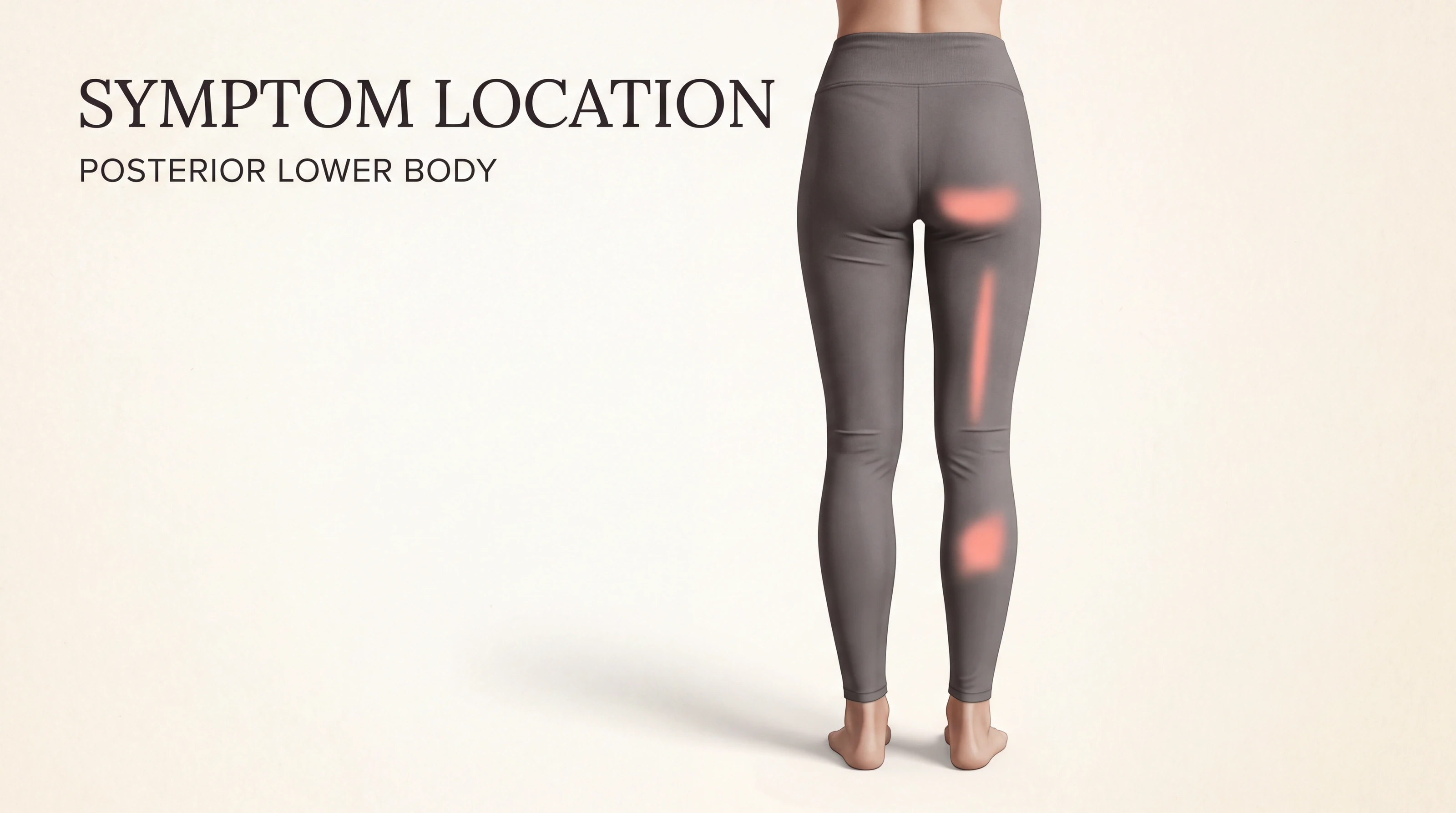
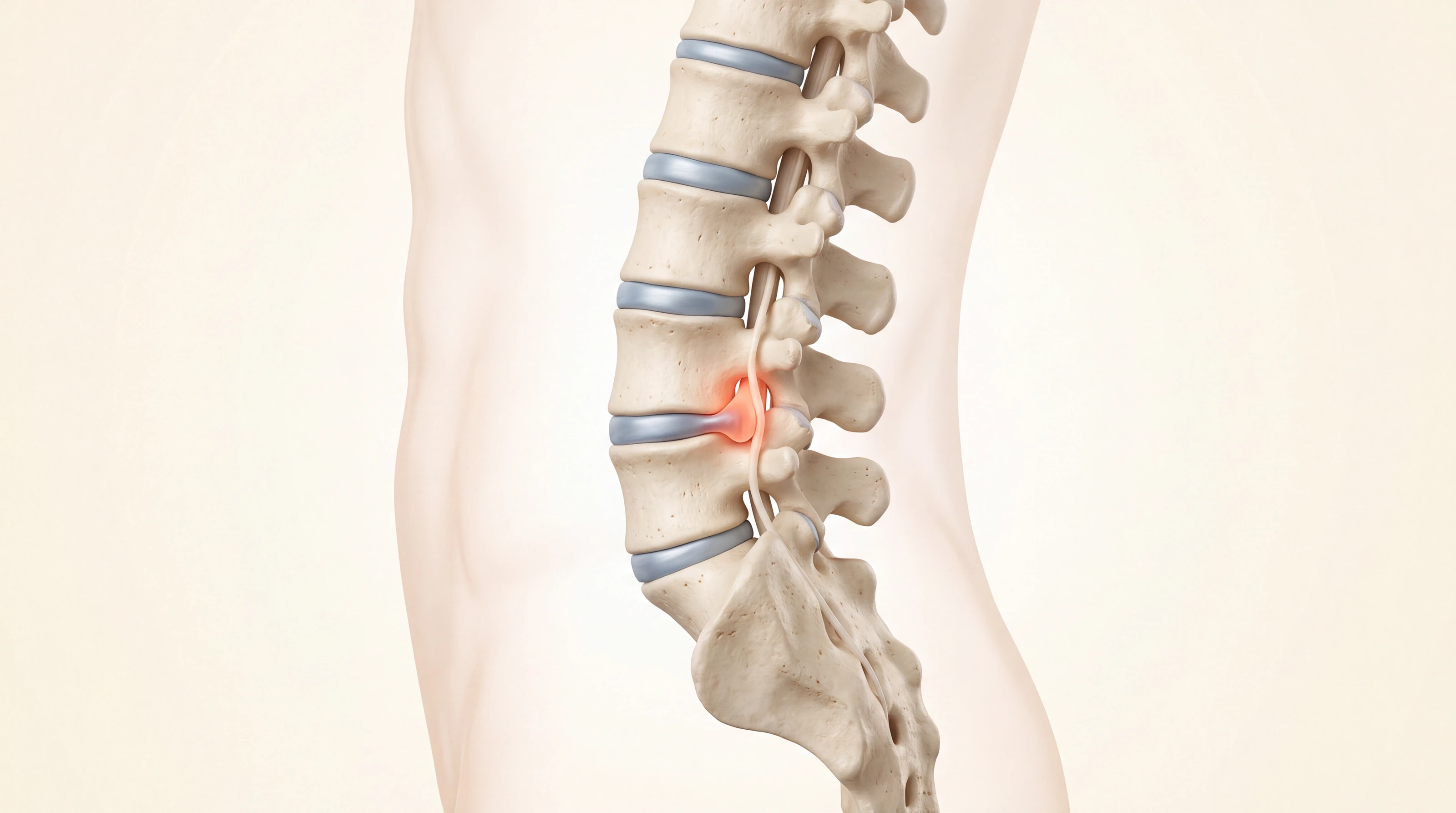
When sharp, burning or electric pain travels from the buttock down the back of one leg, it may fit sciatica. A nerve root in your lower back can be irritated by a herniated disc or by narrowing around the opening where it exits the spine. Pain can extend below the knee and come with tingling or altered strength. Some people feel little pain in their back. Tell your clinician whether the symptoms reach your calf, heel, outer foot or toes and whether they change when you sit, cough or move. [1, 4]
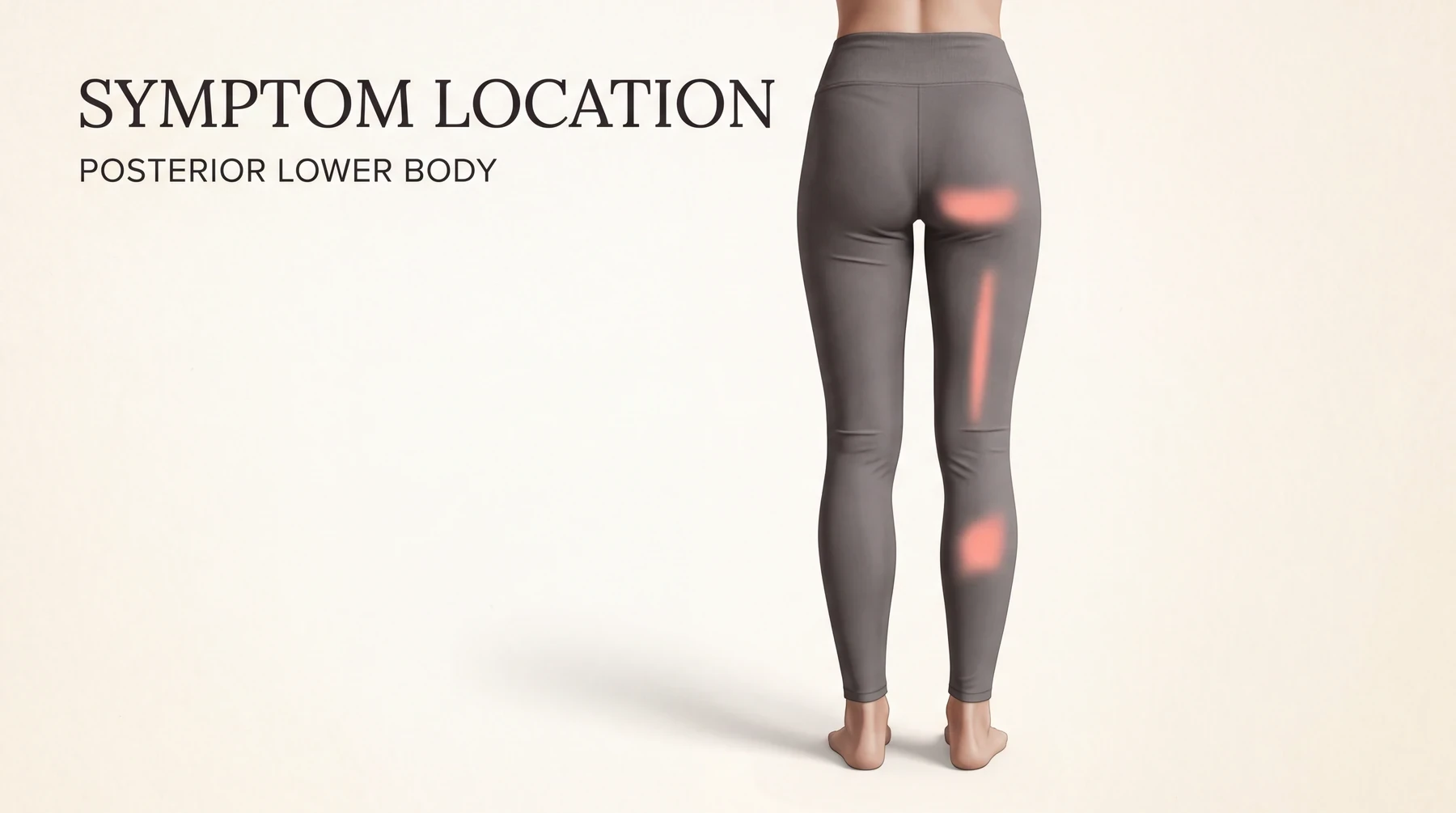
Deep buttock pain can also start outside the spine. The piriformis is a small muscle deep in the buttock near the sciatic nerve. Problems in this area or at the upper hamstring tendon, where it attaches to the sitting bone of the pelvis, can produce pain that extends into the back of the thigh. A clinician may compare how hip motion, sitting and ordinary leg movements affect your symptoms. [5]
Which muscles and nerves are involved?
The lumbar vertebrae are the bones of your lower back. Discs cushion the space between adjacent vertebrae. Nerve roots leave the spinal canal through openings called foramina and contribute to nerves farther down the leg. The location of a disc on a scan and the name of the nerve root do different jobs. For example, a disc between the L4 and L5 vertebrae can irritate the L5 root, depending on where the disc material protrudes. [1, 4]
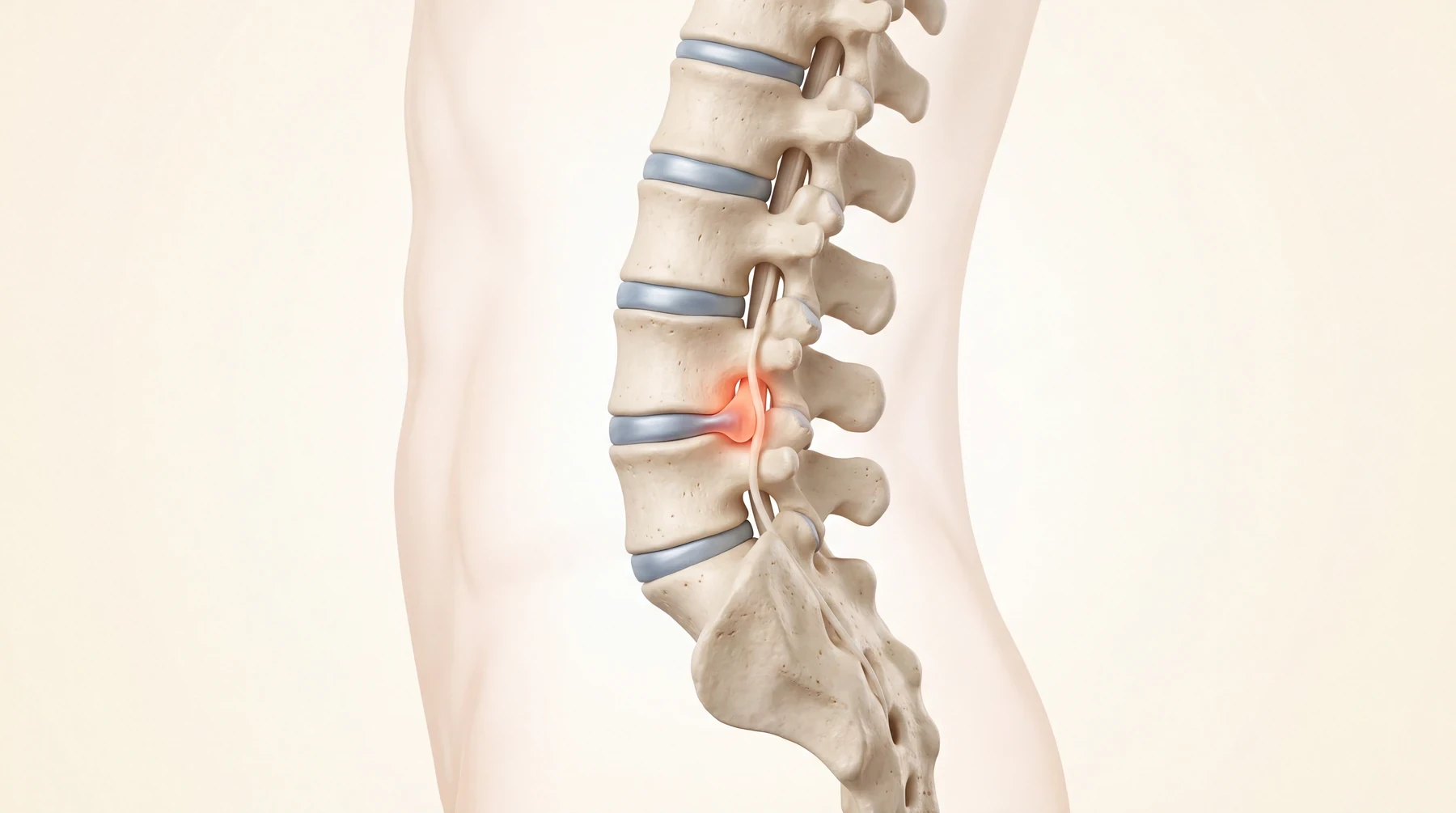
| Nerve root a clinician may check | Where sensation might change | Movement a clinician may examine |
|---|---|---|
| L4 | Inner shin or inner ankle | Straightening the knee. The quadriceps at the front of the thigh help do this. |
| L5 | Outer shin or top of the foot, sometimes near the big toe | Lifting the big toe. The extensor hallucis longus lifts the big toe. The tibialis anterior at the front of the shin helps lift the foot and receives input from both L4 and L5. |
| S1 | Back of the calf or outer edge of the foot | Pushing off through the foot. The gastrocnemius and soleus in the calf contribute to this movement through the Achilles tendon. |
A clinician may also check knee and Achilles reflexes and compare sides. Nerve roots share territory and multiple muscles contribute to each movement, so these examples are a starting point for an exam. If the leg feels unsafe, describe what you noticed during ordinary activity and let the clinician test strength. [4]
A burning patch on the front and outside of the thigh
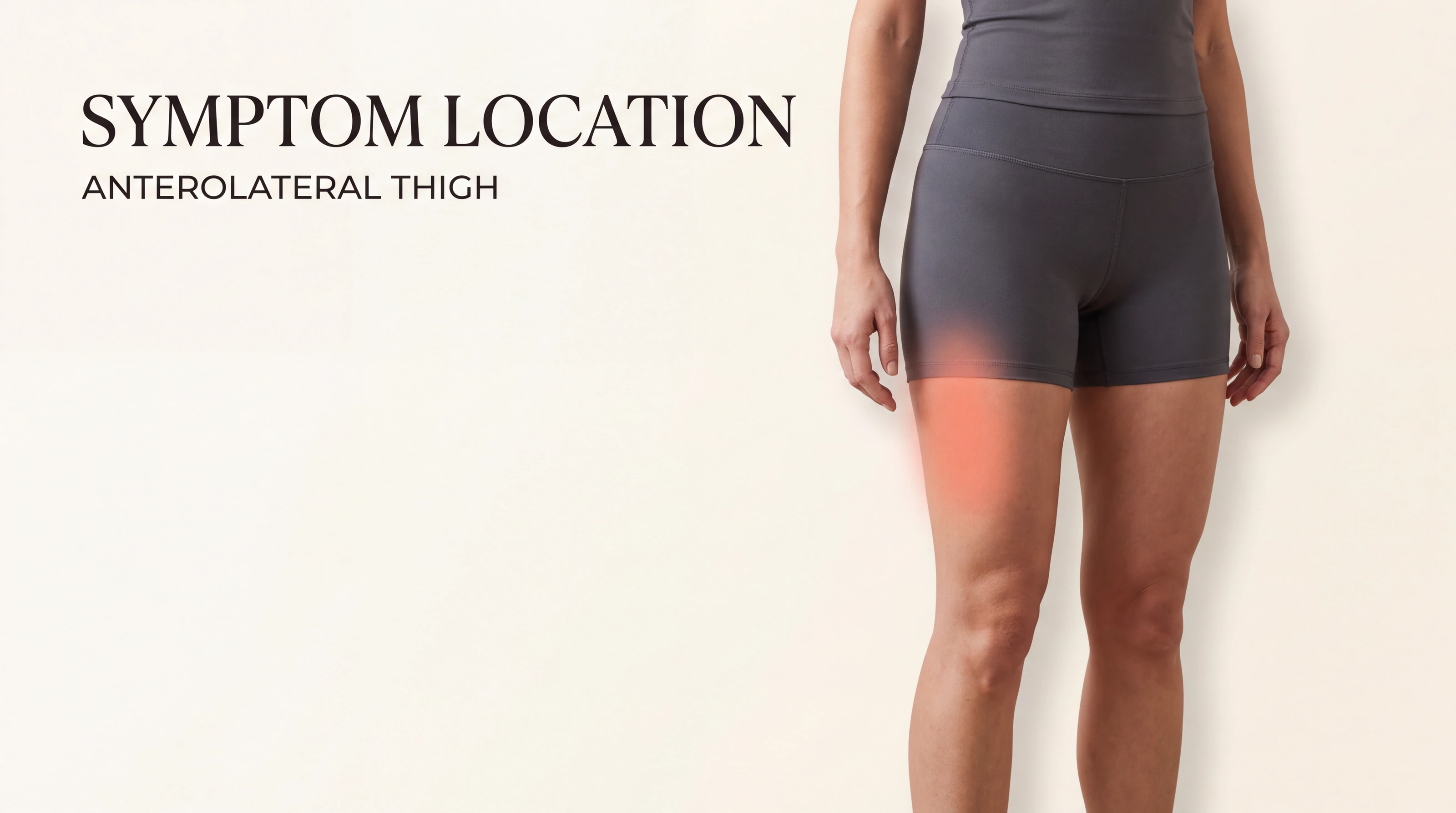
A small area that stings when clothing brushes it, or feels numb to the touch, can fit meralgia paresthetica. The lateral femoral cutaneous nerve passes near the bony front point of the pelvis, called the anterior superior iliac spine, and under or near the inguinal ligament. It carries sensation to the front and outside of the thigh. Pressure from a tight waistband or belt, or changes during pregnancy, can contribute. This nerve carries sensation only. Actual knee buckling or new difficulty straightening the knee needs assessment for another cause. [2]
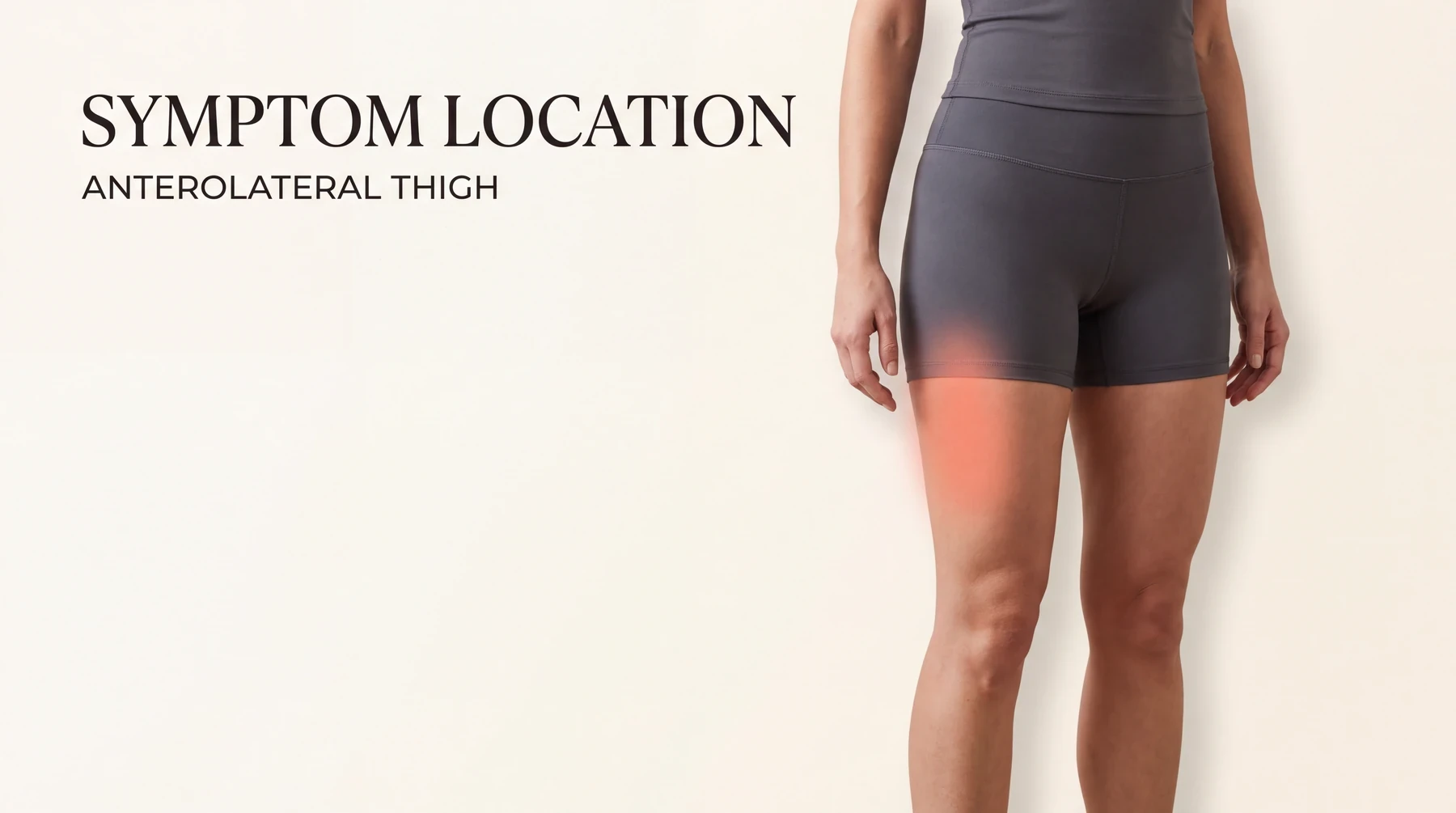
Front thigh numbness with a knee that gives way
The femoral nerve supplies the quadriceps, a muscle group at the front of the thigh that straightens your knee. A femoral nerve problem can change sensation in the front of the thigh and sometimes along the inner shin, through its sensory branch called the saphenous nerve. You might notice the knee give way as you step down off a curb. A problem higher up in the lower back or a painful knee can affect the same activity, so tell your clinician about recent hip, pelvic or abdominal surgery, an injury or new back symptoms. [2, 4]

Numbness from the knee down
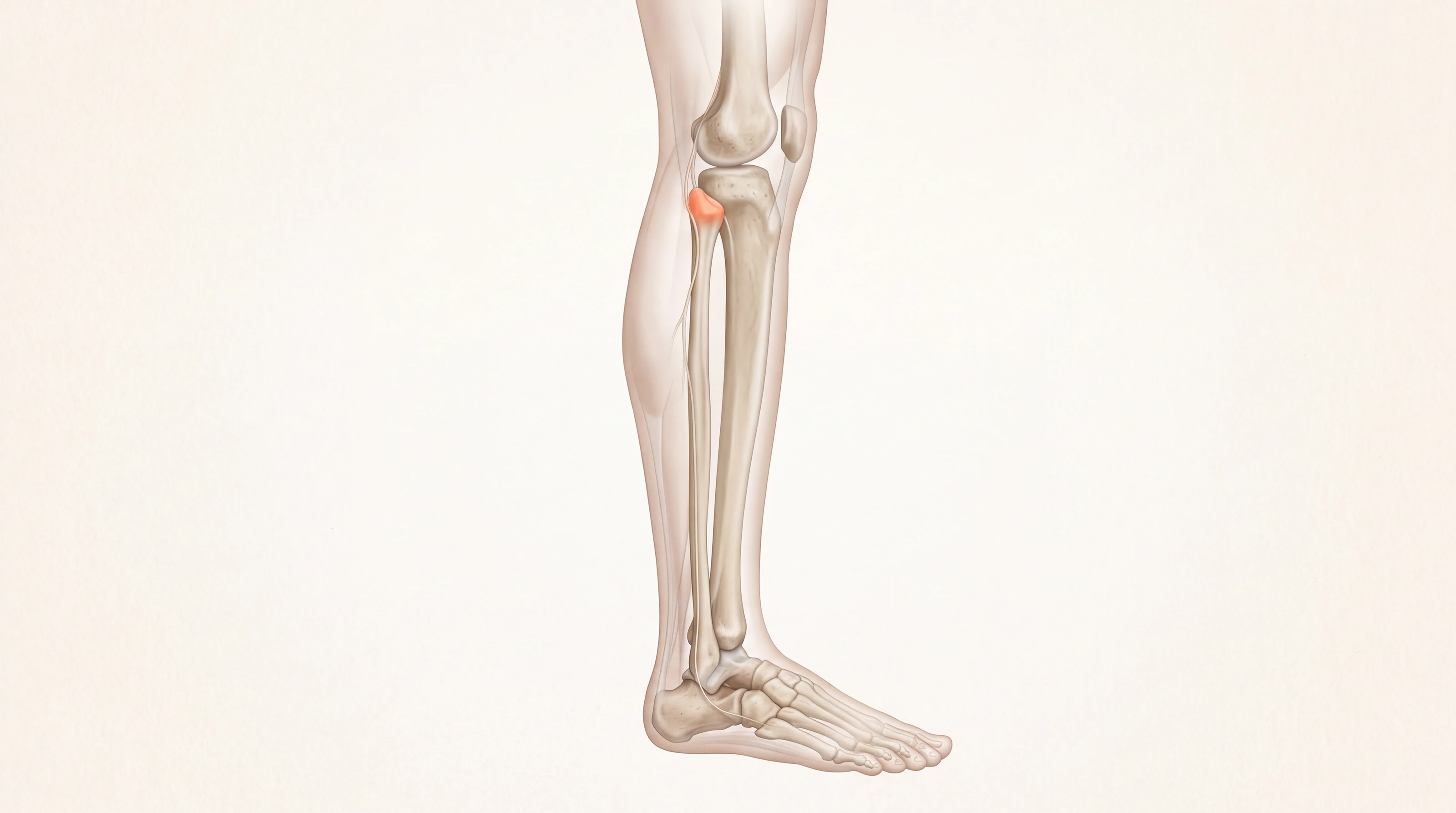
The fibula is the smaller of the two lower-leg bones. Its upper knob, the fibular head, sits just below the outside of the knee. The common fibular nerve, also called the common peroneal nerve, passes close to that bony point and wraps around the fibular neck. Pressure from prolonged leg crossing, kneeling or a poorly fitting brace, or an injury near the outside of the knee, can affect it. Symptoms can include outer shin or top-of-foot numbness and trouble lifting the foot. [3]
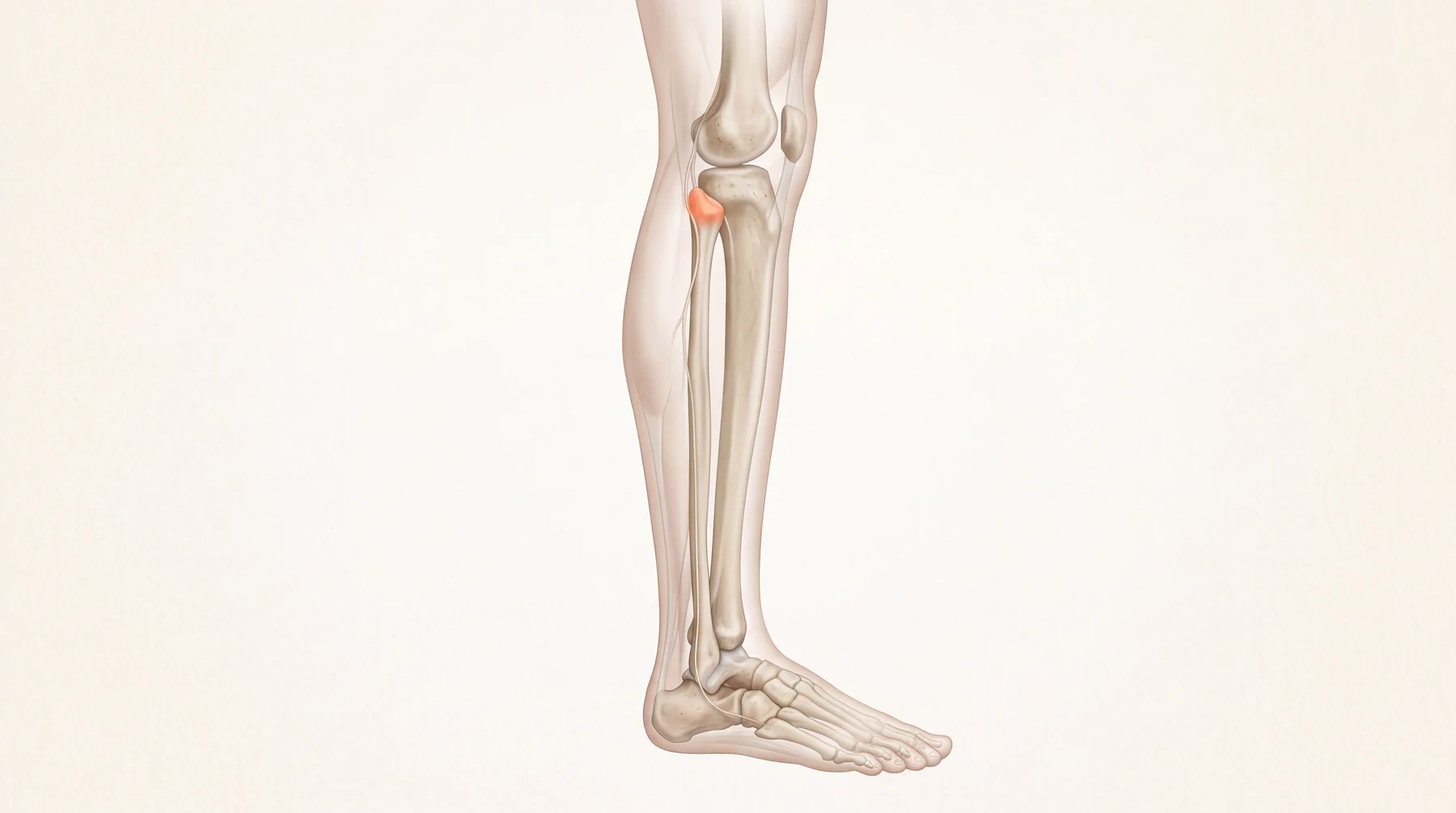
Weakness that makes the toes drag or the foot slap is called foot drop. A problem at the fibular nerve and one at the L5 root can both cause it. Which muscles are weak, including muscles that turn the foot inward or move the leg out to the side at the hip, may help a clinician tell the difference. For new weakness, see the urgent-care guidance. [3, 4] Read about foot drop and toes catching on stairs.
Top of the foot, the sole or the calf
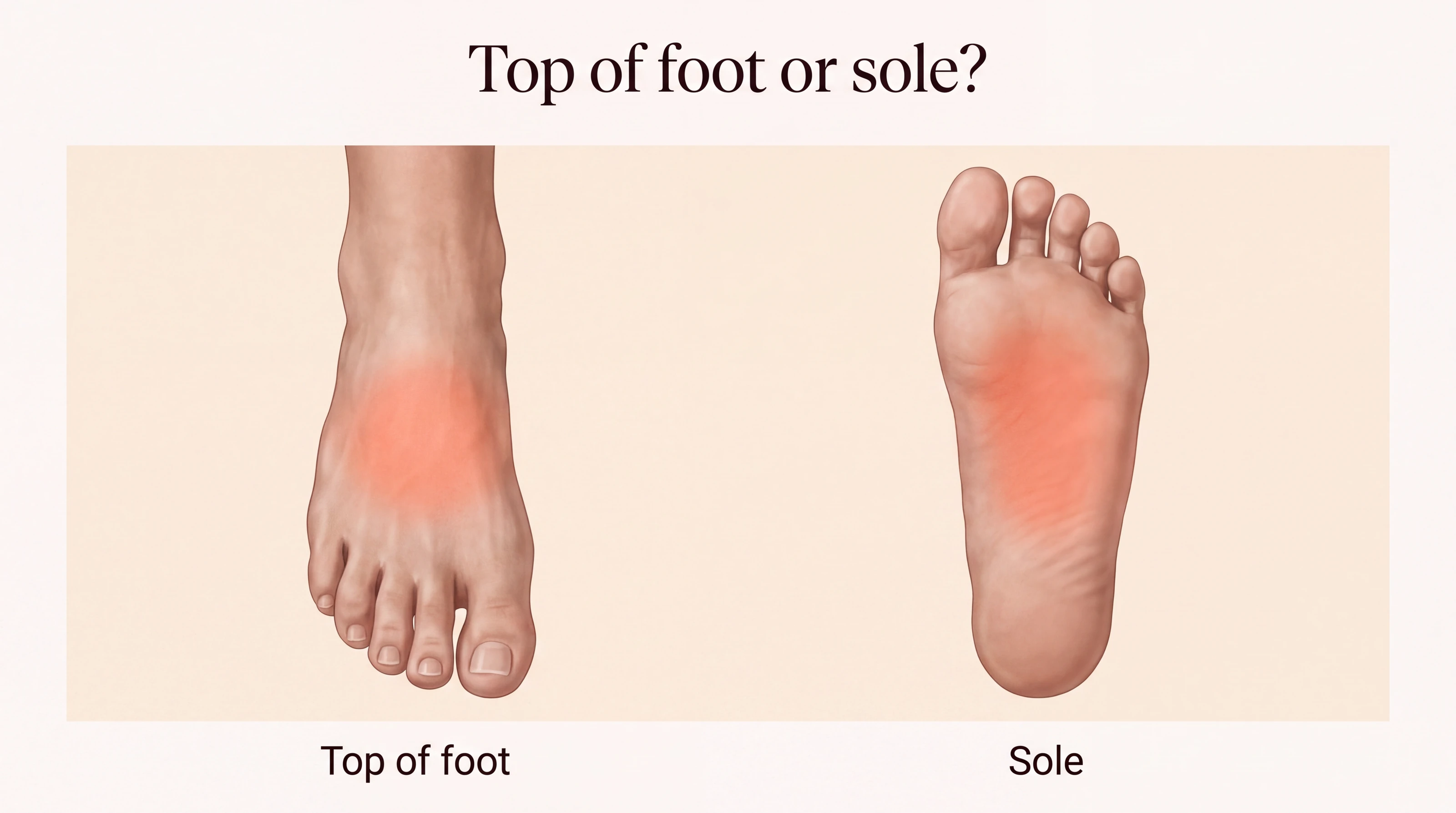
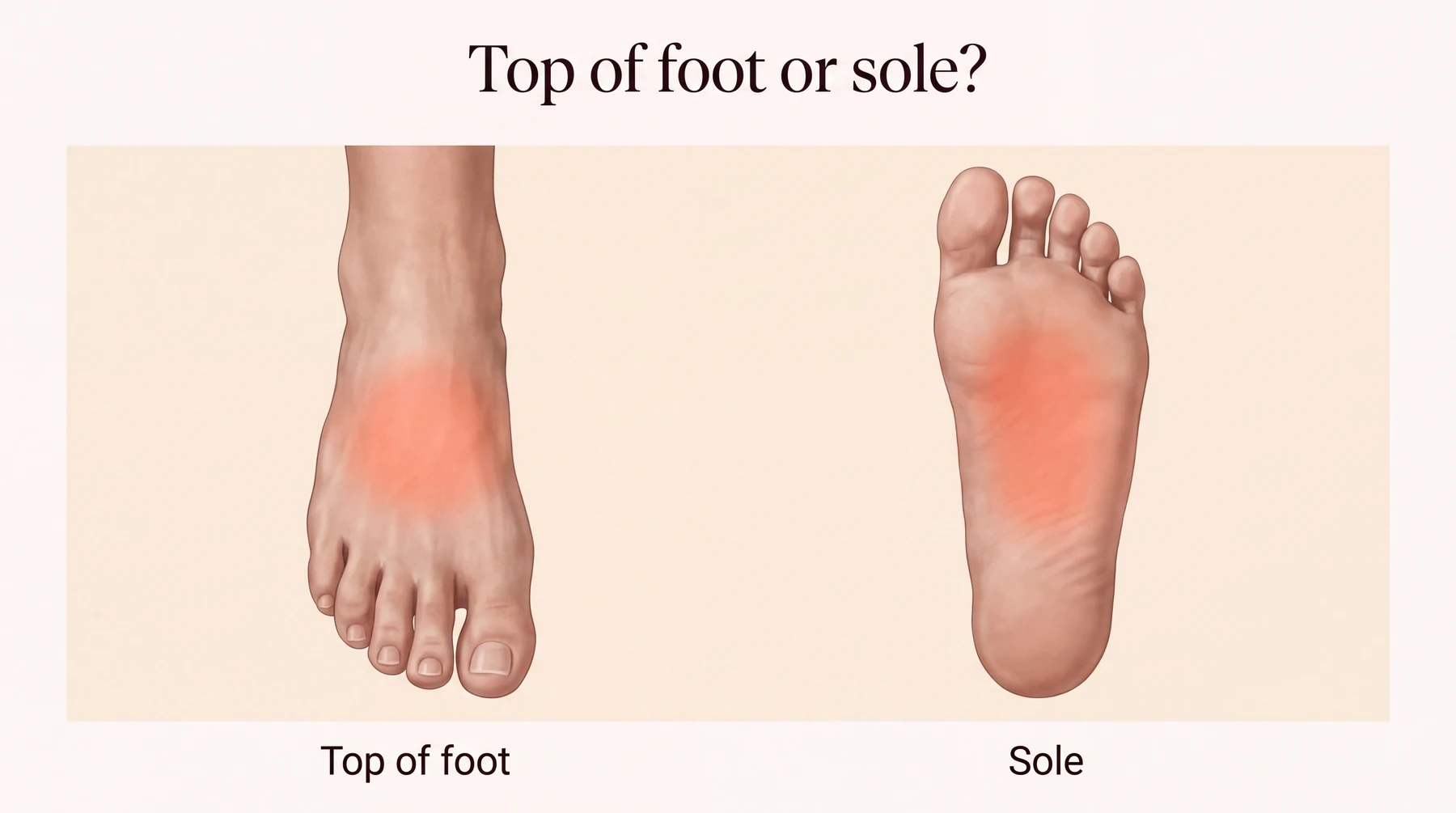
Top of foot. The fibular nerve branches supply sensation across much of the top. The small space between the big toe and second toe has its own branch. A lumbar root problem can affect a similar area, so describe any connection to the shin, buttock or back. [3, 4]
Sole. The tibial nerve passes through a space behind the bony bump on the inside of the ankle, the medial malleolus of the tibia. Its branches supply the sole. Burning or tingling here can occur with tarsal tunnel syndrome, among other causes. Tell your clinician whether the sensation reaches the heel or toes and what standing, walking or footwear does to it. [3]
Calf. Note whether it is the back, inside or outside and whether the calf is newly swollen, warm or tender. Isolated calf pain and numbness can have several causes. See when to get urgent help. [3, 4, 6, 7]
What brings it on matters
Walking or standing
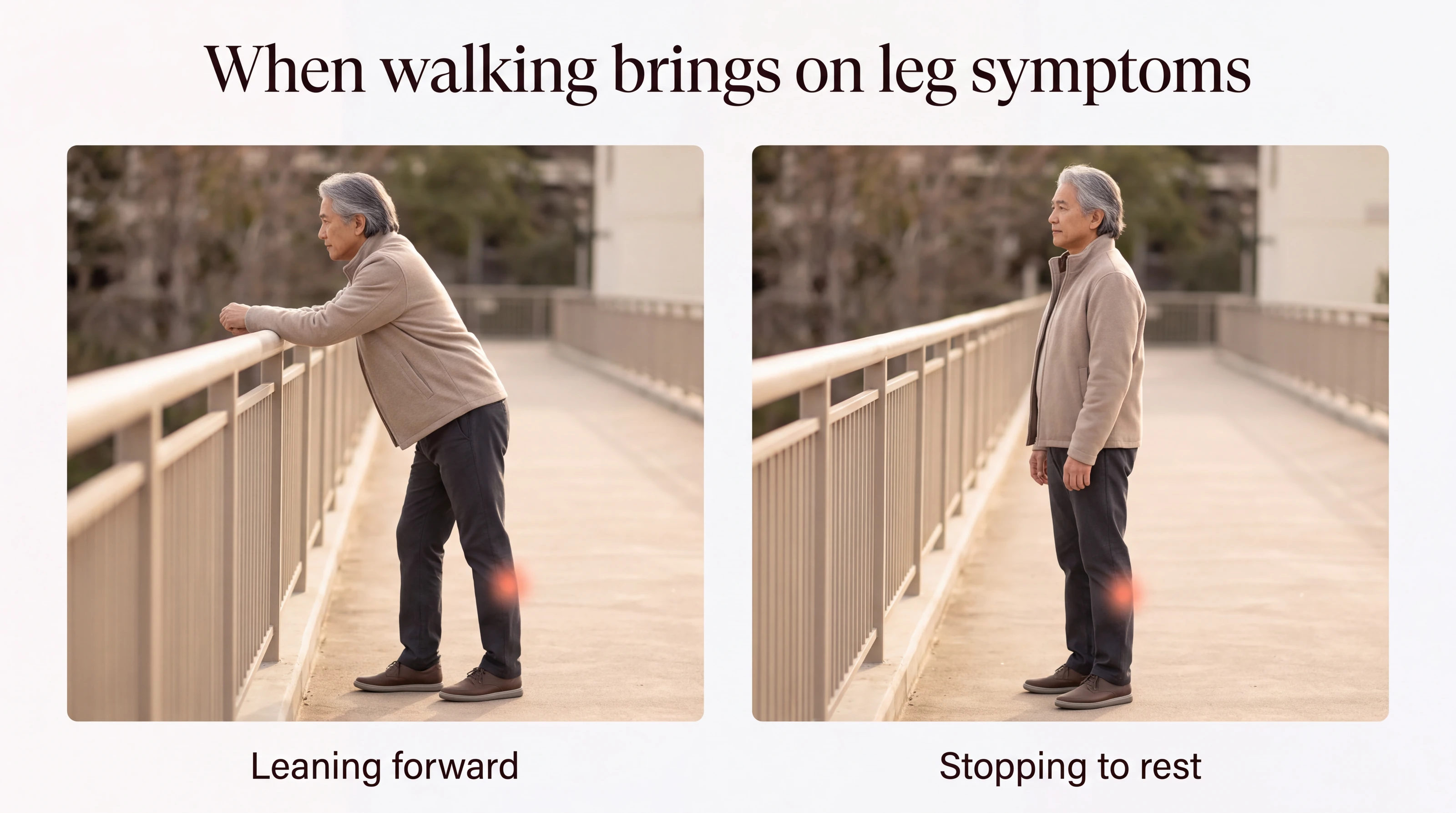
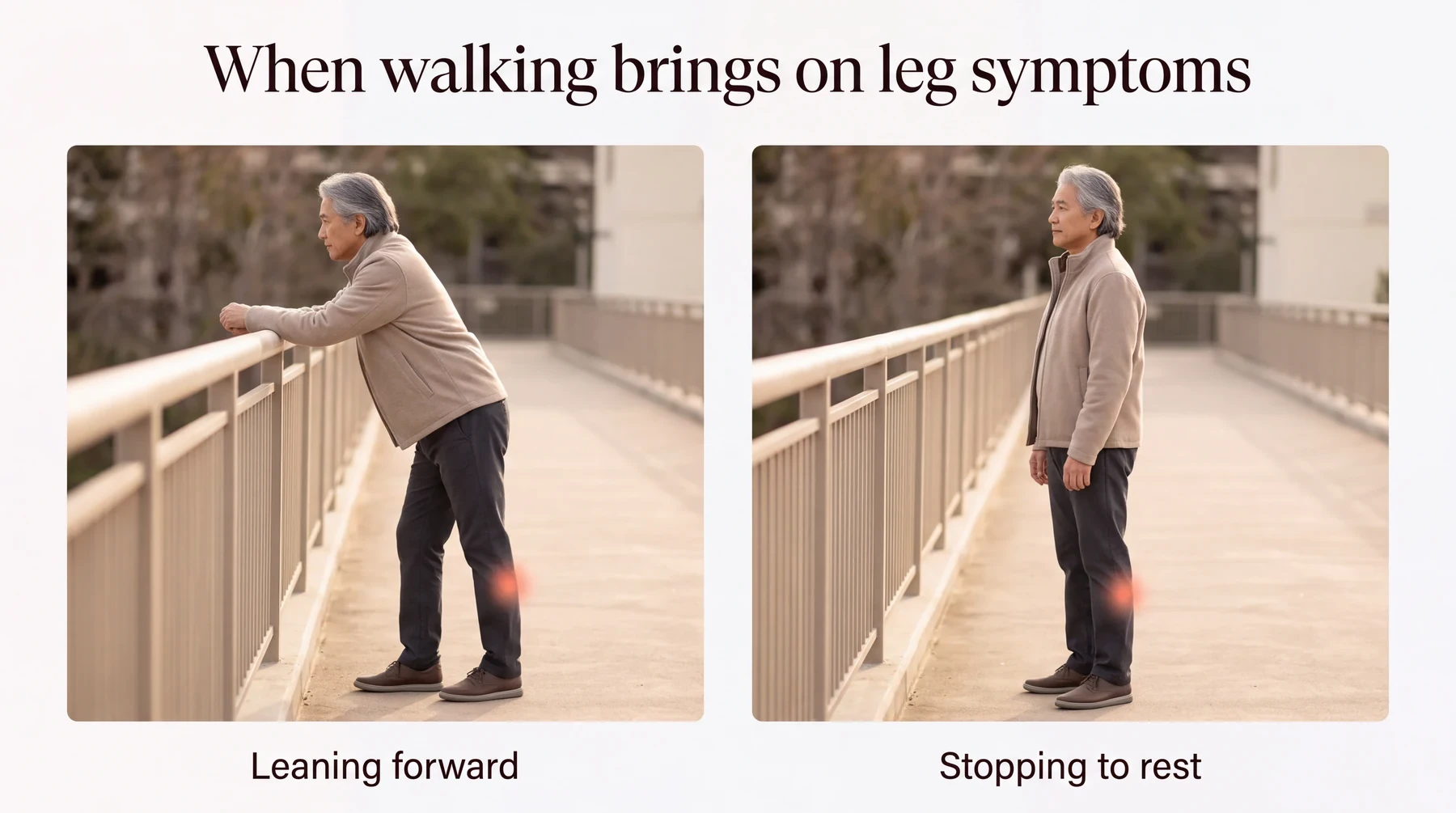
With lumbar spinal stenosis, narrowing in the lower spine can bring on aching, tingling, heaviness or weakness during standing or walking. Some people get more relief by sitting or leaning forward, like resting on a shopping cart. Clinicians call this pattern neurogenic claudication. [8, 9]
With peripheral artery disease, narrowed arteries can limit blood flow to working muscles. Cramping, burning or fatigue can come on during walking and improve when you stop, even if you stay upright. The calf is a common place to feel it. A clinician can check pulses and compare blood pressures at the ankle and arm with an ankle-brachial index when appropriate. Spinal stenosis and artery disease can occur together. How you get relief helps guide the exam. [6, 9, 10]
Sitting, sleeping or changing position
A leg can fall asleep when you sit on it or cross your legs. If the sensation comes back fully shortly after shifting position, brief pressure on a nerve is one possible explanation. If numbness returns repeatedly in the same area, persists after you move, wakes you often or comes with trouble moving your foot or leg, arrange an evaluation. Note the position, how long it takes to come on and what makes it stop. [3, 11]
After a workout, an injury, surgery or during pregnancy
After exercise, soreness and pain can make a leg feel unreliable. Losing the ability to lift the foot or straighten the knee normally is a different finding. A fall, twist, blow to the outside of the knee or tight brace gives the clinician a clue about the location. Bring the brace if you use one and tell the clinician when the symptoms began. See when to get urgent help. [2, 3, 7]
Runners sometimes get a different pattern. Tightness and burning over the shin that predictably build during exercise and ease after stopping can occur when pressure builds within a group of lower-leg muscles. Clinicians call this chronic exertional compartment syndrome. A clinician can compare it with bone stress, nerve or blood-flow problems. See when to get urgent help. [12]
When you have diabetes or another condition
Typical diabetic peripheral neuropathy often starts in the feet, with burning or tingling usually affecting both sides. Diabetes can also be associated with other nerve problems. A new change confined to one leg, especially sudden symptoms or a specific movement that has become weak, deserves its own assessment. Tell your clinician if you have diabetes, a history of artery disease, prior back or hip surgery, or recent illness. [2, 6, 13]
What an evaluation can sort out
The first step is often a conversation and an exam. Primary care is a practical starting point for recurring or lasting symptoms without warning signs. Your clinician may watch you walk, compare strength and sensation, check knee and ankle reflexes and look at the color, temperature, swelling and pulses of both legs. If you can, point with one finger to where you first felt the change, then trace where it travels. Describe what you can or can’t do in daily life, such as clearing a stair, getting up from a chair or walking to the mailbox. [2, 3, 4, 6, 16]
Testing depends on the findings. A lumbar MRI can help if a spinal cause is suspected and there is a reason to image, such as concerning weakness or possible cauda equina syndrome. EMG and nerve conduction studies can help distinguish a problem at a nerve root from a peripheral nerve problem in selected cases. Their timing matters, and a normal result may leave some causes open. Ultrasound can be used to look for a suspected vein clot. A blood-flow test such as an ankle-brachial index helps answer a different question from either a scan or nerve study. [3, 4, 7, 10, 16]
The next step depends on what the exam shows. A clinician may address pressure on a peripheral nerve, advise on gait safety, recommend rehabilitation or refer you for vascular or neurologic evaluation. For stable symptoms that seem to start in the lower back or travel down the leg, our spine team can compare your symptoms, strength and prior imaging to see whether a spine problem fits. You can see Hyun Bae, MD, in Santa Monica, Sanjay Khurana, MD, in Santa Monica or Marina del Rey, or Leonel Hunt, MD, in Beverly Hills. Request an appointment or call us at (310) 437-7921.
Frequently asked questions
Is left leg numbness different from right leg numbness?
Either side can be affected by spine, peripheral nerve or circulation problems. Tell your clinician which side changed, how quickly it started and where it spreads. See when to get urgent help. [1, 2, 3, 6, 14]
Can a pinched nerve make my leg burn without back pain?
Yes. Lumbar nerve root irritation can cause prominent leg symptoms with little back pain. Pressure on a nerve farther down the leg can cause similar burning or tingling. The pattern and exam help distinguish them. [1, 2, 3, 4]
Why does my leg feel numb from the knee down?
Possible causes include a common fibular nerve problem near the knee or irritation of a lumbar nerve root. Tell your clinician whether the change affects the top of the foot, the sole, the inner shin or the outside of the calf. See when to get urgent help. [3, 4]
Why do I get a burning feeling below my knee?
A burning feeling can accompany nerve irritation. Note whether it spreads down the shin or into the foot, starts only with walking or comes with skin changes. See when to get urgent help. [3, 4, 6, 7]
Why does the outside of my thigh burn when fabric touches it?
That can happen when the lateral femoral cutaneous nerve is irritated. This nerve carries feeling from the front and outer thigh, so light touch can feel uncomfortable there. An exam can help confirm whether the pattern fits. [2]
Why does one leg go numb when I sit?
Crossing your legs or pressing the outside of the knee against a hard edge can put pressure on a nearby nerve. Repeated numbness, symptoms that last after shifting or changes in strength warrant assessment. [3, 11]
Why does my leg tingle at night?
Position can affect how pressure is placed on a nerve. Neuropathy can also be more noticeable at night. Tell your clinician whether shifting relieves it, which part of the leg is affected and whether you have daytime symptoms or weakness. [3, 11, 13]
Why do my legs feel heavy after a short walk?
Muscles can feel heavy when blood flow is limited during exertion or when nerves in the lower spine are affected by standing or walking. Whether stopping upright helps, or you need to sit or lean forward, is useful information for your exam. [8, 9, 10]
Can my shoes or brace cause tingling?
Pressure near the top or inside of the foot, or near the outside of the knee, may aggravate a peripheral nerve. Bring the shoes or brace and tell your clinician where it presses. If symptoms began while wearing a prescribed brace, tell the clinician who fitted it. Use the urgent guidance if you notice new weakness. [3, 14]
Is a leg that gives way always weak?
Pain, joint instability and loss of muscle strength can all make a leg feel unsteady. Tell your clinician whether a movement hurts, whether it takes more effort, or whether you can no longer do it. See when to get urgent help. [2, 3, 4]
Do I need an MRI for one numb leg?
An exam often helps decide. MRI is useful for specific spine questions. Nerve studies, a circulation test or ultrasound may be more appropriate depending on the pattern, especially if the problem appears to be at the knee, ankle or blood vessels. See when to get urgent help. [3, 4, 7, 10, 15, 16]
What if the numbness went away?
A familiar pins-and-needles sensation that clears after you uncross your legs can come from temporary pressure. See when to get urgent help. [11, 14]
What if a new numb patch showed up after surgery?
Tell your surgical team about an unexpected change in feeling or strength, even if your incision is healing. Share when the change started and what the leg can do. See when to get urgent help. [2, 3, 7, 14]
Can pregnancy cause burning in one thigh?
Changes during pregnancy can put pressure on the nerve that supplies the front and outside of the thigh. Mention a persistent or recurring patch of burning to your prenatal care team. See when to get urgent help. [2, 7]
Can I injure a numb foot without noticing?
Yes. Reduced feeling can hide a blister, cut or burn. This is especially important if you have diabetes. Tell your diabetes care team if you find a sore or an area where the skin breaks down. [13]
What should I track before an appointment?
Write down the date, side, exact area, what you were doing and how long the symptoms lasted. Note whether the foot slapped, the knee gave way, you had to stop walking, or the skin looked different. Bring prior reports and a medication list if you have them. [2, 3, 4, 6]
Can Wegovy or Zepbound make my leg tingle or burn?
Yes. The prescribing information for Wegovy (semaglutide) and Zepbound (tirzepatide) reports dysesthesia, a change in how the skin feels. It can feel like burning, tingling or unusually sensitive skin. If it starts after you begin treatment or after a dose change, tell your prescriber which area is affected, whether it’s on one side or both, and whether you can move your foot and leg normally. A change in timing is a clue. A persistent patch on one leg or new weakness also needs evaluation for other causes. See when to get urgent help. [14, 17, 18]
Can losing weight on a GLP-1 medication be related to foot drop?
It can be related. After substantial weight loss, the common fibular nerve may have less cushioning where it wraps around the bony knob just below the outside of the knee. Pressure there, including from prolonged leg crossing, can affect feeling over the outer shin or top of the foot and make it hard to lift the toes. Clinicians have reported this pattern after weight loss in people taking semaglutide or tirzepatide. A study that looked back at patient records also found an association with this nerve problem. These studies leave important questions open, including how often it happens and how much of the risk is related to the weight loss itself. A nerve root in the lower back can cause similar symptoms. If your toes are catching or your foot is slapping the ground, follow the urgent-care guidance for new weakness. [3, 19, 20, 21]
Can an antibiotic cause new burning, numbness or weakness?
Some can. The FDA warns that fluoroquinolone antibiotics taken by mouth or by injection can cause peripheral nerve damage that may be permanent. Symptoms can start soon after treatment begins. See when to get urgent help. [14, 22, 23, 24]
Can a statin make my legs feel weak?
A statin such as atorvastatin can cause muscle aching, tenderness or weakness. The atorvastatin label directs patients to report unexplained muscle symptoms promptly, especially with fever or feeling ill. Serious muscle breakdown is rare. Tell the prescriber whether you feel soreness, have trouble rising from a chair, or have a distinct patch of numb skin. See when to get urgent help. [14, 25]
What about metformin, topiramate or chemotherapy?
- Metformin can lower vitamin B12 levels over time. Low B12 can affect sensation, so ask whether your level should be checked if you take metformin long term and develop ongoing tingling or numbness. An exam can help distinguish this from diabetes-related neuropathy or a focal nerve problem. [3, 13, 26, 27]
- Topiramate, used for migraine prevention and some seizure disorders, can cause pins and needles. Tell the prescriber if this is new, especially if there is a persistent change in one area or a change in how you walk. [28]
- Some chemotherapy drugs, including paclitaxel and oxaliplatin, can affect peripheral nerves. Symptoms often start in the toes or fingers. Tell your oncology team about new burning, numbness or balance trouble as soon as you notice it. [29, 30]
How can I tell whether my medicine is involved?
Bring a list of prescriptions, over-the-counter products and supplements. Write down when you started each medicine, when the dose last changed and when the sensation began. Note which part of the leg is affected, whether it comes and goes, and whether you’ve been losing weight or tripping. Ask the prescriber or pharmacist to review the specific product and combinations you take. See when to get urgent help.
When one-sided leg symptoms need urgent care
- Call 911 for a sudden new loss of feeling or strength in one leg. Stroke can cause sudden symptoms on one side of the body. Other sudden signs can include a drooping face, arm weakness, confusion, trouble speaking or understanding, trouble seeing, loss of balance, or a severe headache with no known cause. Call even if the leg is the only part affected or the symptoms go away. Tell the dispatcher when the symptoms started or when you last felt normal. Wait for the ambulance. [14]
- Call 911 for a possible sudden loss of blood flow to a leg. Signs include severe pain starting suddenly, or a foot that suddenly becomes unusually cold or pale, especially if it also feels numb or weak. These signs can occur in different combinations. [6]
- Go to an emergency department immediately for possible cauda equina syndrome. With back or leg symptoms, warning signs include new numbness around the genitals, anus or inner thighs, trouble passing urine, loss of the usual urge to urinate, loss of bladder or bowel control, or rapidly worsening leg weakness. These may be signs that nerves at the base of the spine are under severe pressure, called cauda equina syndrome. Changes in sexual function can also occur. Symptoms can affect one or both legs. Call 911 if you cannot get there safely or the situation appears life-threatening. [15]
- Get urgent same-day medical assessment for new swelling, warmth, tenderness or discoloration in one leg, especially after surgery or a period of limited movement, or during pregnancy or postpartum. A deep vein thrombosis, or DVT, can cause these changes. Call 911 for sudden shortness of breath, chest pain, coughing up blood, severe lightheadedness or fainting. These can be signs of a clot in the lungs. [7]
- Get same-day medical assessment if new trouble lifting the front of your foot or new leg weakness developed gradually and is stable. After a serious back injury, call 911 for new leg weakness or numbness. Go to an emergency department immediately for rapidly worsening leg weakness or the bladder, bowel or saddle-area warning signs above. Call 911 if you cannot get there safely. [1, 3, 11, 14, 15]
Urgent guidance for specific situations
- A sudden change may need emergency care.
- Possible acute compartment syndrome. Severe, increasing pain after a fracture or direct injury, especially with a tight or swollen leg, can signal acute compartment syndrome and needs emergency care. [12]
- Calf symptoms. New one-sided swelling or warmth needs same-day assessment for a possible clot, especially with recent surgery or immobility. A cold or pale foot with sudden symptoms needs emergency care. [3, 4, 6, 7]
- After surgery, report unexpected numbness, weakness or swelling to your surgical team promptly and use emergency care for warning signs. [2, 3, 7]
- During pregnancy or postpartum, let your obstetric team know about symptoms that persist or recur, and seek urgent same-day care for new one-sided swelling or warmth. [2, 3, 7]
- Sudden symptoms on either side. Sudden unexplained loss of feeling or strength on either side can be a sign of stroke and warrants a 911 call. [1, 2, 3, 6, 14]
- Symptoms that have gone away. Sudden, unexplained loss of feeling or strength on one side can be a stroke warning even if it passes. Call 911 in that situation. [11, 14]
- Numbness below the knee. Call 911 for sudden loss of strength. Get same-day assessment for new, gradually developing trouble lifting the foot. [3, 4]
- A leg that gives way. Call 911 if the loss of strength is sudden. Get same-day assessment if it developed gradually and is stable. [2, 3, 4]
- While taking Wegovy or Zepbound. Call 911 for sudden new loss of feeling or strength on one side. [14, 17, 18]
- While taking an antibiotic. Call 911 for sudden loss of feeling or strength on one side. If you develop new burning, tingling, numbness or weakness while taking oral ciprofloxacin or levofloxacin, their Medication Guides direct you to stop the drug and contact your prescriber immediately. [14, 22, 23, 24]
- After surgery. New weakness or a swollen, warm or tender leg needs same-day assessment. Call 911 for sudden new weakness, chest pain or trouble breathing. [2, 3, 7, 14]
- Burning below the knee. Seek urgent help for new swelling or warmth, or call 911 if the foot suddenly turns unusually cold or pale. [3, 4, 6, 7]
- Saddle numbness or bladder or bowel changes. Go to the emergency department for new saddle numbness, loss of bladder or bowel control, or the other warning signs. [3, 4, 7, 10, 15, 16]
- After starting a statin. Sudden new weakness in one leg needs emergency evaluation even if a statin was recently started. [14, 25]
- During pregnancy or after delivery. New swelling, warmth or tenderness in one leg during pregnancy or after delivery needs urgent assessment for a possible clot. [2, 7]
- Medication safety instructions. Follow your product’s safety instructions and get emergency help for warning signs.
For a possible life-threatening emergency, call 911 immediately. Do not wait for an office callback.
This article is for general educational purposes. It does not provide medical advice or create a physician–patient relationship. Ask your own care team about your diagnosis, treatment and recovery.
Learn More
- American Association of Neurological Surgeons on herniated discs.
- American Academy of Physical Medicine and Rehabilitation on upper-leg nerve problems.
- American Academy of Physical Medicine and Rehabilitation on lower-leg nerve problems.
- American Academy of Physical Medicine and Rehabilitation on testing for nerve root problems.
- American Academy of Physical Medicine and Rehabilitation on pain at the back and outside of the hip.
- Society for Vascular Surgery on acute limb ischemia.
- CDC guide to deep vein thrombosis and pulmonary embolism.
- American Academy of Orthopaedic Surgeons on lumbar spinal stenosis.
- Original study comparing symptoms of spinal and vascular claudication.
- American College of Cardiology and American Heart Association guideline for lower-extremity artery disease.
- MedlinePlus on numbness and tingling.
- American Academy of Orthopaedic Surgeons on acute and exertional compartment syndrome.
- National Institute of Diabetes and Digestive and Kidney Diseases on diabetic peripheral neuropathy.
- CDC guidance on signs and symptoms of stroke.
- American Association of Neurological Surgeons on cauda equina syndrome.
- American College of Radiology and Radiological Society of North America on imaging for low back pain.
- FDA prescribing information for Wegovy (semaglutide).
- U.S. prescribing information for Zepbound (tirzepatide).
- Two published cases of foot drop following weight loss with semaglutide or tirzepatide.
- Published case series on fibular nerve compression after tirzepatide-associated weight loss.
- Retrospective case-control study of GLP-1 medicines and fibular neuropathy.
- U.S. prescribing information and Medication Guide for Cipro (ciprofloxacin).
- U.S. prescribing information and Medication Guide for levofloxacin tablets.
- FDA safety communication on nerve damage with fluoroquinolone antibiotics.
- U.S. prescribing information and patient information for Lipitor (atorvastatin).
- U.S. prescribing information for metformin hydrochloride tablets.
- Diabetes Prevention Program Outcomes Study on metformin and vitamin B12.
- U.S. prescribing information for topiramate tablets.
- American Society of Clinical Oncology guideline on chemotherapy-induced peripheral neuropathy.
- National Cancer Institute on peripheral neuropathy during cancer treatment.
Related guides
Foot drop and toes catching on stairs
What a change in foot strength can mean.
Sciatica
Understand pain that travels from the buttock down one leg.
Lumbar spinal stenosis
Learn why standing or walking can bring on leg symptoms.






 (562) 348-4588