
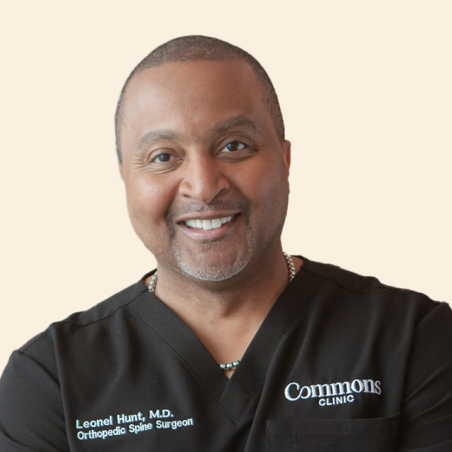
Leonel Hunt, MD
Orthopedic Surgeon, Spine
Book nowIf you’re comparing a smaller-incision operation with another spine surgery option, the first question is what needs to change inside your spine. We’ll review your symptoms and imaging, then explain which approaches can reach the problem and what each might mean for the things you want to do again.
Book now(310) 437-7921
“Minimally invasive” describes how a surgeon gets to the spine. Some approaches use a narrow tube, a microscope or a small camera to see and reach the area while limiting how much nearby muscle is moved. The work inside can differ. Your surgeon may make more space for a nerve, remove disc material or stabilize a part of the spine. Ask for the name of the procedure as well as the name of the approach. [1]
Endoscopic surgery is one type of minimally invasive approach. Decompression describes making room for a nerve, which can be done through different approaches. A fusion joins bones so they heal together. A smaller incision does not change the goal of fusion or remove the need for the bones to heal. [1, 2]
Tell us if pain moves down an arm or leg, if numbness spreads or if your walking has changed. A new foot that catches, loss of grip or increasing trouble with balance deserves prompt assessment. These changes help us decide what to check before comparing treatments. [3, 4]
Go to an emergency department now for new trouble starting urination or controlling your bladder or bowel with back or leg symptoms, numbness around your groin or seat area, or sudden or rapidly worsening weakness or inability to walk safely. Call 911 if you need emergency transport. [4, 5]
We’ll start by looking at whether your symptoms, exam and images point to a problem an operation could help. Many people can start with nonsurgical options. If surgery is worth discussing, we’ll show you what needs to be reached and what the operation would change. For example, a surgeon may be able to reach a single disc fragment through a small opening. A larger area of narrowing, a change in alignment or a need for stabilization can call for a different approach. [1, 2, 3]
Ask how the proposed approach compares with the alternatives for your condition. Less disruption to nearby muscles may matter, but outcomes depend on the diagnosis and the work the surgeon needs to do. Any approach can involve infection, bleeding, nerve injury, a leak of spinal fluid, symptoms that continue or the need for another surgery. We’ll explain the tradeoffs that apply to you. [1, 2]
Bring your images and tell us about prior surgery, medical conditions and medicines that may affect your care. Pick one activity you want to regain, such as finishing a walk, driving or lifting at work. Ask which symptom the plan is most likely to help and how you might know that it is improving. [1, 3]
If a surgeon recommends an operation, ask why that approach fits the area involved and what would change if you chose another approach. Before surgery, get instructions for regular medicines and ask when you’ll need a ride, someone to stay with you or help with heavier tasks. [1, 6]
The first few days are usually about moving safely, caring for the incision and following your pain plan. Your recovery goals and restrictions depend on the procedure, how your nerves are working and what you need to return to. Ask when the team will review driving and work, which symptoms to report and how they will track healing. If the operation includes fusion, the bones need time to join even if the incision heals sooner. [1, 2, 6]
Our spine surgeons include Leonel Hunt, MD, Amandeep Bhalla, MD, Brandon Ortega, MD, Sanjay Khurana, MD and Hyun Bae, MD. We’ll help match your visit to the procedure or diagnosis you want to discuss.
Orthopedic Surgeon, Spine
Book now
Orthopedic Surgeon, Spine
Book now
Orthopedic Surgeon, Spine
Book now
Orthopedic Surgeon, Spine
Book now
Orthopedic Surgeon, Spine
Book nowWe can help arrange a spine consultation in Beverly Hills, Long Beach – Bixby Knolls, Long Beach – Douglas Park, Marina del Rey or Santa Monica. If you choose an operation, we’ll confirm separately which facility fits your procedure and health needs.
Leonel Hunt, MD
Orthopedic Surgeon, Spine
Call us at (310) 437-7921.
Amandeep Bhalla, MD
Orthopedic Surgeon, Spine
Call us at (310) 437-7921.
Brandon A. Ortega, MD
Orthopedic Surgeon, Spine
Call us at (310) 437-7921.
Sanjay Khurana, MD
Orthopedic Surgeon, Spine
Call us at (310) 437-7921.
Hyun Bae, MD
Orthopedic Surgeon, Spine
Sanjay Khurana, MD
Orthopedic Surgeon, Spine
Call us at (310) 437-7921.






 (310) 423-9834