

Brett Pugh, PT, DPT
Licensed Physical Therapist
Functional fitness testing helps us understand how you move and where you might benefit from more support. In our Wholebody program, the physical therapy assessment looks at strength, mobility and exercise capacity. We use your results to discuss activities that matter to you, such as climbing stairs, walking farther or getting back to regular training. [1]
Talk with the Wholebody team(310) 437-7921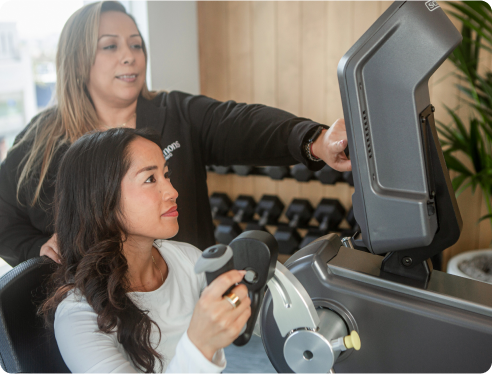
Our Wholebody program lists grip strength, force-plate and motion analysis, and VO₂ max among its assessments. These measurements answer different questions. Grip testing gives us a measure of hand strength. Movement assessment can provide information about how you perform a task. VO₂ max provides information about aerobic capacity. We’ll explain which tests fit your appointment and what they can tell us about your goals. [1, 2]
You may want a starting point after becoming less active, or you may want to understand a change you’ve noticed during exercise. Tell us if your main concern is getting up from a low chair, feeling steadier on uneven ground or keeping up on a bike ride. If pain, recent surgery or a health condition affects how you move, share that before testing so we can discuss what is appropriate. [1, 2]
We’ll talk through what each test represents and consider the effect of symptoms, restrictions and your experience with the movement. A measurement can help guide which strength or mobility goals to prioritize. We can also explain when an orthopedic evaluation or a separate physical therapy plan would make sense. The goal is to help you find a practical way to build toward the activities you want to do. [1, 2]
Wear clothing and shoes you can move in, and follow the instructions we send for your appointment. Bring any current exercise restrictions and tell us about walking aids, recent surgery, symptoms with exertion or movements you avoid. Write down two activities you would like to do more comfortably so we can discuss them with you. [1]
We’ll explain the movements, ask how they feel and discuss changes if needed. Afterward, ask which results are useful for your goals, how they might guide your next steps and whether a later check would help you see progress. If you repeat a test, consistent conditions make comparison easier. [1, 2]
Brett Pugh, PT, DPT is part of our Wholebody team. We can help you understand what the physical therapy assessment covers and whether you need a separate visit for a particular pain or injury. [1, 3]
Licensed Physical Therapist
Talk with our Wholebody team to plan your assessment, or call us at (310) 437-7921.
Our Wholebody program sees you in Santa Monica. We’ll confirm the tests and any preparation instructions when we schedule your assessment.
Brett Pugh, PT, DPT
Licensed Physical Therapist
Our Wholebody physical therapy assessment includes functional fitness testing.
Talk with the Wholebody teamCall us at (310) 437-7921.






 (310) 423-9834