
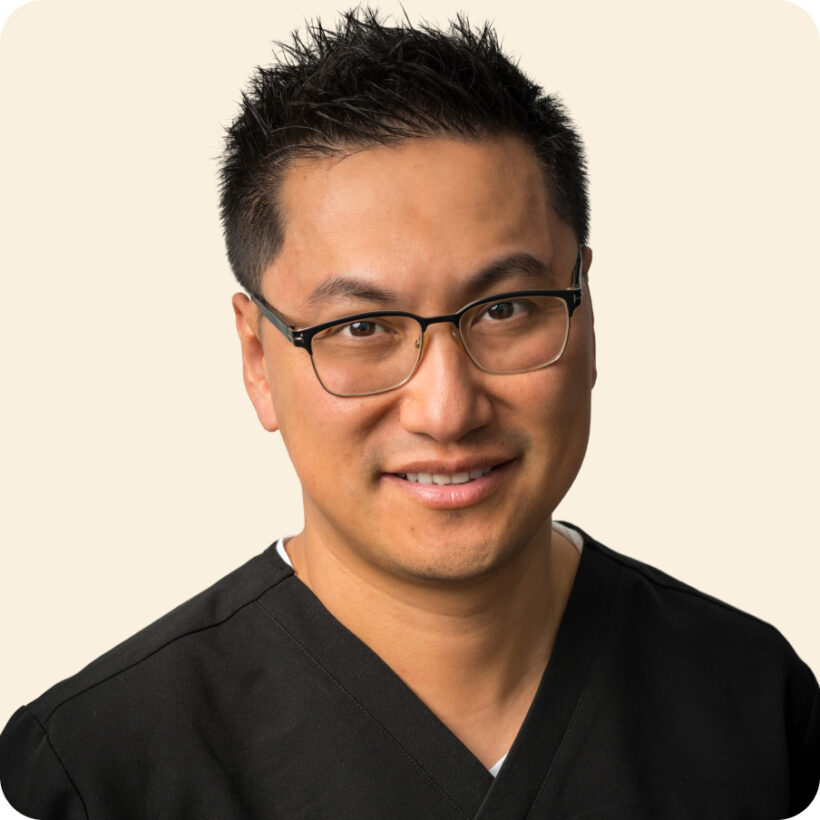
Richard Ahn, MD
Orthopedic Surgeon, Sports Medicine – Elbow, wrist, and hand
Book nowIf hand pain makes it hard to turn a key, open a jar, or close your fingers around a handle, we can check which joint is affected and which treatments might help. The joint at the base of your thumb and the knuckles at the base of your fingers do different work. We’ll explain how that affects decisions about surgery and recovery. [1, 2]
Book now(310) 437-7921
The carpometacarpal, or CMC, joint at the base of the thumb helps you position the thumb to pinch, grip, and hold objects. Arthritis there can hurt when you turn a key or pull open a bag. The metacarpophalangeal, or MCP, joints are the knuckles where your fingers meet the hand. Arthritis in a finger knuckle can make it harder to close or open the hand. It can follow injury or occur with joint disease such as rheumatoid arthritis. [1, 2]
Arthroplasty is surgery to rebuild a joint. A thumb CMC procedure may involve removing an arthritic bone and sometimes using nearby soft tissue to help support the thumb. Some procedures use an implant. Finger MCP arthroplasty uses a different approach, often involving a small implant for a joint where restoring movement and alignment matters. Which options fit depends on the joint, the health of nearby tissue, and what you need the hand to do. [1, 2]
Tell us if many joints are swollen or you have an inflammatory condition. Seek urgent care if a joint suddenly becomes hot, very swollen or red, especially with fever or feeling unwell. [3]
We’ll examine where the pain is, compare movement and strength, and assess joint alignment. X-rays can help us identify which surfaces are affected. We’ll ask which tasks you want to regain and what you’ve tried. A splint, changing how you use your hand, therapy, or other nonsurgical options may help, depending on the problem. [1, 2]
If you are considering surgery, we’ll discuss what a procedure could change. At the thumb base, discuss pinch, reach, pain and stability. At a finger knuckle, ask about alignment, motion, grip, and what an implant can tolerate. We’ll also explain when other options, including fusion in some situations, may fit better than trying to preserve joint movement. Risks can include stiffness, infection, persistent pain and implant problems when an implant is used. [1, 2]
Notice which part of the hand hurts most and what happens when you pinch or close your fingers. Bring images or prior treatment details. Tell us about your job, any tools you use, whether the hand is dominant and whether you need a cane, walker or transfers.
If surgery is planned, ask how to dress, cook and handle your day while protecting the hand. Ask which tasks might need help and how therapy or equipment will be arranged.
Recovery at the thumb base involves different movements than recovery at a finger knuckle. Your team will explain how to protect the hand, when you can start therapy, and when to increase use. Ask about separate milestones for light self-care, writing, driving, pinching and lifting. Some activities can remain difficult even as pain improves. [1, 2]
Tell the team if you have a new change in feeling or movement, increasing redness, drainage, or fever after surgery.
Richard Ahn, MD is a fellowship-trained orthopedic surgeon specializing in hand, wrist, and elbow care. He can help you identify which joint is limiting you and compare treatment options for that joint.
Orthopedic Surgeon, Sports Medicine – Elbow, wrist, and hand
Book nowWe offer hand evaluations in Lakewood and Long Beach – Douglas Park. We’ll confirm the procedure setting if we recommend surgery.
Richard Ahn, MD
Orthopedic Surgeon, Sports Medicine – Elbow, wrist, and hand
Call us at (310) 437-7921.
Richard Ahn, MD
Orthopedic Surgeon, Sports Medicine – Elbow, wrist, and hand
Call us at (310) 437-7921.






 (310) 423-9834