
If your arches have looked the same for years and you walk comfortably, you usually don’t need treatment to change their shape. If pain cuts a walk short, your ankle keeps rolling, or one foot is changing, it’s worth finding out why. At Commons Clinic, we start with what gets in your way: pressure under the ball of your foot calls for a different plan than an ankle that gives way on uneven ground. [1]
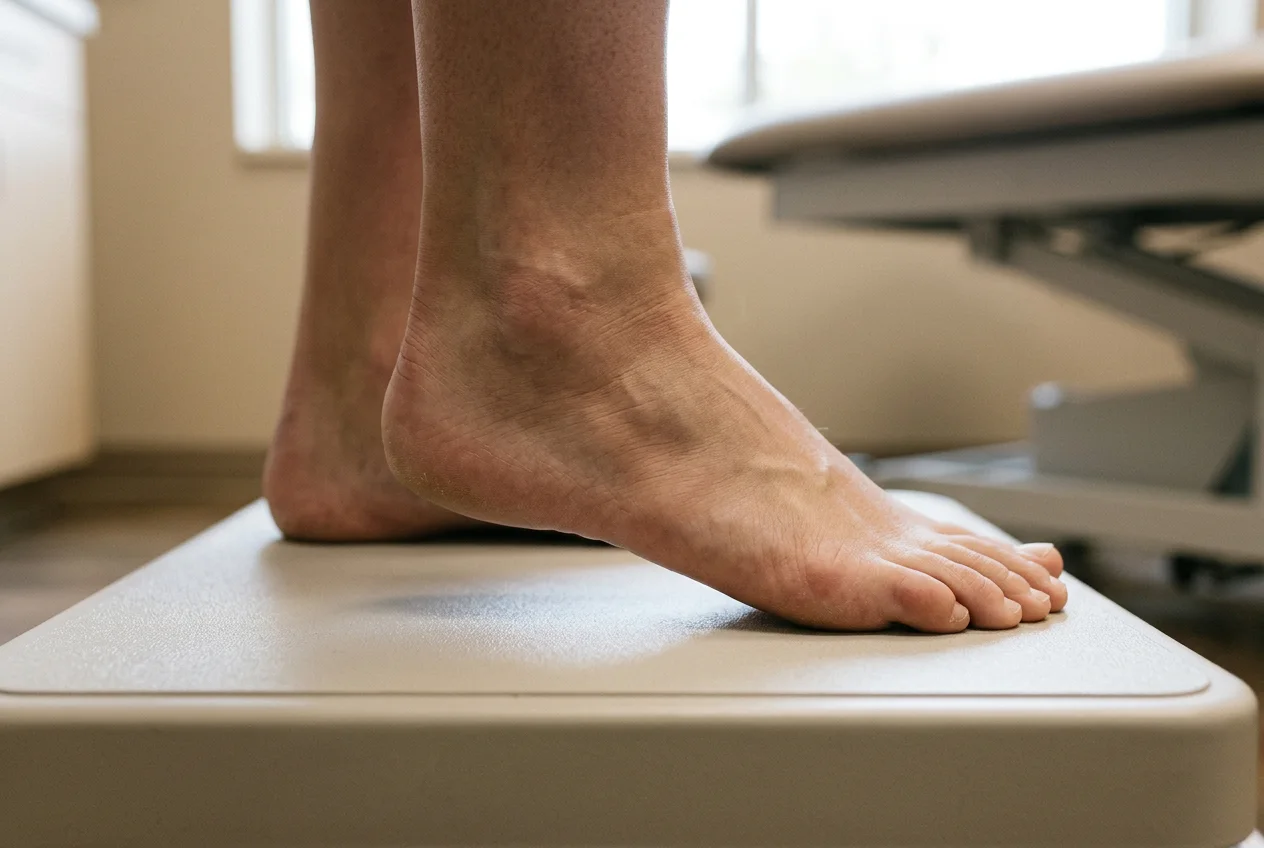
- A Inner arch
- B Heel region
- C Forefoot
Why can a high arch hurt?
With a high arch, also called pes cavus, less of the middle of your foot touches the ground when you stand. Your heel and the ball of your foot may take more pressure. A callus that keeps coming back in the same spot can be a clue. If your heel also tilts inward, more weight can shift onto the outer edge of your foot, making it easier to roll your ankle. [1]
If you have reduced feeling in your feet, don’t rely on pain to tell you there’s a sore spot. If you have diabetes, check your feet daily, including the soles. Ask your clinician to check a callus rather than trimming it yourself, and contact them right away about a blister or open sore, even if it doesn’t hurt. [1] [2]
When should I get checked?
Make an appointment if pain keeps returning, familiar shoes now rub, or you’ve had repeated sprains. If one arch is newly higher or either arch is getting higher over time, arrange an assessment rather than waiting for pain. An inherited nerve condition such as Charcot-Marie-Tooth disease is one possible cause, but arch height alone can’t tell us why a foot is changing. If your arch is getting lower instead, see our guide to progressive arch collapse. [1]
- New weakness or numbness: If it’s developing or worsening, or your toes have started catching because you can’t lift the front of your foot, contact a clinician today. If weakness or numbness has already been evaluated and hasn’t changed, keep your planned follow-up and report changes sooner. [1]
- Sudden stroke symptoms: Call 911 for sudden weakness or numbness on one side, even if it affects just one leg. Sudden facial drooping or trouble speaking is also enough to call. Don’t wait to see whether it passes. [3]
- Possible spinal nerve emergency: Go to an emergency department now if back or leg symptoms come with new numbness around the groin or buttocks, inability to empty your bladder, or loss of bladder or bowel control. [4]
- After an ankle injury: Get same-day care if you can’t put weight on the foot or swelling is rapidly increasing. If the ankle looks crooked, bone is showing, or your toes become pale, blue, or numb, seek emergency care now. Don’t drive yourself. [5]
What will we look for at your visit?
Bring the shoes you walk or work in most. We can compare their wear patterns with your calluses and sore spots. We’ll ask when things changed and whether anyone in your family has similar feet or walking difficulties. We’ll watch you stand and walk, check strength and feeling, and see how readily your heel and arch move. If needed, standing X-rays show how the bones line up under your weight. Unexplained weakness or loss of feeling may warrant nerve testing. [1]
Would shoes, inserts, or ankle support help?
For pressure or rubbing, start with fit. Look for cushioning and enough depth that the shoe doesn’t press on your toes or the top of your foot. Try any insert in the shoes you actually wear. In a trial of adults with high arches in both feet and persistent foot pain, those using custom orthotics reported modestly better pain relief and function after three months than those using sham inserts. That comparison doesn’t tell us whether custom inserts are better than a well-fitted ready-made pair. [1] [6]
For persistent instability after an ankle sprain, a physical therapist can choose strength and balance exercises you can do safely, then build toward a goal like walking the dog on uneven sidewalks. A brace may add support, but it doesn’t replace balance training. [7]
When would we consider surgery?
If pain or repeated sprains still limit walking despite changes in footwear, inserts, and rehabilitation, we may recommend a surgical evaluation. Depending on your alignment, a surgeon may reposition a bone, transfer a tendon, or fuse a damaged joint. Plan for at least six weeks without putting weight on the foot after a typical cavus reconstruction, sometimes longer. Full recovery can take about a year. Ask how you’ll manage stairs, travel to work, or get through a shift before scheduling surgery. [8]
Questions to bring to your visit
- What do my calluses and shoe wear tell you about where I put pressure?
- Does the way my toes catch warrant nerve testing?
- How will we know whether an insert or balance training is helping enough?
Learn More
- American Academy of Physical Medicine and Rehabilitation: Pes Cavus
- CDC: Your Feet and Diabetes
- CDC: Signs and Symptoms of Stroke
- American Association of Neurological Surgeons: Cauda Equina Syndrome
- UMass Memorial Health: Sprain or Broken Bone? When To Visit Urgent Care
- Burns et al.: Effective orthotic therapy for the painful cavus foot: a randomized controlled trial
- Martin et al.: Ankle Stability and Movement Coordination Impairments: Lateral Ankle Ligament Sprains Revision 2021
- American Orthopaedic Foot & Ankle Society: Cavus Foot Surgery Procedure & Recovery






 (310) 595-1030