
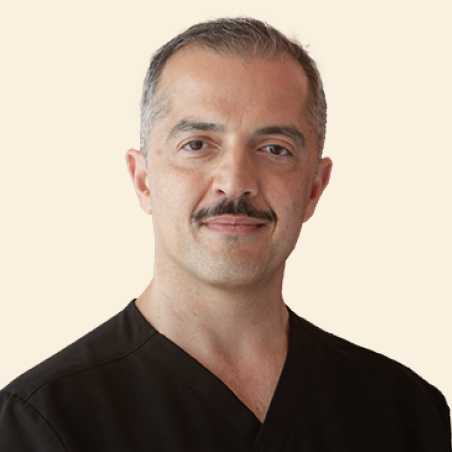
Evish Kamrava, MD
Physical Medicine and Rehabilitation, Pain Management
Book nowIf a stimulator trial made it easier to sleep, stand or finish a walk, the next decision is whether those gains are worth the commitment of an implant. At Commons Clinic, we review the trial with you, explain the operation and discuss how we’d check healing, function and device use over time. If the benefit changes later, we can help you decide what needs reassessment. [1, 2]
Book now(310) 437-7921
A spinal cord stimulator sends electrical pulses through leads near the spinal cord. In a permanent system, the leads and the pulse generator are placed under the skin, with the leads in the epidural space. The generator may be rechargeable. A controller lets you use the settings your clinical team has made available to you. Stimulation can help manage selected types of chronic pain. Its aim is to reduce the burden of pain so you can function more comfortably. [1, 2]
We discuss permanent implantation after a trial has shown a meaningful benefit. The trial gives you a chance to compare pain and function with your starting point. Also consider the operation and everyday equipment use. For some people the benefit changes over time, and care may involve adjusting settings or assessing whether the device still fits their goals. [1, 2]
Before surgery, tell us if your pain has changed since the trial or if you have had a new illness, skin problem or change in medication. After surgery, call the team promptly for fever, spreading redness, drainage, increasing pain at an incision, or an abrupt change in how stimulation feels. Get emergency care for new weakness, new numbness around the groin, or loss of bladder or bowel control. [2, 3]
We review what the trial changed, how much of your pain it affected and whether you could manage the equipment. We explain where the leads and generator may be placed, how anesthesia and recovery would work, and what to expect if you continue with other pain care. Risks include infection, bleeding, movement of the leads, equipment problems, and rare nerve injury. Ask what might require another procedure and how a revision or removal decision would be made. [1, 2]
Medicare coverage can apply when its clinical and documentation conditions are met. Rules can vary with your coverage and situation. Ask our scheduling team and your insurer about prior authorization and how the device, facility, physician and follow-up may be billed. [4]
Bring your trial notes and list the changes you want to keep. Tell us about planned imaging, upcoming travel and your usual work or caregiving activities. Ask about charging, storage and the device identification card. Before any MRI, tell the ordering clinician and imaging team the exact implanted system and components. MRI safety rules depend on the device and scan conditions. [1, 2]
Follow the written instructions for keeping the incisions clean and dry, checking the wounds and limiting bending, lifting or twisting as you heal. Ask your team when you may drive, return to work or restart therapy. Clearance depends on healing, the medications you take, how safely you can move and any device-specific driving instructions. [2]
At follow-up, tell us whether the activities that improved during the trial remain easier and how you are doing with the controller or charging. If the device feels different, stops helping or shows a warning, record when it changed and what you were doing. The care team can assess symptoms and decide whether a settings review, technical check, imaging or another evaluation is appropriate. Ask which office handles follow-up, how a device representative may be involved, and who to contact after hours. New pain or a sudden neurologic change needs medical assessment. [1, 2, 3]
Our fellowship-trained interventional pain specialist Evish Kamrava, MD includes spinal cord stimulator trials and implants in his practice. He can review your trial, discuss whether an implant fits your goals and help plan follow-up. We’ll confirm the clinician and facility for any procedure with you.
Physical Medicine and Rehabilitation, Pain Management
Book nowOur pain management team can help you reassess pain, function and the role of an implanted device in your longer-term treatment plan.
We see you for device consultation and follow-up planning in Westlake Village. We’ll confirm where you would go for an implant and which office to use for each follow-up visit. Book now or call (310) 437-7921.
Evish Kamrava, MD
Physical Medicine and Rehabilitation, Pain Management
Call us at (310) 437-7921.






 (310) 423-9834