Hip Resurfacing at Commons Clinic: Advanced Joint Preservation for Active Patients
Hip resurfacing at Commons Clinic preserves more bone than traditional hip replacement, reshaping the femoral head and hip socket with smooth metal implants. Ideal for younger, active patients, this hip resurfacing procedure offers stability, mobility, and reduced dislocation risk. Explore hip resurfacing benefits, risks, metal ions, and hip resurfacing alternatives in consultation.
What Is Hip Resurfacing and How Is It Different From Total Hip Replacement?
Hip resurfacing is a hip joint resurfacing technique that preserves more bone than total hip replacement. Instead of removing the entire femoral head, the surgeon reshapes it and caps it with a smooth metal implant while placing a metal cup on the socket side. This hip resurfacing procedure can relieve hip pain, maintain natural biomechanics, and help younger patients stay active. To learn if hip resurfacing surgery is right for you, schedule a consultation and review your options.
How hip resurfacing surgery works: preserving more natural bone and hip joint structure
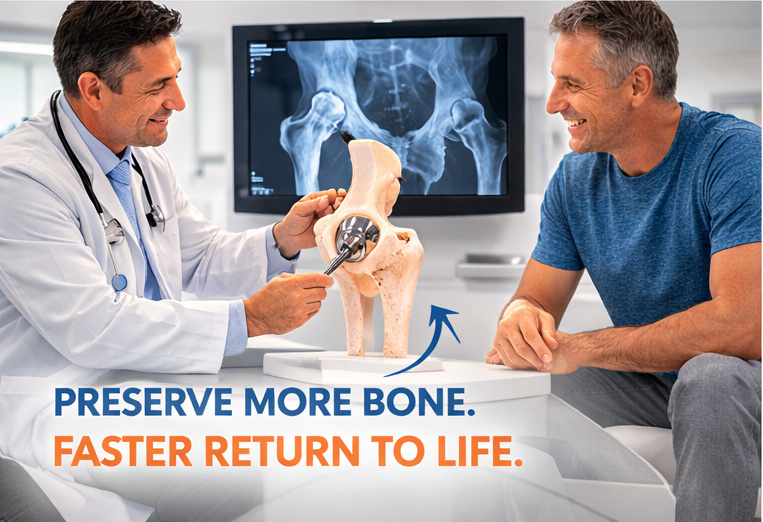
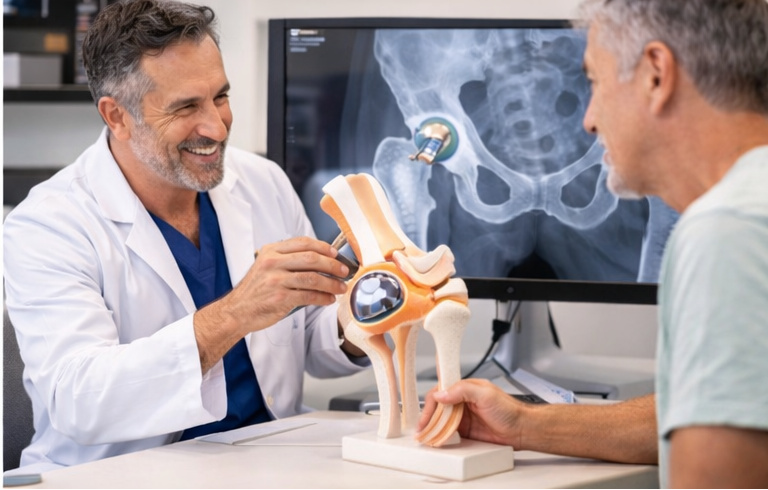
Hip resurfacing reshapes the natural femoral head rather than removing it. The surgeon caps the femoral head with a smooth metal implant and places a metal cup in the hip socket. This technique preserves more natural bone and maintains the structure of the hip joint while restoring smoother movement.
Hip resurfacing vs. total hip replacement: key differences, benefits, and trade offs
Hip resurfacing and total hip replacement both treat hip pain caused by joint damage, but the procedures differ in technique and implant design. Total hip replacement removes the femoral head and replaces it with an artificial joint component. Hip resurfacing preserves the natural femoral head and caps it with a metal implant while resurfacing the socket.
Bone preservation, implant design, and hip function after surgery
Because hip resurfacing preserves the femoral head, it maintains more natural bone and joint mechanics. The resurfacing implant includes a larger ball design that can improve hip stability and reduce the risk of dislocation while supporting smooth joint motion.
Who Is a Good Candidate for Hip Resurfacing?
Ideal patients for hip resurfacing: age, activity level, and bone quality
Ideal patients for hip resurfacing are younger, active patients with good bone quality who want bone preservation and faster hip resurfacing recovery. This procedure caps the natural femoral head and resurfaces the hip socket, so strong femoral bone is essential. If hip pain limits work or sports, surgeons review imaging and explain hip resurfacing risks.
Conditions treated with hip resurfacing: osteoarthritis, avascular necrosis, and hip dysplasia
Hip resurfacing is often considered for patients with hip osteoarthritis, avascular necrosis, and certain forms of hip dysplasia that damage the joint and cause persistent pain or limited mobility.
Benefits and Risks of Hip Resurfacing Surgery
Hip resurfacing benefits: mobility, stability, and active lifestyle return
Hip resurfacing surgery can feel like getting your life back. This hip resurfacing procedure preserves more natural bone than traditional total hip replacement and keeps your femoral head, a key advantage for younger patients who may need future joint replacement. A resurfacing implant with a much larger ball and smooth metal cap often improves stability, hip function, and mobility, with a lower dislocation rate than many standard hip implants. After hip resurfacing recovery, many patients return to sports. Book your Commons Clinic consultation today.
Hip resurfacing risks, metal ions, and how Commons Clinic manages complications
Hip resurfacing carries potential risks, including implant wear, metal ion exposure, and rare complications related to bone strength or implant positioning. Careful patient evaluation and surgical planning help reduce these risks, and patients receive clear guidance about monitoring and follow up after surgery.
Monitoring metal ion levels, imaging, and follow up after hip resurfacing
Follow up appointments may include imaging, clinical evaluation, and monitoring when appropriate to confirm that the hip resurfacing implant continues to function properly.
Hip resurfacing alternatives when you are not a candidate
If hip resurfacing is not recommended, surgeons may discuss other options such as total hip replacement or additional joint treatments designed to relieve hip pain and restore mobility.
What to Expect From the Hip Resurfacing Procedure at Commons Clinic
Your evaluation: diagnostics, imaging, and personalized hip resurfacing treatment planning
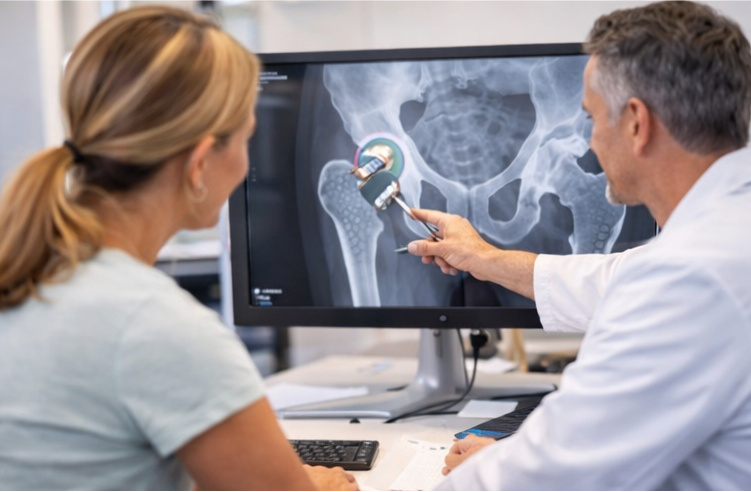
Commons Clinic begins with advanced diagnostics and imaging to assess your hip joint, femoral head, hip socket, and bone health. Your orthopaedic surgeon reviews symptoms, activity level, osteoarthritis, and prior hip replacement. Together, you compare hip resurfacing procedure options, implant design, hip resurfacing benefits, hip resurfacing risks, complications, and recovery.
Hip resurfacing surgery day: anesthesia, surgical technique, and hospital stay
On the day of surgery, the orthopaedic team prepares you for the hip resurfacing procedure with anesthesia and surgical planning. The surgeon reshapes the femoral head, places the metal cap implant, and positions the metal cup in the hip socket. After surgery, patients begin early mobility and recovery planning.
Hip Resurfacing Recovery, Results, and Long Term Outcomes
Hip resurfacing recovery timeline: pain management, rehabilitation, and return to sports
Hip resurfacing recovery starts immediately after surgery with nerve blocks, anti inflammatory drugs, and targeted pain medication so most patients stand and walk the same day. Our orthopaedic surgeons encourage safe early weight bearing on your resurfacing hip to reduce the risk of blood clots and protect bone. Over the first 2 to 6 weeks, rehabilitation targets walking, range of motion, and strengthening while protecting the femoral neck and hip joint resurfacing. By 3 months, many active patients return to cycling, swimming, and controlled sports.
How long does a hip resurfacing last? Longevity, revision surgery, and survivorship data
Hip resurfacing implants are designed to provide long lasting joint support. Implant longevity depends on bone quality, surgical technique, activity level, and long term monitoring by the orthopaedic team.
Real patient stories and satisfaction after hip resurfacing at Commons Clinic
Many patients report meaningful improvement in mobility and quality of life after hip resurfacing surgery, especially those who want to return to active lifestyles and sports.
From painful hip arthritis to active lifestyle: case examples from our Los Angeles patients
Patients treated at Commons Clinic often share stories of returning to walking, cycling, recreational sports, and everyday activities that were limited by hip pain before surgery.
Why Choose Commons Clinic for Hip Resurfacing in Los Angeles?
Commons Clinic focuses on hip resurfacing surgery for younger, active patients seeking powerful hip pain relief and bone preservation without jumping straight to total hip replacement. Our hip resurfacing procedure uses advanced imaging, modern hip resurfacing implants, and a precise hip resurfacing technique to protect the femoral head and femoral neck and support sports. You get clear guidance on hip resurfacing benefits, hip resurfacing risks, hip resurfacing complications, and hip resurfacing alternatives so you choose confidently.
Expert hip resurfacing surgeons, advanced imaging, and coordinated orthopedic care
Our orthopaedic specialists combine surgical expertise, imaging technology, and rehabilitation planning to support successful hip resurfacing outcomes.
Locations, insurance information, and how to schedule a hip resurfacing consultation
Patients can schedule a consultation with the Commons Clinic team to evaluate hip pain, review imaging, and discuss whether hip resurfacing surgery is appropriate.
Call today or request an appointment online to discuss hip resurfacing with our team
A consultation helps you understand your treatment options, review risks and benefits, and create a personalized plan focused on restoring mobility and long term hip health.










 (310) 574-0367