
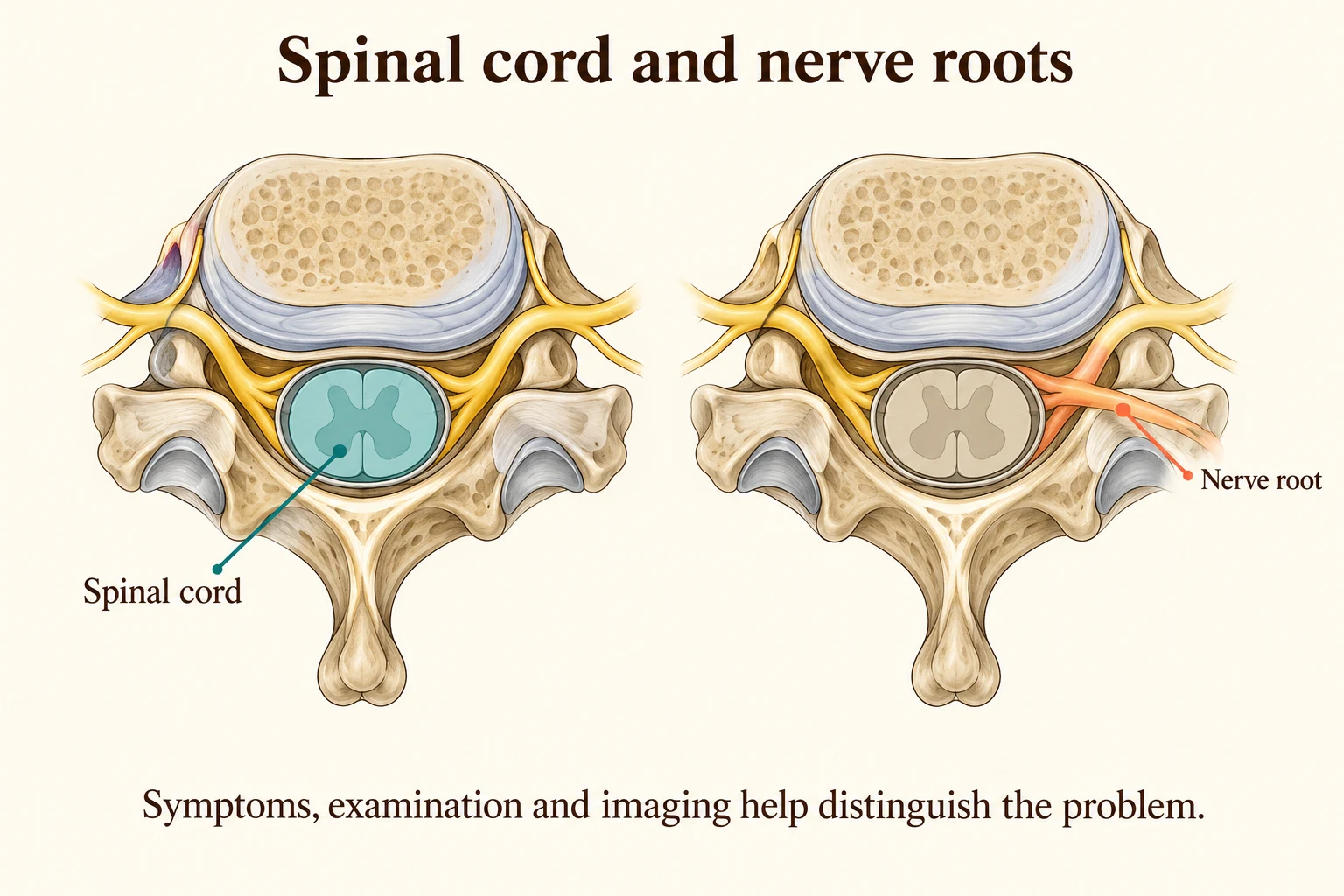
Original educational illustration. Matched cervical spine cross-sections highlight the central spinal cord and an exiting nerve root.
Cord and nerve-root problems can have different implications. Symptoms, examination and imaging are considered together; this orientation drawing cannot diagnose the source of numbness or weakness.
Illustration references: Reference 1 · Reference 2
1. Recognize the question behind the symptoms
Cervical myelopathy describes a problem with spinal cord function in the neck. Degenerative changes can narrow the space for the cord. Symptoms may include reduced hand dexterity, weakness, numbness, or difficulty with balance and walking; neck pain is not the only issue to discuss.
These symptoms can have other causes as well. If you notice new or worsening changes, contact a clinician promptly rather than waiting for a routine pain visit. Describe the change plainly: dropping objects, trouble using utensils, or feeling less steady on stairs. Those details help the team decide how quickly you need assessment.
NASS distinguishes cervical stenosis, the narrowing, from myelopathy, the effect on spinal cord function. Its patient material notes that hand clumsiness and walking difficulty can matter even when neck pain is not the main complaint. Tell us about buttons, handwriting, dropped objects, balance, and any progression. Ask which changes the examination can measure and how urgently they need assessment. A quiet pain score should not replace a careful discussion of what your hands and legs can do.
Sources: Cervical Spondylotic Myelopathy (Spinal Cord Compression) · Cervical Stenosis & Myelopathy
2. Bring a timeline of change
Write down when you first noticed a difference and how it has evolved. Explain whether the change is intermittent or persistent, whether you have fallen, and how it affects everyday tasks. A family member may have noticed changes you had not connected with a neck problem.
Bring prior imaging and reports, a medicine list, and information about other neurologic or orthopedic conditions. Ask what records the office needs before the appointment. Do not wait to assemble a perfect file if symptoms are progressing; contact the team and explain what is happening so they can advise on the next step.
Sources: Cervical Spondylotic Myelopathy (Spinal Cord Compression)
3. Ask how the examination and imaging fit
Ask which findings suggest spinal cord involvement and which may point to another explanation. Imaging can show compression, while the examination helps assess function. A clear explanation should connect the two rather than rely on a severe-sounding phrase in a report.
Ask about severity, whether there is evidence of progression, and what remains uncertain. If additional testing is proposed, ask what question it answers. You can request a drawing or ask the clinician to show the relevant area on the images. Understanding the location and functional concern makes the treatment discussion less abstract.
Johns Hopkins distinguishes spinal cord problems from compression of a nerve root and describes using examination with appropriate imaging or other tests to clarify the diagnosis. Ask whether your symptoms suggest cord involvement, a nerve problem, or a different condition. If treatment is recommended, clarify whether the aim is to prevent further decline, improve existing difficulty, or both. Discuss what recovery cannot be predicted and what changes should trigger urgent contact. You should leave knowing the follow-up plan and the reason for its timing.
Sources: Cervical Spondylotic Myelopathy (Spinal Cord Compression) · Myelopathy
4. Understand why timing can matter
A discussion of myelopathy should address the risk of further loss of function as well as relief of symptoms. Surgical planning may aim to protect the cord and limit deterioration; the amount of recovery after treatment can vary. Ask which goal is most relevant to you and what cannot be promised.
If observation is recommended, ask how you will be monitored and which changes should lead to earlier review. If surgery is recommended, ask why that timing is appropriate. Do not interpret a manageable pain level as proof that a cord problem is mild or safe to ignore.
Sources: AAOS OrthoInfo: Surgery for Cervical Spondylotic Myelopathy
5. Compare the proposed plan in detail
If an operation is discussed, ask why the surgeon favors the proposed access and whether decompression, fusion, or another approach is needed. The number of levels, alignment, and overall health may influence the plan. Ask what alternatives were considered and why they fit less well.
Talk about daily life during recovery: walking safety, help at home, hand function, driving, work, and rehabilitation. Ask who will reassess neurologic function and how progress will be recorded. Obtain clear urgent-contact instructions, particularly for rapidly worsening weakness, major walking changes, or new bowel or bladder symptoms.
Dr. Brandon Ortega and Dr. Hyun Bae are part of our spine team, with clinical interests that include cervical procedures and motion-preserving approaches. Your consultation can establish which expertise and treatment options fit your findings.
Bring the tasks you most want to protect back into the conversation, whether that is walking safely or continuing detailed hand work. Ask the clinician to summarize what is known, why the recommended timing makes sense, and what happens next. If a partner or caregiver is involved, invite them to hear the plan with you. Leave knowing which changes should prompt a call and how the team will monitor your function.
Sources: Cervical Spondylotic Myelopathy (Spinal Cord Compression)
Make the most of your visit
Questions to bring to your consultation
Choose the questions that matter most to you. Bring them along, and ask us to explain anything that is unclear.
- Do my symptoms and examination suggest spinal cord involvement?
- What else could explain my hand or balance changes?
- How severe is the problem, and is there evidence that it is progressing?
- Is the main treatment goal improvement, preventing deterioration, or both?
- Why do you recommend this timing for treatment or observation?
- Which changes should prompt urgent assessment?
- If surgery is proposed, why this approach and number of levels?
- How will you track my walking, hand function, and recovery afterward?
Sources & further reading
- Cervical Spondylotic Myelopathy (Spinal Cord Compression)AAOS OrthoInfo
- Cervical Stenosis & MyelopathyNorth American Spine Society
- MyelopathyJohns Hopkins Medicine
- AAOS OrthoInfo: Surgery for Cervical Spondylotic MyelopathyAmerican Academy of Orthopaedic Surgeons
We use these medical sources to help explain your options and prepare you for a conversation with our team. Our guides feature our own clinicians; patient reviews describe individual experiences.







 (310) 595-1030