
ACL Rehab Phase 6 – Monitored Return to Sport (Month 6 and Beyond)
What you see in this video
The final ACL video takes the series onto the field for monitored return-to-sport drills. It opens with walking lunges that add rotation, an overhead reach and changes in step direction. The demonstrator then moves around a square of four cones. In one chapter, the sides of the square call for shuffling, running forward and backpedaling. In the next, running the box introduces a planted turn at the corner.
Watch the wide receiver drill for the difference between turning off a planted foot and using several short steps to slow down before the cut. The figure-eight chapter then shows the cone pattern in both offensive and defensive versions. Seeing the same route with forward travel and backward footwork makes the difference easier to follow.
The defensive back cone drill finishes the session. The demonstrator accelerates toward a marker, brakes on a designated leg and retreats, then repeats the change of direction at different distances. The instructor closes the series by returning to the role of ongoing strength and conditioning. These field drills give you and your therapist specific movements to discuss when planning a monitored return to your sport.
Revisit any phase in the ACL rehab video series.
Phase description
Month 6+
Cones
Increase the speed, build endurance and work on changing directions.
ACL return-to-sport testing: What does clearance mean in Phase 6?
Updated
After anterior cruciate ligament (ACL) reconstruction, clearance tells you which activity your care team has approved. Readiness is how well you can handle what that activity asks of you. You might be cleared to pass a soccer ball with teammates while scrimmages are still off the plan. A pain-free jog is encouraging. It leaves a different question open: Can you slow down, turn and trust your knee when another player steps into your path? Your surgeon and physical therapist use your exam, test results and experience in practice to help answer that with you. [1] [2]
“Month 6 and beyond” identifies where this video fits in the rehab series. Reaching that month does not clear you to try the field drills on your own. Ask which parts apply to you now. The Commons Clinic return-to-play clearance guide can help you prepare for that conversation. [1]
From joining practice to playing at your previous level
The Panther Symposium consensus describes three stages. Here’s what they might look like for a recreational soccer player. The decisions about practice and competition are made with your care team and revisited as the demands change. [1]
| Milestone | What it might look like | Question to settle |
|---|---|---|
| Return to participation | You join a planned passing drill and sit out the scrimmage. | Which parts of practice can I join today? |
| Return to sport | You play in your usual league again, with an agreed role as you work back toward your previous level. | How did my knee respond to full practice before this game? |
| Return to performance | You can play your usual position at your previous pace and skill level, including late in a match. | Can I still brake and change direction with control when I’m tired? |
What does ACL return-to-sport testing measure?
Your clinician can check for swelling, measure how far your knee bends and straightens, and examine its stability. Your therapist can measure the strength of the muscles at the front and back of your thigh and watch how you land or slow down. Ask which finding matters most for your next activity. A sharp turn on a tennis court asks something different of your knee than a straight run on a track. [1] [2]
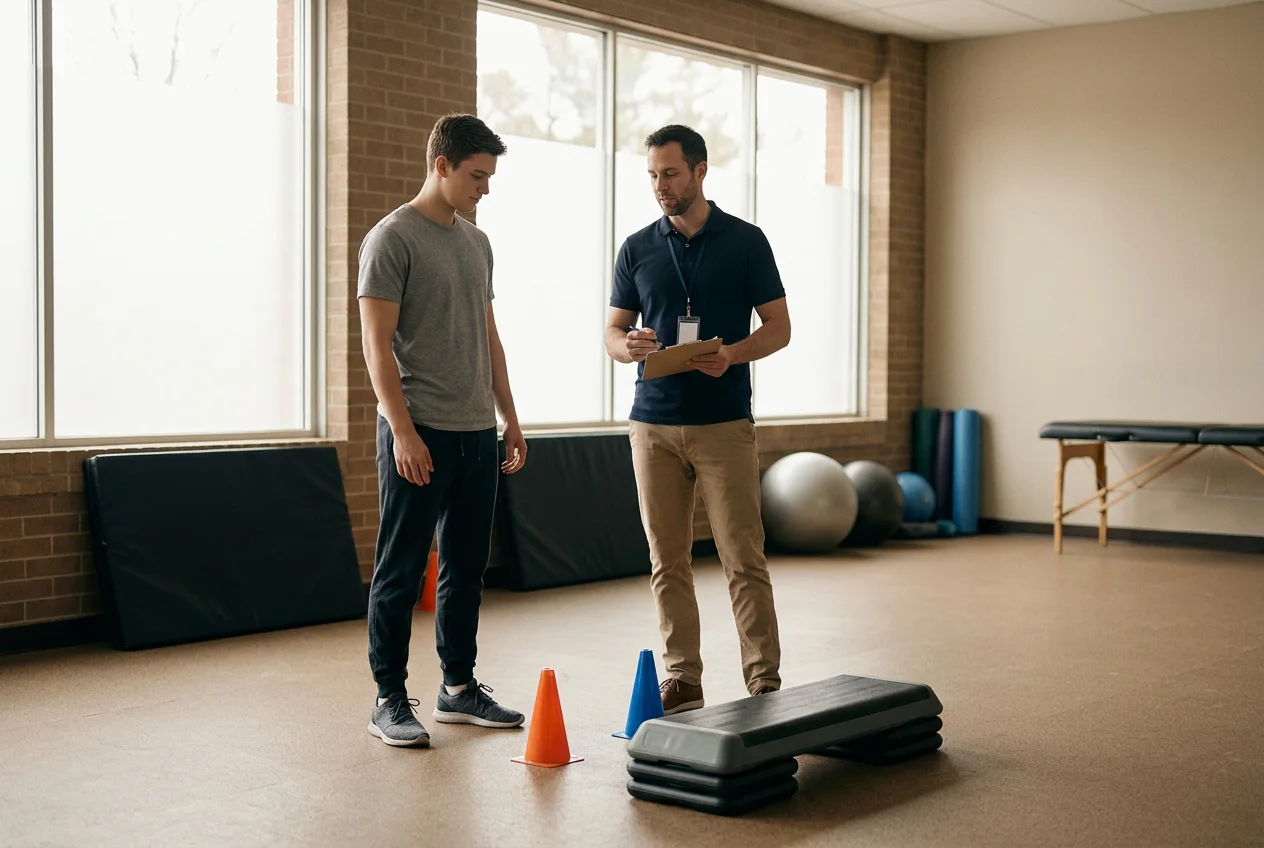
The Aspetar guideline gives one example for professional athletes preparing to resume club training. Its proposed criteria include full knee motion, no pain or swelling, and a stable knee on examination. For sports with demanding pivots, it proposes equal strength in both legs on a machine test of the quadriceps and hamstrings. These are expert targets for a particular group and stage. No test can guarantee that an individual will avoid another injury. [2]
What does a 90% symmetry score tell me? On a strength test, it means the operated leg produced 90% as much force as the other leg. If the other leg has also lost strength, the comparison can make recovery look further along than it is. In a study of 70 athletes, averaging about 27 years of age, 40 met a 90% symmetry target for front-of-thigh strength and four hop tests at six months. Only 20 met the target when researchers used the other leg’s presurgery results for comparison. Ask for each leg’s actual results and how they have changed. [3]
How you move matters, too. In a study of 26 male athletes already cleared after reconstruction, the two legs hopped nearly the same distance. On landing, the operated knee absorbed less of the load and the hip did more of the work. That’s a reason to ask what your therapist saw during the landing as well as how far you went. [4]
How do timing, age and graft type affect the decision?
The graft, the tissue used to rebuild your ACL, needs time to heal. A strength test cannot measure exactly how far that healing has progressed. In the Delaware–Oslo study, participants averaged 24 years old. Among 106 people who played pivoting sports, each month they delayed returning, up to nine months after surgery, was associated with fewer knee reinjuries. Some athletes who returned later were still reinjured. [1] [5] A later study looked specifically at male athletes who completed rehab, met discharge criteria and returned to pivoting sports. It found no clear difference in new knee injury risk before versus after nine months when injuries from direct contact were excluded. Neither study sets a personal return date, particularly for an older recreational player or someone whose goal is hiking. [5] [6]
Graft choice can also help explain a test result. In a trial of adults ages 18 to 45, those who received a graft from their own patellar tendon had a larger gap between legs in quadriceps strength during the first year. Those with a hamstring tendon graft had a larger gap in hamstring strength. The trial excluded people who also had a meniscus repair. If you had both procedures, ask which restrictions still apply and review the guide to combined ACL and meniscus recovery. [7]
Plan a practice that answers your next question
In the video above, watch how the demonstrators slow down before changing direction. A therapist might first watch a turn you know is coming, then later assess a turn prompted by a partner’s signal. A noncontact team drill could follow when your team agrees you’re ready. Use the video to discuss that progression. If you’re still preparing for field work, you can revisit Phase 5: Return to Sport Prep. [1] [2]
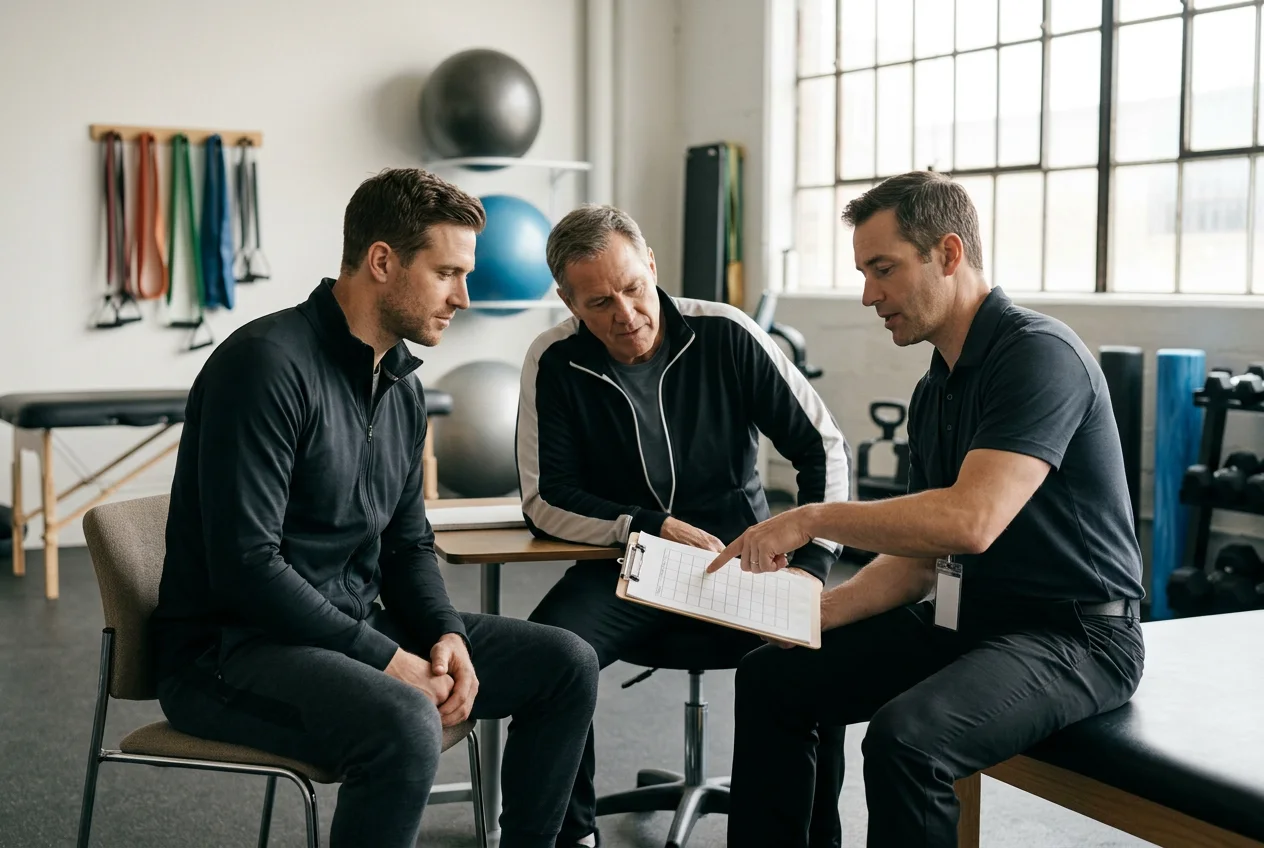
Why am I still scared? can be a hard question to answer. Try Which moment makes me hesitate, and how could we work on it together? It might be the instant a defender approaches from the side. Your therapist may use the ACL–Return to Sport after Injury questionnaire (ACL-RSI) to discuss confidence and fear of reinjury alongside your physical results. [1] [2]
Include the rest of your day in that plan. Tell your team if practice follows a warehouse shift, or if your desk job includes a commute with station stairs. If you live alone in a walk-up or help someone transfer from a chair, ask how to plan for those tasks on practice days. Walking down your own stairs comfortably may be the milestone you want to work on first.
What if swelling comes back?
If your knee swells again, gives way or becomes harder to straighten, stop the session and contact your physical therapist or surgeon before your next practice. Get assessed promptly if you felt a pop, cannot put weight on the leg or the knee locks. Describe what changed during practice and what you noticed later. [1] [2]
Example practice log: Planned passing drill after work. No pain during practice. Knee looked puffy that evening. Stairs felt stiffer the next morning. Skipped the next field session and contacted the therapist about the swelling.
Get medical help right away for new swelling, pain, warmth or tenderness in one leg or arm. Call 911 for sudden unexplained shortness of breath, chest pain, coughing up blood or fainting. These can be signs of a clot in the lungs. [8]
Questions to ask your physician
- What am I cleared to do at the next practice, and what should I sit out?
- Which result would change your recommendation about contact or competition?
- How do my graft, any meniscus repair and my own strength measurements affect that decision?
- If swelling returns or I hesitate during a turn, whom should I contact and when should we reassess?
Learn More
- Meredith SJ, et al. Return to Sport After Anterior Cruciate Ligament Injury: Panther Symposium ACL Injury Return to Sport Consensus Group (2020)
- Kotsifaki R, et al. Aspetar clinical practice guideline on rehabilitation after anterior cruciate ligament reconstruction (2023)
- Wellsandt E, Failla MJ, Snyder-Mackler L. Limb Symmetry Indexes Can Overestimate Knee Function After Anterior Cruciate Ligament Injury (2017)
- Kotsifaki A, et al. Single leg hop for distance symmetry masks lower limb biomechanics: time to discuss hop distance as decision criterion for return to sport after ACL reconstruction? (2022)
- Grindem H, et al. Simple decision rules can reduce reinjury risk by 84% after ACL reconstruction: the Delaware–Oslo ACL cohort study. British Journal of Sports Medicine (2016)
- Kotsifaki R, et al. Is 9 months the sweet spot for male athletes to return to sport after anterior cruciate ligament reconstruction? (2025)
- Cristiani R, et al. Autograft type affects muscle strength and hop performance after ACL reconstruction (2021)
- Centers for Disease Control and Prevention. About Venous Thromboembolism (Blood Clots) (2025)






 (562) 348-4588