
The Ultimate Guide to PRP Therapy for Joint and Tendon Pain
Clinically reviewed by Evish Kamrava, MD — Fellowship-trained physical medicine, rehabilitation, and interventional pain specialist at Commons Clinic Updated: March 2026 | Read time: 15 minutes
Your Body Already Knows How to Heal — It Just Needs Reinforcements
The idea behind platelet-rich plasma therapy is elegantly simple: your blood already contains the growth factors and signaling proteins your body uses to repair tissue. PRP concentrates those repair agents and delivers them precisely where you need them most.
If you're living with a nagging tendon injury that won't resolve, early-stage joint arthritis that's limiting your activity, or a chronic pain condition that hasn't responded to rest and physical therapy, PRP represents a growing category of treatment that harnesses your own biology rather than relying solely on medications or surgical intervention.
PRP therapy has moved from the experimental fringes to the mainstream of sports medicine and orthopedic practice. Professional athletes have used it for over a decade. The evidence base continues to expand. And for many patients, it fills a critical gap between "keep waiting" and "go to surgery."
What Is PRP Therapy?
Platelet-rich plasma (PRP) therapy is a regenerative medicine treatment that uses a concentrated preparation of your own platelets — delivered by injection — to promote healing in damaged tendons, ligaments, muscles, and joints.
Here's how it works at the cellular level: Platelets are small blood cells best known for clotting, but they also carry hundreds of bioactive proteins called growth factors. When platelets are activated at a site of injury, they release these growth factors — including platelet-derived growth factor (PDGF), transforming growth factor (TGF), and vascular endothelial growth factor (VEGF) — which stimulate tissue repair, reduce inflammation, and recruit stem cells to the area.
PRP simply concentrates this natural process. A standard preparation contains three to five times the normal platelet concentration found in whole blood, delivering a supraphysiological dose of growth factors directly to the injured tissue.
When to Consider PRP Therapy
You May Be a Candidate If:
- You have a chronic tendon injury (tendinopathy) that hasn't resolved with rest, physical therapy, and anti-inflammatory measures — common sites include the Achilles tendon, patellar tendon, rotator cuff, tennis elbow (lateral epicondyle), and golfer's elbow (medial epicondyle)
- You have mild to moderate knee osteoarthritis and want to delay or avoid joint replacement
- You have a partial ligament tear or muscle strain that is healing slowly
- You have plantar fasciitis that hasn't responded to conservative treatment
- You want a biologic treatment option that uses your own tissue rather than synthetic medications
When PRP May Not Be the Right Fit
PRP works best for conditions with an active inflammatory or degenerative component in tissue that has the capacity to heal. It is less effective for advanced bone-on-bone arthritis (where the cartilage is fully destroyed), complete ligament tears that require surgical reconstruction, and pain without a clear tissue-level diagnosis. Your physician will evaluate whether your condition has the biological substrate for PRP to make a meaningful difference.
"PRP is a tool, not a miracle," says Dr. Evish Kamrava, a fellowship-trained interventional pain and rehabilitation specialist at Commons Clinic. "When the diagnosis is right and the expectations are realistic, it can be remarkably effective. The key is patient selection — understanding who benefits most and being honest about limitations."
How PRP Therapy Works
The Procedure
PRP is performed in a single office visit, typically taking 30 to 60 minutes from start to finish. No general anesthesia is required.
Step 1 — Blood draw. A small volume of blood (typically 30 to 60 mL, roughly two to four tablespoons) is drawn from your arm, just like a routine blood test.
Step 2 — Centrifugation. The blood is placed in a specialized centrifuge that spins at high speed, separating the components by density. The platelet-rich layer is isolated from the red blood cells and platelet-poor plasma.
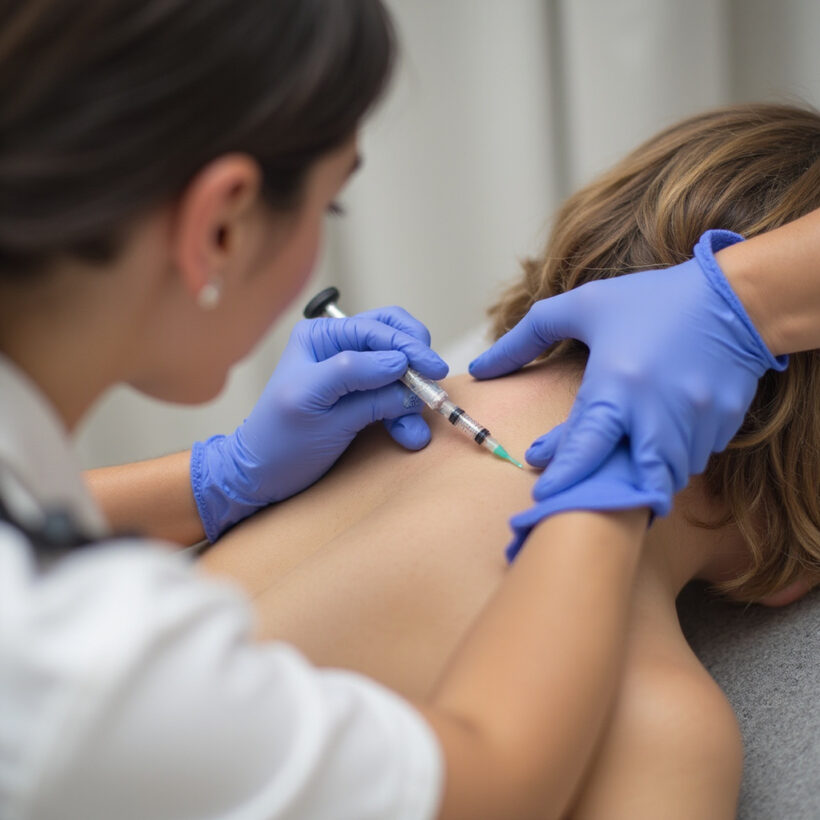
Step 3 — Injection. The concentrated PRP is injected directly into the target tissue using ultrasound guidance. Ultrasound allows the physician to visualize the needle entering the exact area of damage — whether that's a degenerative tendon, an arthritic joint, or a partial tear — ensuring the growth factors are delivered where they will have the greatest effect.
Step 4 — Recovery. You can go home immediately. Most patients resume normal daily activities within 24 to 48 hours. There is typically a brief period of increased soreness at the injection site (a sign that the inflammatory healing response has been activated), followed by gradual improvement over the following weeks.
What Happens After Injection
The PRP activates a three-phase healing response:
Phase 1 (Days 1 to 7) — Inflammatory response. The concentrated growth factors trigger a controlled inflammatory reaction at the injection site. This is the body's natural first step in tissue repair. You may experience increased soreness during this phase.
Phase 2 (Weeks 1 to 4) — Proliferative response. New collagen fibers and blood vessels form. The damaged tissue begins to remodel. Pain typically begins to improve during this phase.
Phase 3 (Months 1 to 3) — Maturation. The new tissue matures and strengthens. Maximum benefit is typically realized between six and twelve weeks after injection. Physical therapy during this phase is critical to ensure the regenerating tissue develops the strength and flexibility needed for function.
Conditions Treated with PRP at Commons Clinic
| Condition | Location | Evidence Level | Expected Outcome |
|---|---|---|---|
| Tennis elbow (lateral epicondylitis) | Elbow | Strong | Significant pain reduction and functional improvement in 70% to 80% of patients |
| Knee osteoarthritis (mild to moderate) | Knee | Strong | Pain relief and functional improvement lasting 6 to 12 months; may delay need for replacement |
| Achilles tendinopathy | Ankle | Moderate to strong | Improved pain and function; particularly effective for chronic cases that failed PT |
| Patellar tendinopathy (jumper's knee) | Knee | Moderate | Pain reduction and return to activity in athletes and active patients |
| Rotator cuff tendinopathy (partial tear) | Shoulder | Moderate | Reduced pain, improved function; may promote healing of partial-thickness tears |
| Plantar fasciitis | Foot | Moderate | Pain relief comparable to or exceeding cortisone injection, with more durable effect |
| Golfer's elbow (medial epicondylitis) | Elbow | Moderate | Similar response profile to tennis elbow |
| Hamstring tendinopathy | Hip/thigh | Emerging | Promising results for chronic proximal hamstring tendinopathy |
PRP vs. Cortisone Injections
This is the question patients ask most often, and the answer matters.
| Factor | PRP | Cortisone |
|---|---|---|
| Mechanism | Stimulates tissue repair through concentrated growth factors | Suppresses inflammation (anti-inflammatory steroid) |
| Onset of relief | Gradual — peak benefit at 6 to 12 weeks | Rapid — often within days |
| Duration of relief | 6 to 12 months or longer; may produce lasting tissue remodeling | Weeks to months; effect diminishes with repeat injections |
| Effect on tissue | Promotes healing and regeneration | May weaken tendons and cartilage with repeated use |
| Number of treatments | 1 to 3 injections total | Generally limited to 3 to 4 per year per site |
| Insurance coverage | Often not covered; self-pay | Typically covered |
| Best for | Chronic tendinopathy, early arthritis, patients seeking biological healing | Acute flares, diagnostic confirmation, patients needing immediate relief |
"Cortisone is like hitting the mute button on pain — effective and fast, but the underlying problem is still there," says Dr. Kamrava. "PRP is more like turning up the volume on your body's repair system. It takes longer, but the goal is actual tissue improvement, not just symptom suppression."
Recovery After PRP
Day 1 to 3: Expect increased soreness at the injection site. Avoid anti-inflammatory medications (ibuprofen, naproxen) for at least two weeks — these can blunt the inflammatory healing response that PRP is designed to trigger. Acetaminophen (Tylenol) and ice are acceptable for pain management.
Week 1 to 2: Gradual activity resumption. Most patients return to desk work and light daily activities immediately. Avoid strenuous use of the treated area.
Week 2 to 6: Guided physical therapy begins. The focus is on progressive loading of the treated tissue to stimulate remodeling and strengthening. Your therapist will design a protocol specific to the tissue treated.
Week 6 to 12: Peak benefit period. Many patients report significant improvement in pain and function during this window. Return to sports and high-demand activities is typically cleared in this timeframe for tendon injuries.
Month 3 to 6: Continued maturation of regenerated tissue. Some patients receive a second injection at the six-week to three-month mark if the response to the first injection was partial but positive.
Benefits and Risks
Benefits
PRP uses your own blood — eliminating the risk of allergic reaction or rejection. It addresses the underlying tissue damage rather than masking symptoms. Published evidence supports its efficacy for chronic tendinopathy and mild to moderate knee osteoarthritis, with effect sizes comparable to or exceeding cortisone in many studies. No general anesthesia, no incisions, no downtime from work.
Risks
Risks are minimal. The most common is temporary increased pain at the injection site (expected and usually self-limiting within three to five days). Infection is extremely rare (less than 0.01%). Because PRP uses your own blood, there is no risk of disease transmission or allergic reaction. Some patients experience no improvement — particularly those with advanced arthritis or conditions that lack the biological capacity for regeneration.
Why Patients Choose Commons Clinic for PRP Therapy
Dr. Evish Kamrava is a fellowship-trained specialist in physical medicine, rehabilitation, and interventional pain management at Commons Clinic. His approach integrates regenerative treatments like PRP into a broader care plan that includes physical therapy, biomechanical assessment, and — when necessary — coordination with the surgical team.
What sets Commons Clinic apart:
- Ultrasound-guided precision. Every PRP injection at Commons Clinic is performed under direct ultrasound visualization, ensuring the concentrated platelets reach the exact target tissue.
- Integrated with the broader care team. If PRP is not sufficient and surgical intervention becomes appropriate, the transition to a fellowship-trained orthopedic surgeon is seamless — no new referrals, no starting over.
- Conservative care philosophy. Commons Clinic's care model begins with non-invasive and minimally invasive options before considering surgery. PRP, physical therapy, and guided rehabilitation are core offerings — not afterthoughts.
- Physical therapy coordination. Post-PRP rehabilitation is designed collaboratively between Dr. Kamrava and the physical therapy team to maximize the benefit of the biologic treatment.
- Clinic locations across Los Angeles. Santa Monica, Marina del Rey, Beverly Hills, and Long Beach.
- Virtual consultations nationwide. Initial consultations via telehealth for patients outside Los Angeles who want to understand whether PRP is appropriate for their condition.
Frequently Asked Questions
How much does PRP cost?
PRP therapy is generally not covered by insurance and is typically a self-pay procedure. Costs at Commons Clinic vary by the complexity of the condition and the number of injection sites. Your care team will provide a transparent cost estimate during your initial consultation.
How many PRP injections will I need?
Most patients receive one to three injections. Many conditions respond to a single injection. If the response is partial but positive, a second injection may be recommended at six to twelve weeks. A third injection is less common and is reserved for cases with incremental improvement.
Is PRP FDA-approved?
The FDA regulates the devices used to prepare PRP (the centrifuge and collection kits) but does not approve or disapprove PRP therapy itself as a drug. PRP is classified as a point-of-care autologous blood product and is legally performed in physician offices throughout the United States.
Can PRP replace surgery?
In some cases, yes — particularly for chronic tendinopathy and mild to moderate arthritis. For conditions requiring structural repair (complete ACL tears, advanced bone-on-bone arthritis, displaced meniscus tears), PRP is not a substitute for surgery. It may, however, serve as a complement to surgical treatment.
Does PRP work for arthritis?
Published evidence supports PRP for mild to moderate knee osteoarthritis, with studies showing pain relief and functional improvement lasting six to twelve months. It is less effective for severe (bone-on-bone) arthritis. For hip arthritis, the evidence is more limited but growing.
Can I take ibuprofen after PRP?
No. Avoid all non-steroidal anti-inflammatory drugs (NSAIDs) for at least two weeks after PRP. NSAIDs suppress the inflammatory response that PRP relies on to stimulate healing. Acetaminophen (Tylenol) is an acceptable alternative for pain management.
Key Takeaways
- PRP therapy concentrates your own platelets and growth factors and delivers them directly to damaged tissue to promote healing
- It is most effective for chronic tendinopathy (tennis elbow, Achilles, patellar, rotator cuff) and mild to moderate knee osteoarthritis
- The procedure is performed in a single office visit under ultrasound guidance, with no general anesthesia and no downtime
- Peak benefit occurs at six to twelve weeks; physical therapy during recovery is essential to maximize outcomes
- PRP addresses tissue-level healing rather than masking symptoms, with effects that may be more durable than cortisone
- Avoid anti-inflammatory medications for at least two weeks after injection to avoid blunting the healing response
Take the Next Step
If a chronic tendon injury or early joint arthritis is limiting your activity and you want to explore biologic treatment options, a consultation with a regenerative medicine specialist is the right starting point.
Dr. Evish Kamrava and the Commons Clinic pain management and regenerative medicine team see patients at clinics across Los Angeles — including Santa Monica, Marina del Rey, Beverly Hills, and Long Beach.
Not in Los Angeles? Commons Clinic's virtual specialty clinic offers initial consultations and second opinions nationwide via telehealth.
Insurance: While PRP is typically self-pay, Commons Clinic accepts all major insurance carriers for evaluation and diagnostic workup. For surgical procedures, patients covered by Carrum, Transcarent, or LanternCare may qualify for $0 out-of-pocket treatment.
Schedule a consultation: Call (310) 437-7921 or email hello@commonsclinic.com
Sources: American Journal of Sports Medicine, Journal of Orthopaedic Research, British Journal of Sports Medicine, Arthroscopy: The Journal of Arthroscopic and Related Surgery, Cochrane Database of Systematic Reviews



 (562) 633-2222