
The Ultimate Guide to Knee Osteoarthritis Treatment
Clinical Review: Prem N. Ramkumar, MD, MBA — Fellowship-trained orthopedic surgeon specializing in hip and knee replacement at Commons Clinic
Updated: March 2026 | Read time: 16 minutes
The Day Everything Changed: Understanding Knee Osteoarthritis
Sarah had always been active. Weekend hikes in the Santa Monica Mountains, morning runs along the beach, even casual walks with friends—these were the rhythms of her life. But over the past two years, something shifted. A vague ache in her left knee gradually transformed into sharp pain that made her wince with every step. Stairs became obstacles. Hiking became a memory.
At first, she blamed it on age or overuse. She tried rest, ibuprofen, ice packs. But the pain persisted, especially after activity. Mornings were the worst—she'd wake up stiff, unable to straighten her leg fully until she'd moved around for an hour. When even simple activities like grocery shopping began to feel daunting, Sarah realized something more serious was happening.
What Sarah didn't know then was that she was experiencing one of the most common conditions affecting Americans today: knee osteoarthritis. More than 10 million people in the United States have symptomatic knee osteoarthritis, and millions more have early-stage disease without realizing it. But here's what matters most: knee osteoarthritis is highly treatable. Modern medicine offers a progression of proven options—from conservative interventions that help most people find relief, to advanced surgical techniques that can restore function and quality of life. Understanding your condition and the full spectrum of treatment options is the first step toward reclaiming the activities you love.
What Is Knee Osteoarthritis?
Knee osteoarthritis is a degenerative joint disease where the protective cartilage that covers the ends of bones gradually breaks down. To understand this condition, it helps to visualize your knee's anatomy.
Your knee is formed where three bones meet: the femur (thighbone), the tibia (shinbone), and the patella (kneecap). Covering the ends of the femur and tibia is hyaline cartilage, a smooth, slippery tissue that's 80% water. This cartilage acts like the perfect shock absorber and low-friction surface—allowing your bones to glide smoothly with movement. When you have healthy cartilage, your knee can move with minimal friction and maximum efficiency.
Osteoarthritis begins when this cartilage breaks down. The causes are multifactorial: aging, repetitive stress, injury, genetic predisposition, and biomechanical factors all play roles. As cartilage degenerates, bone underneath it becomes exposed and begins to remodel. The body responds to this damage by forming bone spurs (osteophytes), thickening the joint capsule, and triggering inflammation. This cascade of changes causes pain, stiffness, and progressive loss of function.
The progression follows a predictable pattern described by radiologists using the Kellgren-Lawrence (KL) grading system, which ranges from 0 to 4:
- Grade 0 (Normal): No osteoarthritis present
- Grade 1 (Doubtful): Minimal joint space narrowing and possible osteophytes
- Grade 2 (Mild): Clear osteophytes and possible joint space narrowing
- Grade 3 (Moderate): Moderate joint space narrowing, multiple osteophytes, possible deformity
- Grade 4 (Severe): Severe joint space narrowing or complete loss, large osteophytes, significant deformity
Early-stage osteoarthritis (Grades 1-2) often responds exceptionally well to conservative treatment. Many patients experience significant improvement without surgery. However, advanced stages (Grades 3-4) frequently require surgical intervention to restore function and quality of life.
Symptoms: Recognizing Knee Osteoarthritis
Knee osteoarthritis symptoms vary widely among patients, ranging from mild discomfort to severe limitations. Understanding your particular symptom pattern is crucial for tailoring treatment.
Pain characteristics typically include:
- Activity-related pain that worsens with weight-bearing activities like walking, stairs, or standing for extended periods
- Morning stiffness lasting 30 minutes to several hours, improving with movement
- Intermittent catching or locking, where the knee suddenly feels unstable or stuck
- Swelling that fluctuates with activity; worsening by evening or after exertion
- Pain at night that disrupts sleep, especially when lying on the affected side
- Dull, aching quality rather than sharp pain (though flare-ups may be acute)
- Weather sensitivity with some patients reporting worse symptoms in cold, damp weather
Functional limitations often include:
- Difficulty climbing or descending stairs (often leading patients to navigate one step at a time)
- Reduced walking tolerance; needing to take breaks during shopping or hiking
- Difficulty rising from a seated position, especially low chairs or car seats
- Reduced ability to squat, kneel, or perform household tasks
- Limping or altered gait pattern to reduce pain
- Inability to participate in recreational activities previously enjoyed
- Psychological impact: frustration, anxiety about progression, or social isolation
Physical examination findings Dr. Ramkumar often observes in his practice include:
- Reduced range of motion compared to the unaffected knee
- Visible swelling or joint effusion (fluid in the joint)
- Crepitus—audible or palpable grinding sensation with movement
- Varus (bow-legged) or valgus (knock-kneed) deformity in advanced cases
- Muscle weakness, particularly quadriceps atrophy from disuse
- Antalgic gait (pain-favoring posture)
Diagnosis: How We Confirm Knee Osteoarthritis
Diagnosing knee osteoarthritis involves a systematic approach combining clinical history, physical examination, and imaging studies.
Clinical Evaluation begins with understanding your story. When did symptoms start? Was there an initial injury? How has it progressed? Which activities are limited? Your answers help establish the timeline and severity of disease.
Physical examination includes several specific tests:
- Range of motion assessment comparing both knees
- McMurray's test and Lachman test to assess for meniscal or ligamentous pathology
- Palpation of the joint line, assessment of effusion, and evaluation of stability
- Gait analysis to identify biomechanical factors
- Strength testing of the quadriceps and hip muscles
Imaging studies provide crucial confirmation:
X-rays are the first-line imaging. Standard views include:
- Weight-bearing anteroposterior (AP) view (standing, showing true joint space narrowing)
- Lateral view (side view showing patellofemoral joint involvement)
- Merchant view (specifically for the patellofemoral joint)
- Varus/valgus stress views (in some cases, to assess alignment)
X-rays show osteophytes, joint space narrowing, and subchondral sclerosis (bone hardening beneath cartilage). These findings correlate with disease severity and help guide treatment decisions.
Magnetic Resonance Imaging (MRI) provides detailed soft tissue information:
- Cartilage thickness and signal changes
- Meniscal pathology
- Ligamentous integrity
- Presence of bone marrow lesions
- Synovitis (joint lining inflammation)
MRI is particularly valuable for treatment planning. It can reveal structural damage not visible on X-rays and help determine if additional pathology exists. Some insurance plans require MRI before approving advanced injection therapies.
Ultrasound is increasingly used for real-time guidance during injections and can show cartilage and meniscal pathology without radiation exposure.
Laboratory tests are typically not needed for osteoarthritis diagnosis but may be ordered to rule out inflammatory arthritides like rheumatoid arthritis if the clinical picture suggests it.
Treatment Options: From Conservative Care to Surgery
The treatment of knee osteoarthritis follows a well-established progression, beginning with conservative interventions and advancing only when symptoms persist. This structured approach ensures most patients find significant relief without surgery.
Conservative Treatment: The Foundation
Physical Therapy and Exercise Physical therapy remains the cornerstone of osteoarthritis management. Evidence consistently demonstrates that structured exercise programs reduce pain, improve strength, and enhance function—sometimes as effectively as medication or injections in early-stage disease.
Effective PT programs focus on:
- Quadriceps strengthening to stabilize the knee and reduce stress on cartilage
- Hip and glute strengthening to improve lower limb mechanics and reduce knee strain
- Flexibility and stretching to improve range of motion; particularly hamstring, calf, and hip flexor stretching
- Core stability to improve overall body mechanics
- Low-impact cardiovascular exercise like swimming, cycling, or elliptical training to maintain fitness without joint stress
- Balance and proprioception training to reduce fall risk and improve stability
- Functional training for activities specifically limited by the patient (stairs, squatting, etc.)
Most effective programs involve 2-3 sessions weekly for 6-8 weeks, followed by a home program. The commitment required is real—but so are the results. Studies show patients who maintain consistent exercise programs have better long-term outcomes regardless of which other treatments they pursue.
Weight Management Every pound of body weight adds 3-6 pounds of load across the knee joint. Weight loss is therefore one of the most powerful interventions available. Studies consistently show that 10% weight loss in overweight patients results in significant pain reduction and functional improvement. Importantly, weight loss works synergistically with other treatments—the combination of weight loss plus PT plus injections often yields superior results to any single intervention.
Activity Modification and Biomechanics Sometimes the simplest interventions are most effective. Strategic activity modification means:
- Avoiding high-impact activities (running, jumping) while maintaining low-impact alternatives
- Using proper body mechanics with daily activities
- Taking regular breaks during prolonged standing or walking
- Using supportive footwear with cushioning
- Using a cane or walker if needed (reducing knee load by 20-40%)
- Modifying the environment (chair height, reaching, etc.)
Medications
- NSAIDs (ibuprofen, naproxen) reduce inflammation and pain. Long-term use requires monitoring for gastrointestinal and cardiovascular side effects.
- Acetaminophen is a reasonable alternative for patients who cannot tolerate NSAIDs.
- Topical NSAIDs applied directly to the knee reduce systemic side effects while still providing local pain relief.
- Prescription medications like duloxetine (an SNRI antidepressant) have shown efficacy for chronic pain.
Assistive Devices
- Knee braces (particularly unloader braces) can significantly reduce pain by shifting weight away from the affected compartment
- Compression sleeves may help with swelling and proprioception
- Proper footwear with adequate cushioning and support
Intermediate Interventions: When Conservative Care Needs Enhancement
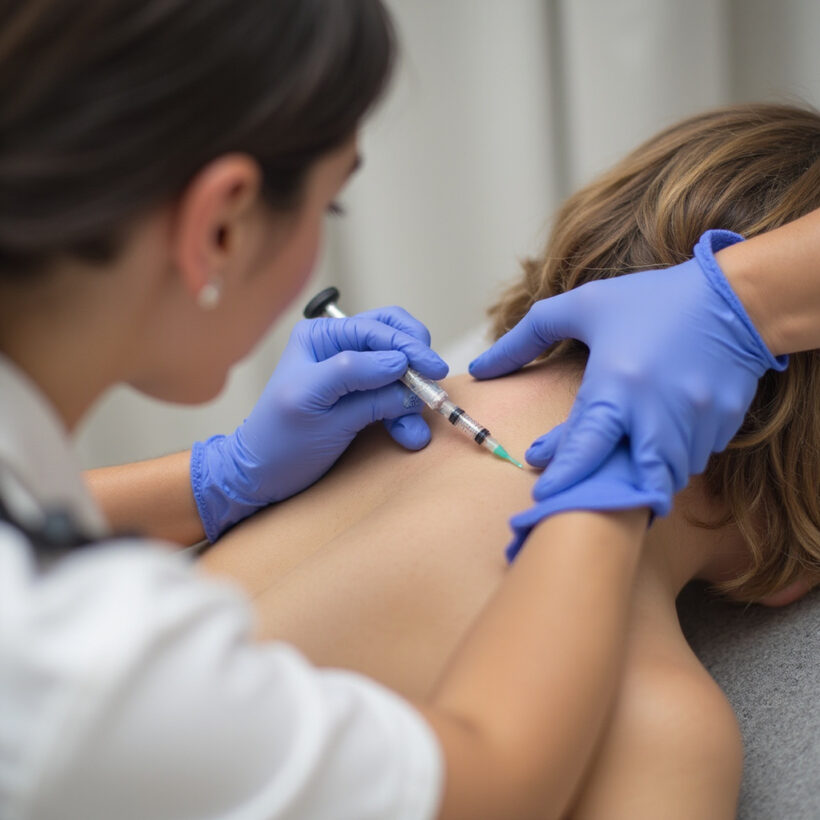
Corticosteroid Injections Intra-articular corticosteroid injections reduce inflammation and can provide significant pain relief, often lasting 6-12 weeks. These injections work best for patients with mild-to-moderate osteoarthritis and effusion. Modern injection techniques use ultrasound or fluoroscopic guidance for improved accuracy and safety. Most insurance plans cover 3-4 injections per year; Medicare typically covers 2 per year.
The procedure is straightforward: using sterile technique and imaging guidance, the physician injects a combination of corticosteroid and local anesthetic directly into the knee joint. Relief often develops within days and may last weeks to months. The main limitation is that injections don't reverse cartilage damage—they're anti-inflammatory therapy.
Viscosupplementation (Hyaluronic Acid Injections) Hyaluronic acid is a natural component of synovial fluid that lubricates joints. In osteoarthritis, the molecular weight and concentration of hyaluronic acid decrease. Viscosupplementation restores these properties. Several formulations exist, administered as a series of 3-5 injections over several weeks.
Viscosupplementation works through multiple mechanisms: lubrication, anti-inflammatory effects, and potentially protective effects on cartilage. Response varies—some patients experience dramatic improvement lasting 6-12 months; others notice minimal benefit. Success is more likely in early-stage osteoarthritis. Most insurance plans cover viscosupplementation, though some require prior authorization or failed conservative therapy documentation.
Platelet-Rich Plasma (PRP) Injections PRP is increasingly used for knee osteoarthritis, though evidence is still evolving. Blood is drawn from the patient, centrifuged to concentrate platelets, and the platelet-rich plasma is injected into the knee. Platelets contain numerous growth factors that may reduce inflammation and potentially promote cartilage healing.
The advantage of PRP is that it uses the patient's own biological material, avoiding immune rejection concerns. Some studies show benefit equivalent to or exceeding hyaluronic acid injections, particularly for early-stage osteoarthritis. PRP treatments are typically not covered by insurance and represent an out-of-pocket expense, usually $800-2000 per injection.
"Many of my patients explore PRP after finding that traditional injections no longer provide adequate relief," Dr. Ramkumar notes. "For carefully selected patients with moderate osteoarthritis, PRP can extend the window before surgery becomes necessary."
Surgical Options: Restoring Function
Surgery is considered when conservative and intermediate treatments no longer provide adequate relief, or when structural damage is severe. The goal is to reduce pain and restore function—ideally allowing return to meaningful activities.
Arthroscopic Knee Surgery (Diagnostic and Therapeutic) Knee arthroscopy involves inserting a small camera into the joint through a small incision, allowing direct visualization. While arthroscopy can diagnose meniscal tears or loose bodies (bone fragments), its role in simple osteoarthritis is limited. Arthroscopic "cleanup"—removing loose cartilage fragments or debriding damaged cartilage—provides only temporary pain relief and is not recommended for primary osteoarthritis management.
However, arthroscopy remains valuable for addressing specific structural problems: removing meniscal tears, loose bodies, or synovial inflammation that may be contributing to symptoms in early-stage disease.
Partial Knee Replacement (Unicompartmental Knee Arthroplasty) The knee has three compartments: medial (inner), lateral (outer), and patellofemoral (front). Some patients have osteoarthritis limited to one compartment—typically the medial compartment.
Partial knee replacement is ideal for these patients: single-compartment disease, age typically over 50, reasonable bone quality, and intact ligaments. The procedure replaces only the damaged compartment with a smaller, more bone-conserving prosthesis. Advantages include:
- Smaller incision and less bone removal
- Faster recovery (6-8 weeks versus 12 weeks for total knee replacement)
- Better range of motion than total replacement
- Excellent long-term outcomes in appropriate candidates
- Potential for future total replacement if needed
Success rates exceed 90% at 10 years in well-selected patients. The main limitation is that osteoarthritis may progress in the remaining compartments over time, requiring future surgery. Modern robotic-assisted partial knee replacement has improved precision and alignment, further improving outcomes.
Total Knee Replacement (Total Knee Arthroplasty) When osteoarthritis involves multiple compartments or has reached advanced stages, total knee replacement is often the most effective option. The procedure replaces the damaged articulating surfaces of all three compartments with prosthetic components.
A modern knee prosthesis consists of:
- A metal femoral component that covers the thighbone's lower end
- A plastic spacer on the tibia (shinbone) with optional metal backing
- A plastic button covering the kneecap (patellar component)
The prosthesis is typically fixed using bone cement (polymethylmethacrylate), though cementless and hybrid fixation options exist. Modern materials are designed to last 15-20 years or longer in most patients.
The surgical procedure takes 60-90 minutes. The surgeon:
- Makes an incision along the front of the knee
- Removes damaged cartilage and bone
- Prepares the bone surfaces to receive the prosthetic components
- Implants the components and tests alignment
- Closes the wound
Total knee replacement dramatically improves outcomes for appropriate candidates: pain relief in >90% of patients, significant functional improvement, and substantial improvement in quality of life. Most patients report that surgery was worthwhile.
Recovery follows a predictable timeline:
- Weeks 0-2: Maximum pain, swelling, and limping; pain control crucial
- Weeks 2-6: Progressive improvement in pain and function; intensive PT
- Weeks 6-12: Continued gradual improvement; returning to normal activities
- 3-6 months: Continued improvement; many limitations resolved
- 6-12 months: Plateau phase; final outcomes apparent
Robotic-Assisted Knee Replacement Robotic-assisted total knee replacement uses advanced imaging and robotic technology to achieve unprecedented precision in bone cuts and component placement. The surgeon uses a robotic arm to guide instruments with submillimeter accuracy based on preoperative imaging.
Advantages of robotic-assisted surgery include:
- Superior alignment precision compared to conventional surgery
- Potentially improved implant survival and longevity
- Better functional outcomes in some studies
- Reduced blood loss and smaller bone cuts in some systems
- Improved kinematic alignment to restore natural knee motion
The disadvantages include longer operative time, increased cost (typically $3,000-5,000 more than conventional surgery), and the learning curve for surgeons. "Robotic-assisted technology represents the frontier of knee replacement," Dr. Ramkumar explains. "In our practice, we've found that robotic guidance produces remarkably consistent results and improves patient satisfaction."
Treatment Decision Framework: Which Option Is Right for You?
Choosing the appropriate treatment requires considering your disease severity, symptom severity, functional limitations, age, overall health, and personal preferences.
| Disease Stage | Conservative Treatment | Intermediate Interventions | Surgical Consideration |
|---|---|---|---|
| Early (KL 1-2) | PT, exercise, weight loss, activity modification | Corticosteroid injections if effusion or flare-ups; viscosupplementation | Rarely needed; consider arthroscopy if mechanical symptoms |
| Moderate (KL 2-3) | Continued PT, activity modification, weight management | Injections as mainstay; PRP if available | Partial or total replacement if conservative therapy fails |
| Advanced (KL 3-4) | Exercise within tolerance; activity modification | Limited effectiveness; primarily for bridging to surgery | Usually indicated; total replacement most common |
| Severe (KL 4) with major functional loss | Supportive care, activity modification | Temporary bridging only | Strongly indicated; functional improvement likely to be dramatic |
Conservative therapy should be attempted for 3-6 months before considering surgery (unless functional loss is catastrophic). This period allows you to optimize exercise, weight management, and medical optimization while gaining a realistic sense of what conservative care can achieve.
Consider surgery when:
- Conservative and intermediate treatments provide inadequate relief after 3-6 months
- Pain significantly limits daily activities or sleep
- Functional limitations prevent work or meaningful activities
- Imaging shows advanced disease
- You understand risks and benefits and have realistic expectations
- You're willing to commit to postoperative rehabilitation
Benefits and Risks of Treatment
Conservative Treatment
Benefits:
- Low risk profile
- Non-invasive
- Can be sustained long-term
- Improves overall health (exercise, weight loss)
- Delays or sometimes prevents surgery
- No complications from medical devices
Risks:
- Slower symptom improvement
- Requires sustained commitment and discipline
- May not provide sufficient relief
- Disease may progress despite treatment
Injections (Corticosteroid, Viscosupplementation, PRP)
Benefits:
- Minimally invasive office procedure
- Rapid onset of relief (days to weeks)
- Low systemic side effects
- Can be repeated if beneficial
- Preserves surgical options
- Can extend duration before surgery
Risks:
- Temporary relief (not permanent)
- Variable efficacy between patients
- Rare but serious complications: infection, allergic reaction, intra-articular injection of medication causing damage (extremely rare)
- Systemic absorption possible with corticosteroids (minor clinical significance for intra-articular injections)
- Cost (particularly for PRP)
Arthroscopic Surgery
Benefits:
- Minimally invasive with small incisions
- Can address specific mechanical problems
- Faster recovery than open surgery
- Diagnostic capability
Risks:
- Limited effectiveness for primary osteoarthritis
- Infection (rare, <1%)
- Blood clots (rare)
- Damage to surrounding structures (very rare)
- Anesthesia risks
Partial Knee Replacement
Benefits:
- Excellent pain relief (>90%)
- Preserves more normal knee mechanics
- Better range of motion than total replacement
- Smaller incision and faster recovery
- Less bone removed
- Allows future surgery if needed
Risks:
- Progression to adjacent compartments (requiring future total replacement)
- Prosthesis failure/wear (less common than decades ago)
- Infection (1-2%)
- Blood clots (0.5-2%)
- Implant loosening
- Anesthesia complications
- Stiffness (1-5%)
- Pain (5-10% of patients)
Total Knee Replacement
Benefits:
- Excellent pain relief (>90% of patients)
- Durable; prosthesis typically lasts 15-20+ years
- Comprehensive solution for multi-compartment disease
- Significant functional restoration
- High patient satisfaction (80-85%)
- Improved longevity and quality of life
Risks:
- Infection (1-2%; serious if deep infection)
- Blood clots/pulmonary embolism (0.5-2%)
- Prosthesis loosening or wear
- Component malalignment
- Stiffness (1-5%)
- Persistent pain (5-10%)
- Implant fracture (rare)
- Anesthesia complications
- Bleeding/hematoma
- Nerve damage (very rare)
- The need for revision surgery eventually (10-15% of primary replacements require revision within 15 years)
Robotic-Assisted Knee Replacement
Benefits: All benefits of total replacement, plus
- Superior alignment precision
- Potentially improved longevity
- Better functional outcomes in some metrics
- Reduced blood loss in some systems
Risks: All risks of total replacement apply; no additional significant risks specific to robotic assistance
Why Patients Choose Commons Clinic for Knee Osteoarthritis Treatment
About Dr. Prem N. Ramkumar, MD, MBA
Dr. Ramkumar is a fellowship-trained orthopedic surgeon specializing in hip and knee replacement and correction of lower limb deformities. He completed his orthopaedic surgery residency at New York Presbyterian Hospital and his fellowship in adult reconstruction at the prestigious Massachusetts General Hospital and Brigham and Women's Hospital.
His credentials include:
- Board certified by the American Board of Orthopaedic Surgery
- Diplomate of the American Board of Orthopaedic Surgery
- Published researcher with numerous peer-reviewed publications
- Consultant for leading orthopedic companies
- Clinical instructor at UCLA
Dr. Ramkumar brings a distinctive blend of academic rigor and practical expertise to patient care. His fellowship training at Harvard's top-tier programs exposed him to cutting-edge surgical techniques and research. His MBA provides financial and business literacy that translates to transparent discussions about cost-effective care and optimal treatment decisions.
"The privilege of my career," Dr. Ramkumar reflects, "is helping patients return to the activities that matter most. That requires matching the right treatment to the right patient at the right time."
Commons Clinic Differentiators
Advanced Surgical Capabilities Commons Clinic is located at MOSI (Marina del Rey Surgery Institute), a state-of-the-art ambulatory surgery center in Marina del Rey. The facility features:
- Advanced imaging including intraoperative X-ray and navigation technology
- Robotic-assisted surgery platforms for precision knee replacement
- Same-day discharge capability
- Streamlined processes that reduce surgical time and anesthesia exposure
Extended Consultation Time Dr. Ramkumar allocates nearly three times the national average consultation time. This isn't rushed. You'll have time to discuss your specific situation, concerns, and preferences without feeling hurried. This thorough approach leads to better treatment decisions and improved satisfaction.
Transparent Cost Structure Commons Clinic partners with innovative benefit plan companies:
- Carrum – $0 out-of-pocket for eligible procedures
- Transcarent – Transparent pricing with embedded negotiated rates
- LanternCare – Fixed surgical benefit coverage
These partnerships eliminate surprise bills and allow you to understand costs upfront.
Insurance Network Commons Clinic accepts major insurance including:
- Aetna
- Cigna
- Anthem Blue Cross
- Blue Shield of California
- United Healthcare
Care Guarantee Commons Clinic's two-year warranty covers the full cost of professional follow-up care related to your knee osteoarthritis treatment. This commitment demonstrates confidence in outcomes and protects you from unexpected follow-up costs.
Convenient Clinic Locations
- Santa Monica
- Marina del Rey
- Beverly Hills
- Long Beach
- Lakewood
Virtual Specialty Clinic For patients nationwide, telehealth consultations with Dr. Ramkumar are available, providing access to specialist expertise without travel.
Frequently Asked Questions
Q: Can knee osteoarthritis be reversed? A: Unfortunately, current treatments cannot reverse cartilage loss or "cure" osteoarthritis. However, symptoms can be dramatically improved through conservative therapy, injections, and surgery. Many patients experience pain-free or nearly pain-free function after treatment. Research into cartilage regeneration and repair (including biologics like PRP and emerging stem cell therapies) is ongoing and promising.
Q: How long do knee replacements last? A: Modern knee replacements typically last 15-20 years or longer. Modern materials and techniques have dramatically extended prosthesis lifespan compared to earlier generations. Most patients won't need revision surgery during their lifetime. However, revision surgery is possible if needed and is increasingly successful.
Q: Can I exercise with knee osteoarthritis? A: Yes—exercise is one of the most important treatments. Low-impact exercises like swimming, cycling, elliptical training, and walking are excellent. Avoid high-impact activities like running or jumping. Physical therapy specifically designed for your knees is ideal. Always work within your pain tolerance; some discomfort is normal during exercise, but sharp pain is a warning sign to modify activity.
Q: Will weight loss help my knee pain? A: Almost certainly, yes. Every pound of body weight adds 3-6 pounds of load across the knee joint. Studies consistently show that 10% weight loss results in significant pain reduction and improved function. Weight loss amplifies the benefits of other treatments.
Q: Is knee replacement major surgery? A: Total knee replacement is a substantial surgical procedure, but it's one of the most common and successful surgeries performed worldwide. Anesthesia risks are low for most patients, and serious complications are uncommon. Recovery takes 3-6 months typically. Most patients consider it well worth the temporary disruption.
Q: Can I avoid surgery? A: For many patients, yes. Conservative therapy, injections, and activity modification allow pain-free or nearly pain-free function indefinitely. However, if these approaches don't provide adequate relief, surgery often becomes the best option for functional restoration.
Q: What happens if I delay surgery too long? A: Delaying surgery isn't dangerous, though prolonged severe pain and functional loss affect quality of life. Occasional concern exists about muscle atrophy with prolonged immobility, but modern PT addresses this effectively. There's no "deadline" for knee replacement—the decision is about your symptoms and functional goals.
Key Takeaways
Knee osteoarthritis is common and highly treatable. More than 10 million Americans have symptomatic knee osteoarthritis, but most find significant relief with appropriate treatment.
Conservative therapy should be attempted first. Physical therapy, exercise, weight management, and activity modification effectively treat many cases, particularly early-stage disease.
Progressive treatment options exist. If conservative care is insufficient, injections (corticosteroid, viscosupplementation, PRP) offer intermediate options. Surgery is reserved for when other treatments fail.
Surgical options include arthroscopy, partial replacement, and total replacement. The choice depends on disease extent and location. Modern robotic-assisted techniques improve precision and outcomes.
Dr. Ramkumar provides personalized expertise. His fellowship training, research background, and patient-centered approach ensure you receive optimal treatment matched to your specific situation.
Commons Clinic offers transparent costs and convenience. Multiple clinic locations, innovative benefit partnerships, and a care guarantee remove barriers to high-quality treatment.
Call to Action
If you're experiencing knee pain that's limiting your life, don't wait. A consultation with Dr. Ramkumar can clarify your condition, explain your options, and create a personalized treatment plan.
Contact Commons Clinic:
- Phone: (310) 437-7921
- Email: hello@commonsclinic.com
- Virtual consultations available nationwide
Clinic locations in Santa Monica, Marina del Rey, Beverly Hills, Long Beach, and Lakewood.
Sources
American Academy of Orthopaedic Surgeons. (2021). Osteoarthritis of the Knee. Retrieved from https://orthoinfo.aaos.org/
Brophy, R. H., Allamerini, G., et al. (2019). Consensus statement on preventing nonoperative-to-operative conversion in knee osteoarthritis. Journal of Bone and Joint Surgery, 101(24), e124.
Felson, D. T., et al. (2000). Osteoarthritis: new insights. Annals of Internal Medicine, 133(9), 726-737.
Hernigou, P., Vermesan, D. (2006). Bone-marrow osteogenic cells: A new alternative for cartilage or bone regeneration. Acta Chirurgica Belgica, 106(6), 645-651.
Kellgren, J. H., & Lawrence, J. S. (1957). Radiological assessment of osteoarthritis. Annals of Rheumatic Diseases, 16(4), 494-502.
Kolasinski, S. L., et al. (2020). 2019 American College of Rheumatology/Arthritis Foundation Guideline for the Management of Osteoarthritis of the Hand, Hip, and Knee. Arthritis Care & Research, 72(2), 149-162.
Litwic, A., Edwards, M. H., Dennison, E. M., & Cooper, C. (2013). Epidemiology and burden of osteoarthritis. British Medical Bulletin, 104, 25-44.
Moskal, J. T., Capps, S. G., et al. (2019). Unicompartmental knee arthroplasty: a minimum 20-year follow-up study. Journal of Arthroplasty, 34(12), 2945-2954.
Orishimo, K. F., et al. (2010). Correlation between lower limb alignment and symptoms in patients with knee osteoarthritis. American Journal of Orthopedics, 39(9), 425-428.
Rahman, S. A., et al. (2019). Robotic-assisted total knee replacement: Clinical outcomes and health-economic implications. Current Reviews in Musculoskeletal Medicine, 12(3), 305-315.
Ritter, M. A., Harty, L. D., Davis, K. E., Meding, J. B., & Berend, M. E. (2003). Predicting range of motion after total knee arthroplasty: clustering, log-linear regression, and regression tree analysis. Journal of Bone and Joint Surgery, 85(7), 1278-1285.
Scher, D. L., Belmont, P. J., et al. (2011). The increasing use of intra-articular corticosteroid injections for knee osteoarthritis in the United States. Journal of the American Academy of Orthopaedic Surgeons, 19(12), 731-736.
Sinusas, K. (2010). Osteoarthritis: diagnosis and treatment. American Family Physician, 85(1), 49-56.



 (562) 348-4588