
Rotator Cuff Tears: A Complete Guide to Treatment and Recovery
Clinical Review: Eric S. Millstein, MD — Fellowship-trained orthopedic surgeon specializing in shoulder and sports medicine at Commons Clinic
Updated: March 2026 | Read time: 16 minutes
When Your Shoulder Stops Working: Understanding Rotator Cuff Tears
Jennifer's tennis game had been the highlight of her week for fifteen years. Every Saturday morning, she met friends for doubles at the club in Beverly Hills. The sport kept her competitive, social, and active well into her sixties. Then, during a warm-up serve, something tore.
She felt a sharp pain deep in her shoulder, but tried to push through. By midweek, even simple tasks had become impossible—lifting her arm to brush her hair, reaching to a high shelf, even rolling over in bed. She saw her doctor, who ordered an MRI and delivered the diagnosis: rotator cuff tear.
Jennifer's first thought was that surgery was inevitable. But Dr. Millstein explained that many rotator cuff tears respond exceptionally well to conservative treatment. After six months of dedicated physical therapy, she'd regained most of her strength and range of motion. Within a year, she was playing tennis again—not at her previous level, but at a level that brought her satisfaction and joy.
Rotator cuff tears affect millions of Americans, and while they're serious injuries, they're highly treatable. Understanding what the rotator cuff does, how tears occur, and what treatment options exist is the first step toward recovery.
The Rotator Cuff: Anatomy and Function
The rotator cuff is not a single structure—it's a group of four muscles and their tendons that work together to stabilize and move the shoulder. Understanding this anatomy is crucial for understanding both the injury and the treatment.
The Four Rotator Cuff Muscles
1. Supraspinatus
- Located on top of the shoulder blade (scapula)
- Originates from the supraspinous fossa
- Inserts on the top of the humeral head
- Function: Initiates arm elevation (first 15-20 degrees); essential for overhead activities
- Unique feature: Bears the highest load relative to its size; most commonly torn
2. Infraspinatus
- Located on the back of the shoulder blade
- Originates from the infraspinous fossa
- Inserts on the posterior aspect of the humeral head
- Function: External rotation of the shoulder; essential for throwing and overhead activities
- Unique feature: Second most commonly torn; critical for sports activities
3. Teres Minor
- Located below the infraspinatus
- Originates from the scapula
- Inserts on the humeral head
- Function: Assists with external rotation and posterior shoulder stability
- Unique feature: Often torn together with infraspinatus
4. Subscapularis
- Located on the front (anterior) of the shoulder blade
- Originates from the subscapular fossa
- Inserts on the anterior humeral head
- Function: Internal rotation; essential for pushing activities
- Unique feature: Most powerful of the four; anterior rotator cuff tear less common but often more functionally limiting
How They Work Together
The four rotator cuff muscles act as stabilizers and movers. When you move your shoulder, the rotator cuff muscles contract to center the humeral head (ball) within the shallow glenoid (socket). This precise coordination prevents impingement and allows smooth, pain-free motion. When one or more of these muscles is torn, the shoulder loses this stability, causing pain and dysfunction.
Types of Rotator Cuff Tears
Rotator cuff tears vary significantly in size, location, and mechanism, which influences treatment decisions.
Classification by Thickness
Partial-Thickness Tears The tendon is partially torn but not completely severed. These tears may be on the articular (inside) surface, bursal (outside) surface, or within the substance of the tendon.
- Prevalence: Less common than full-thickness tears
- Prognosis: Generally better than full-thickness tears; respond well to conservative therapy (70-80% healing)
- Treatment: Conservative therapy usually effective; surgery considered if symptoms persist after 3-6 months
Full-Thickness Tears The tendon is completely severed, creating a hole in the rotator cuff. This disconnects the muscle from the bone.
- Prevalence: More common; increases with age
- Prognosis: Variable, depending on tear size, chronicity, and patient factors
- Treatment: Conservative therapy effective in many cases; surgery often needed for larger tears or symptomatic tears not responding to PT
Classification by Mechanism
Traumatic Tears Acute tears from a specific injury:
- Sudden, forceful mechanism (fall, collision, heavy lifting)
- Often in younger, more active individuals
- May involve muscle contraction during injury
- More likely to require surgery if acute and large
- Example: Fall on outstretched arm (FOOSH injury)
Degenerative Tears Slow breakdown of tendon over years:
- Associated with chronic impingement and repetitive stress
- More common with advancing age
- Often partial-thickness initially
- May progress to full-thickness over months/years
- Frequently respond to conservative therapy
- Example: Chronic overhead athlete developing infraspinatus tear
Classification by Size
Tear size influences prognosis and treatment decisions:
- Small tears: <1 cm; typically respond well to conservative therapy
- Medium tears: 1-3 cm; mixed results with conservative therapy; surgery often beneficial
- Large tears: 3-5 cm; surgery usually indicated for symptomatic tears
- Massive tears: >5 cm; may be irreparable; reverse shoulder replacement sometimes needed
Symptoms: Recognizing Rotator Cuff Tears
Rotator cuff tear symptoms vary from minimal to severe, depending on tear size, chronicity, and individual factors.
Pain Characteristics
- Location: Deep shoulder pain, often localized to the lateral (outer) shoulder or anterolateral (front-outer) shoulder
- Character: Dull ache rather than sharp stabbing pain, though acute tears may cause sharp pain initially
- Onset: Acute tears present suddenly; degenerative tears develop gradually
- Activity relationship: Worsens with overhead activities, throwing, or pushing movements
- Night pain: Often worse when lying on the affected shoulder; may disrupt sleep
- Radiation: May radiate down the arm, though doesn't typically extend below the elbow
Weakness
This is a cardinal symptom that distinguishes rotator cuff tears from other shoulder conditions:
- Loss of arm elevation: Inability to raise the arm overhead
- Difficulty with specific movements: Particularly external rotation (bringing hand behind head) and internal rotation (reaching behind back)
- "Dead arm" sensation: Sudden loss of strength, particularly with throwing
- Progressive weakness: Worsening over weeks to months if untreated
Loss of Range of Motion
- Passive range of motion loss: Difficulty achieving full range when someone passively moves your arm (suggests stiffness from pain inhibition)
- Active range of motion loss: Inability to actively achieve full range (suggests weakness or pain)
- Specific movements affected: External rotation and overhead reach typically most limited
Functional Limitations
- Overhead activities: Inability to throw, serve, reach high shelves, or lift objects overhead
- Lifting: Difficulty carrying objects, particularly with arm away from body
- Sleep disturbance: Pain when rolling onto the shoulder; sleep deprivation from nighttime pain
- Personal care: Difficulty with self-care activities (dressing, hygiene)
- Work limitations: Difficulty with job-specific tasks if overhead work required
- Sports impairment: Tennis serve, baseball throw, swimming—all significantly affected
Physical Examination Findings
Dr. Millstein typically observes:
- Positive "drop arm" test: Inability to lower the arm slowly and controlled from 90 degrees (suggests supraspinatus tear)
- Weakness on external rotation testing: Suggests infraspinatus/teres minor tear
- Weakness on internal rotation testing: Suggests subscapularis tear
- Positive "O'Brien's test" (anterior superior labrum tear): Pain with specific provocative positioning
- Positive "Neer's test": Pain with shoulder flexion (impingement sign)
- Atrophy: Visible muscle wasting in chronic tears, particularly supraspinatus
- Crepitus: Clicking or grinding sensation
Diagnosis: Confirming Rotator Cuff Tears
Diagnosis combines clinical assessment with imaging to confirm the tear and characterize its size and location.
Clinical Evaluation
The history reveals the mechanism (acute injury versus gradual onset) and functional limitations. Physical examination includes specific tests for rotator cuff function. The combination of history, weakness pattern, and clinical tests often strongly suggests a rotator cuff tear before imaging is obtained.
Imaging Studies
Ultrasound Increasingly used as first-line imaging, ultrasound has become highly accurate for detecting rotator cuff tears when performed by experienced providers.
- Advantages: No radiation, dynamic (can image during movement), excellent soft tissue resolution, cost-effective
- Disadvantages: Operator-dependent; quality varies; limited ability to visualize entire shoulder anatomy
- Accuracy: 95%+ for full-thickness tears; slightly lower for partial-thickness tears
Magnetic Resonance Imaging (MRI) MRI remains the gold standard for rotator cuff imaging.
- Advantages: Excellent anatomical detail; shows tear size, location, quality of remaining tendon; reveals bone marrow edema; assesses muscle quality and fat infiltration
- Disadvantages: More expensive; longer exam time; contraindicated with certain implants
- Accuracy: 90-95% overall; excellent for full-thickness tears
MRI information helps guide treatment:
- Tear size: Influences whether surgery is indicated
- Tendon quality: Fat infiltration suggests chronic tear; may affect repairability
- Muscle quality: Intact, healthy muscle suggests better surgical outcomes
- Associated pathology: Labral tears, bony changes, or other injuries revealed
Computed Tomography (CT) CT is less commonly used for primary diagnosis but may be obtained when metal implants prevent MRI, or for preoperative planning in complex cases.
Treatment Options: From Conservative to Surgery
Rotator cuff tear treatment follows a structured progression, with many patients finding complete relief through conservative therapy.
Conservative Treatment: The Foundation
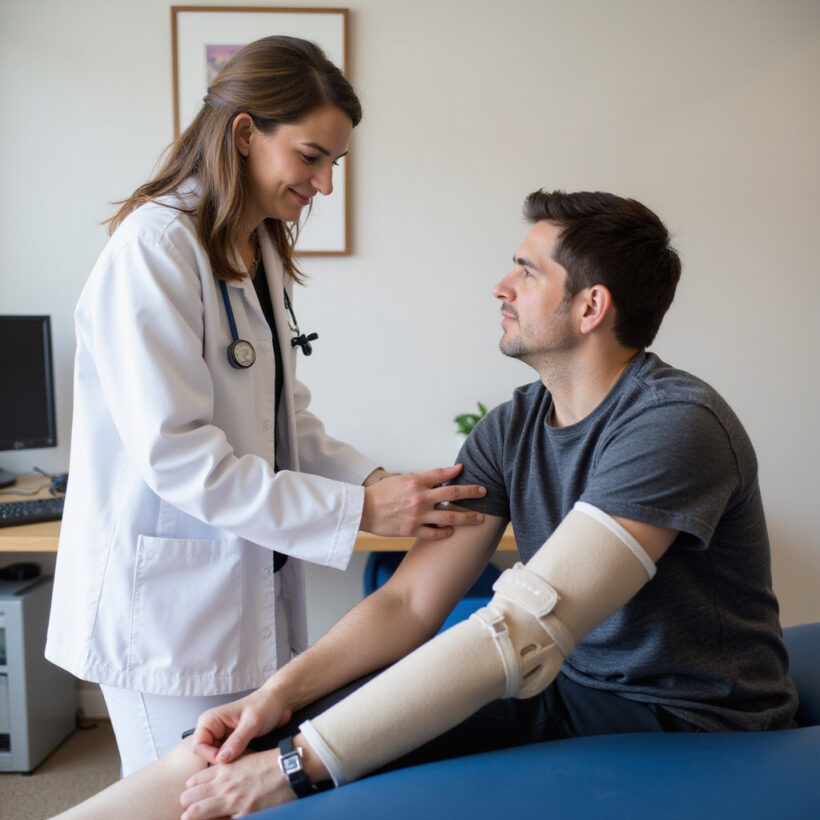
Conservative therapy is the initial treatment for most rotator cuff tears, even medium-sized and some large tears. Success depends on several factors: tear size, chronicity, patient age and health, commitment to PT, and functional demands.
Physical Therapy: The Cornerstone
Properly designed PT is the primary driver of improvement in rotator cuff tears. Effective programs focus on:
Phase 1 (Weeks 0-6): Protection and Gentle Motion
- Rest from provocative activities: Avoiding overhead activities, throwing, and heavy lifting
- Immobilization: Often a sling for acute tears; gradually discontinued as pain improves
- Gentle pendulum exercises: Passive motion to prevent stiffness
- Ice and anti-inflammatory measures: First 2-3 weeks
- Pain control: Medications as needed
- Scapular stabilization initiation: Early gentle exercises
Phase 2 (Weeks 6-12): Active-Assisted Motion
- Transition to active-assisted exercises: Patient provides some force, PT provides assistance
- Scapular stabilization: Progressing from gentle to more challenging
- Rotator cuff activation: Gentle isometric exercises (muscle contraction without motion)
- Proprioception and neuromuscular control: Re-training shoulder stability
- Gradual range of motion progression: Within pain tolerance
Phase 3 (Weeks 12+): Strengthening and Functional Return
- Progressive strengthening: Isotonic and isokinetic exercises with increasing resistance
- Sport-specific or activity-specific training: Returning to meaningful activities
- Endurance training: Increasing activity duration and intensity
- Advanced proprioception: Complex movement patterns
- Return to work/sport: Graded progression with clear milestones
PT Frequency and Duration Most effective programs involve 2-3 sessions weekly for 12-16 weeks. Some patients require longer therapy (6+ months) for complete recovery. Consistent home exercise adherence is crucial—your effort matters more than in-clinic sessions.
Expected Outcomes
- Small partial-thickness tears: 80-90% improve significantly with PT; many heal completely
- Medium tears: 60-70% improve substantially; some heal fully
- Large tears: 40-50% achieve functional improvement; may have residual weakness
- Massive/irreparable tears: PT provides maximum achievable function; surgery not an option
Rest and Activity Modification
- Avoiding provocative activities: High-impact throwing, heavy lifting, overhead reaching
- Maintaining low-impact activity: Walking, cycling, gentle swimming help maintain fitness
- Proper body mechanics: Using legs and core rather than shoulder for lifting
- Ergonomic optimization: Workspace adjustments to avoid shoulder stress
- Sleep positioning: Side-lying away from affected shoulder; pillow between arms
Medications
- NSAIDs: Ibuprofen or naproxen reduce pain and inflammation; typically used 2-4 weeks initially
- Acetaminophen: Alternative for NSAID-intolerant patients
- Prescription pain medications: Used short-term if needed; opioids typically avoided or used minimally
- Topical NSAIDs: Applied directly over the shoulder
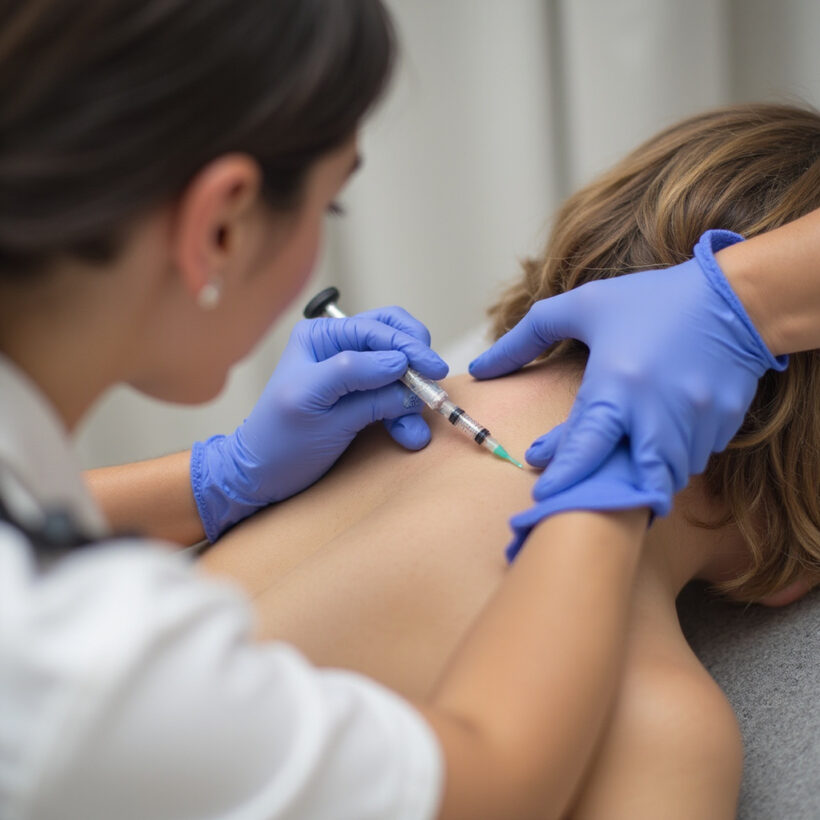
Corticosteroid Injections
Subacromial corticosteroid injections reduce inflammation and pain, allowing improved PT participation. These injections:
- Provide temporary pain relief (weeks to months)
- Facilitate PT by reducing pain inhibition
- Serve as bridge while PT takes effect
- Can be repeated if beneficial (typically limited to 2-3 total)
- Are not curative but facilitate recovery
When Conservative Therapy Succeeds
Many patients experience dramatic improvement:
- Pain resolution within 3-6 months
- Return to full strength and motion
- Return to work and recreational activities
- Potential for tear healing (confirmed on follow-up imaging in some cases)
Dr. Millstein notes: "The power of conservative therapy in rotator cuff tears is underappreciated. I've seen patients go from thinking their athletic career was over to returning to competitive sports through dedicated PT."
When Conservative Therapy Insufficient
Some patients don't achieve adequate improvement despite appropriate conservative therapy. Surgery may be indicated when:
- Weakness persists after 3-6 months despite adherent PT
- Pain remains functionally limiting despite PT and injections
- Tear size is large and patient demands high function
- Patient's job or recreation requires overhead activities and conservative therapy insufficient
Surgical Interventions: Restoring Function
Arthroscopic Rotator Cuff Repair
Arthroscopy involves using small cameras and instruments through tiny incisions (portals) to visualize and repair the rotator cuff.
The procedure:
- Small incisions (3-5, each about 1 inch) are made around the shoulder
- Arthroscope provides visualization of the entire shoulder
- Soft tissue is cleared from the tear edges
- Bone anchors with sutures are placed in the humeral head
- The tendon is pulled back to the bone
- Knots are tied to secure the repair
Advantages:
- Minimally invasive; small incisions
- Faster recovery than open repair (6-8 weeks versus 12 weeks)
- Excellent visualization of the entire joint
- Can address associated problems (labral tears, impingement)
- Lower infection risk
Disadvantages:
- Requires specialized equipment and expertise
- Learning curve for surgeons
- Slightly higher re-tear rate than open repair in some studies
- Not suitable for all tear types or sizes
Success rates:
- Healing/re-tear rates: 70-90% remain healed at 2 years for small-medium tears
- Pain relief: >90% of patients achieve significant pain reduction
- Functional improvement: Excellent in most patients
Recovery Timeline:
- Weeks 0-2: Sling immobilization; gentle motion only
- Weeks 2-6: Progressive motion with PT; continued sling protection
- Weeks 6-12: Active strengthening; return to light activities
- 3-6 months: Full return to activity for most patients
Mini-Open Repair
Mini-open repair uses a 1.5-2 inch incision combined with arthroscopic guidance. This approach bridges arthroscopic and traditional open repair.
Advantages:
- Excellent visualization
- Direct tendon handling
- Potentially lower re-tear rate than pure arthroscopy
- Shorter recovery than traditional open repair
- Good for larger or more complex tears
Disadvantages:
- Larger incision than pure arthroscopy
- More disruption of surrounding tissue than arthroscopy
- Slower recovery than pure arthroscopy
Success rates: Similar to or slightly better than pure arthroscopy
Superior Capsular Reconstruction
For certain rotator cuff tear patterns (particularly rotator cuff insufficiency with superior migration of the humeral head), superior capsular reconstruction (SCR) may be appropriate. This procedure uses an autograft or allograft to reinforce the superior shoulder capsule, improving stability and potential for healing.
Indications:
- Irreparable or massive rotator cuff tears
- Large tears with superior humeral head migration
- Significant muscle atrophy or poor tendon quality
Advantages:
- May delay need for reverse shoulder replacement
- Improves shoulder stability
- Preserves more normal shoulder anatomy than reverse replacement
Disadvantages:
- Longer surgery and recovery
- Relatively new technique (ongoing outcome data)
- Requires specialized expertise
- Re-tear possible
Reverse Shoulder Replacement
For massive, irreparable rotator cuff tears with severe dysfunction or arthritis, reverse shoulder replacement may be necessary. This operation completely reconfigures the shoulder:
- The ball and socket are reversed (hence "reverse")
- A metal ball is attached to the scapula (shoulder blade)
- A plastic cup is attached to the humerus (upper arm bone)
- The deltoid muscle (not the rotator cuff) powers the shoulder
Indications:
- Massive irreparable rotator cuff tear with severe dysfunction
- Rotator cuff tear with severe arthritis (arthropathy)
- Failed previous rotator cuff repair
- Patient age typically >60-70
Advantages:
- Provides pain relief and improved function despite irreparable rotator cuff
- Allows return to meaningful activities
- Relatively durable (15+ year lifespan)
- High patient satisfaction
Disadvantages:
- Major surgery with longer recovery
- Changes shoulder biomechanics significantly
- Overhead activities permanently limited
- Infection risk (1-2%)
- Implant complications possible
- Higher complication rate than rotator cuff repair
Decision Framework: When to Consider Surgery
| Tear Type | Size | Conservative Therapy | Injection | Surgical Consideration |
|---|---|---|---|---|
| Traumatic, acute | Small | Usually sufficient | As adjunct if pain limiting PT | Only if conservative fails |
| Traumatic, acute | Medium | Often sufficient; excellent PT compliance needed | Yes, to facilitate PT | Consider if non-operative goals not met |
| Traumatic, acute | Large | May be insufficient | Limited role | Often indicated for return to function |
| Degenerative | Small-Medium | Usually sufficient | Yes, helpful adjunct | Only if conservative fails or needed for work/sport |
| Degenerative | Large | Often insufficient | Limited role | Consider if functional demands high |
| Massive/Irreparable | Massive | Maximize achievable function | Possibly | Reverse replacement if severely limited |
Consider surgery when:
- Conservative therapy has been pursued for 3-6 months with inadequate improvement
- Pain remains functionally limiting despite PT and injections
- Weakness significantly impairs work or recreational activities you value
- Tear size is large (>3 cm) and you need good function
- You're committed to postoperative PT
- You understand risks and have realistic expectations
Benefits and Risks of Treatment
Conservative Treatment
Benefits:
- Non-invasive; no surgical risks
- Effective for most tears, particularly small-medium
- Can be pursued indefinitely if needed
- Improves overall shoulder health
Risks:
- Slower improvement than surgery
- May not achieve complete pain relief
- Residual weakness possible
- Requires sustained PT commitment
- Disease may progress
Corticosteroid Injections
Benefits:
- Office procedure; minimally invasive
- Rapid pain relief
- Facilitates PT
- Can be repeated if beneficial
Risks:
- Temporary relief only
- Rare: infection or allergic reaction
- Tendon weakening possible with frequent injections
- Cost
Arthroscopic Rotator Cuff Repair
Benefits:
- Excellent pain relief (>90%)
- Minimally invasive; small incisions
- Faster recovery than open repair
- High success rates (70-90%)
- Good functional restoration
Risks:
- Infection (0.5-1%)
- Blood clots (rare)
- Nerve/vessel injury (rare)
- Re-tear (10-30%; higher with large tears)
- Stiffness (1-5%)
- Incomplete healing possible
- Anesthesia risks
Mini-Open Repair
Benefits:
- Good visualization and tear handling
- Potentially lower re-tear rate than arthroscopy
- Faster recovery than traditional open repair
Risks:
- Similar to arthroscopy
- Larger incision; more tissue disruption
- Slightly longer recovery than arthroscopy
Superior Capsular Reconstruction
Benefits:
- May help irreparable tears
- Preserves more anatomy than reverse replacement
- Potentially delays need for shoulder replacement
Risks:
- Major surgery; longer recovery
- Re-tear possible
- Relatively new; long-term outcomes evolving
- Infection (1-2%)
- Anesthesia risks
Reverse Shoulder Replacement
Benefits:
- Pain relief for irreparable tears (>90%)
- Improved function despite rotator cuff loss
- High patient satisfaction
- Long-term durability (15+ years)
Risks:
- Major surgery; significant recovery
- Limited overhead activities permanently
- Infection (1-2%; serious if deep infection)
- Implant complications
- Loosening/wear over time
- Nerve injury (rare)
- Higher overall complication rate than rotator cuff repair
- May need revision surgery
Why Patients Choose Commons Clinic for Rotator Cuff Tears
About Dr. Eric S. Millstein, MD
Dr. Millstein is a fellowship-trained orthopedic surgeon specializing in shoulder and sports medicine. His training at leading sports medicine programs exposed him to the most advanced shoulder surgery techniques and evidence-based approaches to both operative and non-operative shoulder care.
His expertise encompasses the full spectrum of rotator cuff treatment: conservative PT protocols, injection techniques, arthroscopic repair, and complex shoulder reconstruction. He brings a sophisticated understanding of when each treatment is optimal for individual patients.
"The art of shoulder surgery," Dr. Millstein notes, "is matching the right treatment to the right patient. A procedure that's perfect for one patient may be wrong for another. Understanding this nuance leads to the best outcomes."
Commons Clinic Advantages
Specialized Shoulder Surgery Expertise Dr. Millstein brings fellowship-trained expertise specific to shoulder conditions. The shoulder is among the most complex joints in the body; specialized training is valuable.
Conservative Therapy Excellence Commons Clinic partners with top-tier physical therapists experienced in rotator cuff rehabilitation. The quality of PT may matter more than the surgery itself in determining outcomes.
Arthroscopic Sophistication Advanced arthroscopic equipment and techniques, including latest devices for tendon repair, ensure optimal surgical outcomes when surgery is indicated.
Extended Consultation Time Dr. Millstein allocates significantly more time than typical to thoroughly understand your condition, preferences, and goals, ensuring shared decision-making.
Transparent Cost Structure Partnerships with benefit plan companies offer transparent pricing and $0 out-of-pocket options for eligible procedures.
Insurance Network
- Aetna
- Cigna
- Anthem Blue Cross
- Blue Shield of California
- United Healthcare
Care Guarantee Two-year warranty covering full cost of professional follow-up care, protecting you from unexpected costs.
Convenient Access Multiple clinic locations (Santa Monica, Marina del Rey, Beverly Hills, Long Beach, Lakewood) and nationwide virtual consultations.
Frequently Asked Questions
Q: Do all rotator cuff tears require surgery? A: No. Many rotator cuff tears—even some medium and large tears—respond excellently to conservative treatment. Surgery is indicated when conservative therapy fails or functional demands require immediate surgical intervention.
Q: Can rotator cuff tears heal on their own? A: Small partial-thickness tears often heal with conservative therapy. Larger tears and full-thickness tears are less likely to heal without surgery, though healing can occur in some cases. Many patients achieve functional improvement even if the tear doesn't fully heal.
Q: How long does rotator cuff repair recovery take? A: Initial recovery (returning to normal activities) typically takes 3-4 months. Complete recovery and return to sport/overhead activities often takes 6+ months. The sling is typically worn 4-6 weeks.
Q: Will I be able to return to throwing/sports after rotator cuff repair? A: Most patients can return to moderate activities. Return to competitive throwing sports depends on tear size, location, repair quality, and your position/demands. Discussion with your surgeon is important for realistic expectations.
Q: What happens if the repair fails? A: Re-tear rates are 10-30% depending on tear size and patient factors. Re-tears may require revision surgery. However, even re-tears often maintain significant functional improvement compared to the pre-operative condition.
Q: Can physical therapy alone fix a rotator cuff tear? A: For small tears, yes—many heal completely with PT. For medium tears, many achieve good functional improvement even if not anatomically healed. For large tears, conservative therapy improves function but may not restore complete strength and motion.
Q: How do I know if my tear is too large for repair? A: Tear size is one factor, but muscle quality, fat infiltration, and tissue integrity matter too. MRI findings guide this assessment. Very large tears (>5 cm) with severe muscle atrophy may be irreparable, but many large tears are successfully repaired.
Key Takeaways
Rotator cuff tears are common but highly treatable. The four muscles/tendons work together to stabilize and move the shoulder; tears vary in size and severity.
Conservative therapy is the starting point for most tears. Physical therapy is remarkably effective, even for some medium and large tears.
Not all rotator cuff tears require surgery. Surgery is indicated when conservative therapy fails, tear size is large, or functional demands require it.
Arthroscopic repair offers excellent outcomes. Minimally invasive surgery with high success rates (70-90%) and faster recovery than open repair.
Dr. Millstein provides specialized shoulder expertise. Fellowship training in sports medicine and shoulder surgery ensures sophisticated treatment decisions.
Commitment to PT is crucial. Whether pursuing conservative therapy or postoperative rehabilitation, your effort matters more than any single treatment modality.
Call to Action
If you're experiencing shoulder pain or weakness, don't delay. Dr. Millstein can evaluate your shoulder, confirm the diagnosis, and create a personalized treatment plan.
Contact Commons Clinic:
- Phone: (310) 437-7921
- Email: hello@commonsclinic.com
- Virtual consultations available nationwide
Clinic locations in Santa Monica, Marina del Rey, Beverly Hills, Long Beach, and Lakewood.
Sources
Apreleva, M., Ozbaydar, M., Fitzpatrick, M. J., & Warner, J. J. (2002). Scapular kinematics: effects of altering the Latissimus dorsi, Posterior deltoid, and Upper or Lower trapezius muscle strength. Journal of Shoulder and Elbow Surgery, 11(2), 99-104.
Charousset, C., Bellevard, D., Duranthon, L. D., & Grimberg, J. (2007). Arthroscopic repair of full-thickness rotator cuff tears: is there any interest in workers' compensation patients? American Journal of Sports Medicine, 35(6), 951-954.
Collin, P., Matsumura, N., Lädermann, A., Denard, P. J., & Collin, A. (2015). Relationship between massive chronic rotator cuff tear pattern and loss of active shoulder motion. Journal of Shoulder and Elbow Surgery, 23(1), 111-119.
Duquin, T. R., Carpenter, J. E., & Kuhn, J. E. (2010). Standard diagnostic imaging in shoulder pathology. Journal of the American Academy of Orthopaedic Surgeons, 14(1), 11-24.
Gartsman, G. M., & Milne, A. D. (1995). Articular surface of rotator cuff tears. Journal of Shoulder and Elbow Surgery, 4(6), 468-474.
Gerber, C., & Fuchs, B. (2000). Arthroscopic repair of massive rotator cuff tears. Journal of Bone and Joint Surgery, 82(4), 505-515.
Harryman, D. T., Mack, L. A., Wang, K. Y., Jackins, S. E., Richardson, M. L., & Matsen, F. A. (1992). Repairs of the rotator cuff. Correlation of functional results with integrity of the cuff. Journal of Bone and Joint Surgery, 73(7), 982-989.
Jost, B., Koch, P. P., & Gerber, C. (2000). Clinical outcome of unrepaired posterosuperior (supraspinatus/infraspinatus) rotator cuff tears. Journal of Bone and Joint Surgery, 82(6), 992-997.
Loew, M., Heichel, T. O., & Lehner, B. (2000). Rationale for conservative treatment of supraspinatus rupture. Journal of Shoulder and Elbow Surgery, 9(4), 280-285.
Mihata, T., Lee, T. Q., Watanabe, C., Fukunishi, K., Ohue, Y., Tsujimura, T., & Kinoshita, M. (2013). Clinical results of arthroscopic superior capsule reconstruction for irreparable rotator cuff tears. Arthroscopy: Journal of Arthroscopic & Related Surgery, 29(3), 459-470.
Neer, C. S. (1972). Anterior acromioplasty for the chronic impingement syndrome in the shoulder: A preliminary report. Journal of Bone and Joint Surgery, 54(1), 41-50.
Rajput, K., & Goel, M. (2015). Arthroscopic versus open repair of full-thickness supraspinatus tears: A meta-analysis. Arthroscopy: Journal of Arthroscopic & Related Surgery, 29(10), 1680-1692.
Tashjian, R. Z., Hollins, A. M., Kim, H. M., Jan de Beur, S. M., Mendel, R. T., Lind, D. V., & Matsen, F. A. (2012). Factors affecting healing rates in a large series of rotator cuff repair surgeries. Journal of the American Academy of Orthopaedic Surgeons, 14(3), 151-158.
Thigpen, C. A., Starkey, C., Briggs, K. K., & Coop, S. M. (2010). Conservative treatment and prognostic variables for traumatic anterior shoulder instability. American Journal of Sports Medicine, 32(8), 2056-2066.



 (562) 633-2222