Published by Commons Clinic.
[Web version](https://commonsclinic.com/programs/injuries/foot-arch-conditions/)
[Home](https://commonsclinic.com/) [Conditions and procedures](https://commonsclinic.com/programs/injuries/) Flatfoot and high arches
# Flatfoot and high arches
Some feet have low arches and others have high arches. What matters is whether the shape is changing or the foot has become painful, weak or hard to balance on. We can help you find out what’s driving the trouble and choose support that lets you spend more time walking, working or doing what you enjoy. [[1](https://commonsclinic.com/programs/injuries/foot-arch-conditions/#care-reference-1) , [2](https://commonsclinic.com/programs/injuries/foot-arch-conditions/#care-reference-2) ]
[Book now](https://book.commonsclinic.com/) [(310) 437-7921](tel:+13104377921)
## When it starts and how it happens
**Low arches or flatfoot.** A low arch that has been present for years may cause very little trouble. If one arch flattens over time, the tendons and ligaments that hold it up may have weakened. We call this progressive collapsing foot deformity. As the arch drops, the heel may tilt outward and the foot may become harder to move or support. [[1](https://commonsclinic.com/programs/injuries/foot-arch-conditions/#care-reference-1) ]
**High arches or cavus feet.** A high arch can change where your foot bears weight. Some people feel more pressure at the heel, ball of the foot or outside edge. The foot can also be more prone to rolling outward. A high arch may run in the family or occur with muscle imbalance and some nerve conditions. When one foot is changing or you’re developing weakness, we look beyond the shape of the arch. [[2](https://commonsclinic.com/programs/injuries/foot-arch-conditions/#care-reference-2) ]
## Signs to look out for
With a changing low arch, you may notice tenderness along the inside of the ankle, a heel that angles outward or difficulty rising onto the toes. With a high arch, you might notice sore calluses, trouble finding comfortable shoes or repeated ankle sprains. Tell us if you have numbness, new weakness or difficulty lifting the front of the foot. [[1](https://commonsclinic.com/programs/injuries/foot-arch-conditions/#care-reference-1) , [2](https://commonsclinic.com/programs/injuries/foot-arch-conditions/#care-reference-2) ]
Ask us to check a foot that is gradually changing shape or interfering with daily activity. If a foot suddenly becomes warm and swollen and you have diabetes or reduced sensation, seek prompt assessment. [[3](https://commonsclinic.com/programs/injuries/foot-arch-conditions/#care-reference-3) ]
## How we can help
We’ll look at both feet while you stand and walk, check how flexible the arch and heel are, and assess strength, sensation and balance. Standing X-rays can show alignment under your weight. We may recommend other imaging to evaluate a tendon or joint, or refer you for further assessment when weakness or sensory changes suggest a nerve condition. [[1](https://commonsclinic.com/programs/injuries/foot-arch-conditions/#care-reference-1) , [2](https://commonsclinic.com/programs/injuries/foot-arch-conditions/#care-reference-2) ]
When a low arch needs support, a shoe insert or brace may help stabilize the foot. With a high arch, an insert can help redistribute pressure, and an ankle brace may help if the foot keeps rolling. We’ll discuss how footwear and therapy can support your goals. If pain or loss of function persists, we can talk through whether a procedure could help and how the plan would depend on the shape, flexibility and health of the foot. [[1](https://commonsclinic.com/programs/injuries/foot-arch-conditions/#care-reference-1) , [2](https://commonsclinic.com/programs/injuries/foot-arch-conditions/#care-reference-2) ]
## What you can do
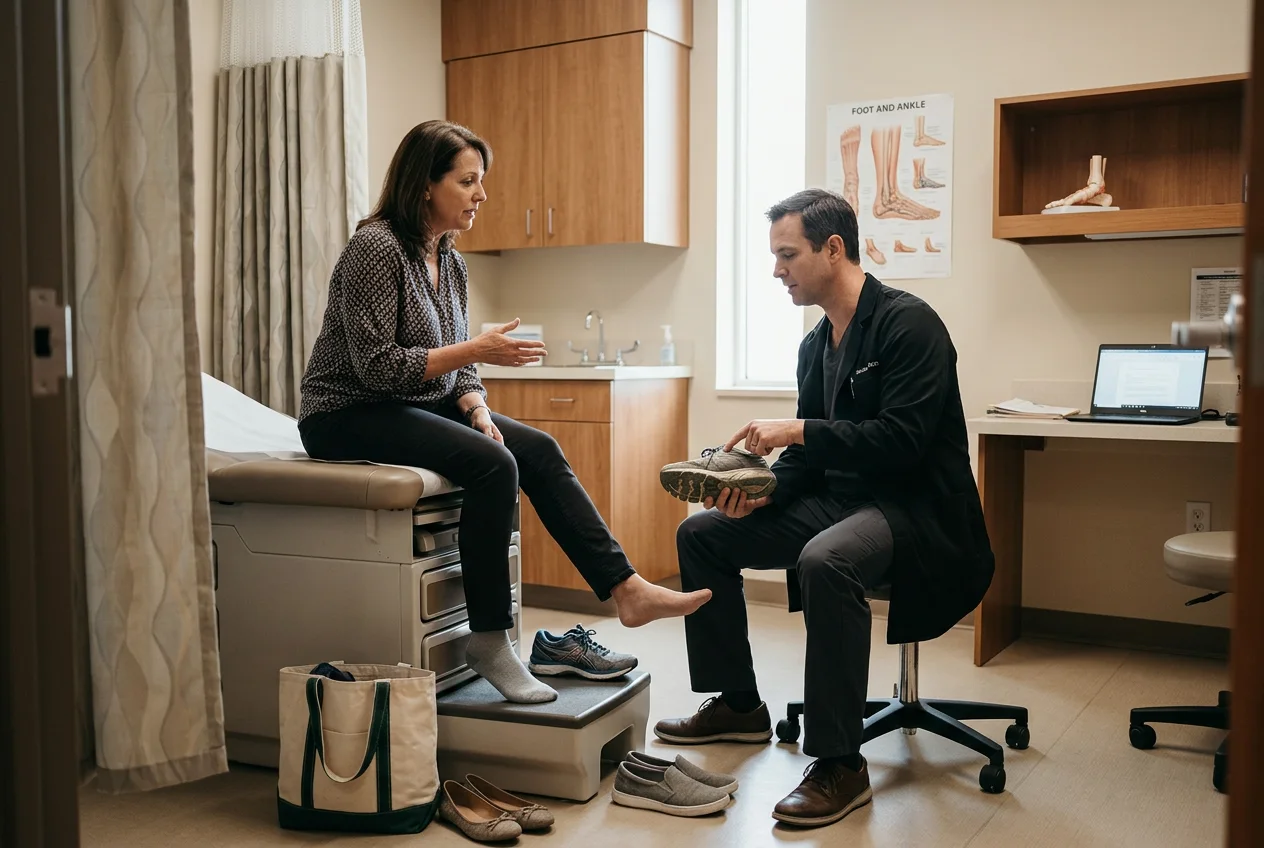
Bring your usual shoes, inserts or braces. Tell us where shoes rub, where calluses keep coming back and when the foot feels least steady. If the shape has changed, bring a photo or describe how it looks now compared with before.
Choose a practical activity to track, such as walking to the bus stop, standing at the kitchen counter or finishing a shift. Tell us how long you can do it comfortably so we can agree on what improvement would look like. [[1](https://commonsclinic.com/programs/injuries/foot-arch-conditions/#care-reference-1) , [2](https://commonsclinic.com/programs/injuries/foot-arch-conditions/#care-reference-2) ]
## What to expect during recovery
If we start with shoes, an insert, a brace or therapy, we’ll ask you to watch for pressure spots and changes in pain, balance or walking tolerance. Your follow-up helps us judge whether the support is doing its job or needs an adjustment. If surgery makes sense, your ability to put weight on the foot will depend on what we need to correct and which tissues or bones need to heal. [[1](https://commonsclinic.com/programs/injuries/foot-arch-conditions/#care-reference-1) , [2](https://commonsclinic.com/programs/injuries/foot-arch-conditions/#care-reference-2) ]
## Our physicians
You can see [David Lee, MD](https://commonsclinic.com/physicians/david-lee-md/) , our board-certified orthopedic foot and ankle surgeon, for evaluation of low or high arches. He can help you understand which part of the foot affects walking and which treatments fit your everyday needs.
### [David Lee, MD](https://commonsclinic.com/physicians/david-lee-md/)
Orthopedic Surgeon, Foot and Ankle
[Book now](https://book.commonsclinic.com/?providerId=david-lee-md)
## Related articles and guides
- [Seven things to understand about a changing foot arch](https://commonsclinic.com/articles/flatfoot-progressive-arch-collapse/)
- [High arches and foot pain](https://commonsclinic.com/articles/high-arched-feet-cavus/)
- [Flatfoot and arch reconstruction](https://commonsclinic.com/flatfoot-reconstruction-at-commons-clinic-get-back-to-moving-with-confidence/)
## Explore the program
Learn how we evaluate foot shape, movement and joint symptoms in our [foot and ankle program](https://commonsclinic.com/specialties/foot-and-ankle/) .
## References
1. [American Academy of Orthopaedic Surgeons. Progressive collapsing foot deformity](https://www.orthoinfo.org/bodypart/foot-ankle/posterior-tibial-tendon-dysfunction/)
2. [American College of Foot and Ankle Surgeons. Cavus foot](https://www.foothealthfacts.org/conditions/cavus-foot-%28high-arched-foot%29)
3. [American Academy of Orthopaedic Surgeons. Diabetic Charcot foot](https://www.orthoinfo.org/bodypart/foot-ankle/diabetic-charcot-foot/)
## Where we can see you
Meet Dr. Lee at [Long Beach – Bixby Knolls](https://commonsclinic.com/location/long-beach-bixby-knolls/) or [Long Beach – Douglas Park](https://commonsclinic.com/location/long-beach-douglas-park/) . [Book a visit](https://book.commonsclinic.com/) or call [(310) 437-7921](tel:+13104377921) .
### [Long Beach – Bixby Knolls](https://commonsclinic.com/location/long-beach-bixby-knolls/)
[David Lee, MD](https://commonsclinic.com/physicians/david-lee-md/) Orthopedic Surgeon, Foot and Ankle
[Book Online](https://book.commonsclinic.com/)
Call us at [(310) 437-7921](tel:+13104377921) .
### [Long Beach – Douglas Park](https://commonsclinic.com/location/long-beach-douglas-park/)
[David Lee, MD](https://commonsclinic.com/physicians/david-lee-md/) Orthopedic Surgeon, Foot and Ankle
[Book Online](https://book.commonsclinic.com/)
Call us at [(310) 437-7921](tel:+13104377921) .